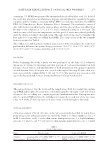
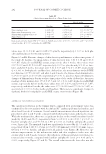
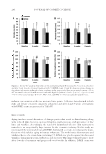
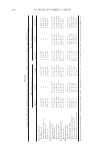
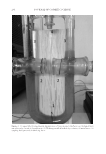
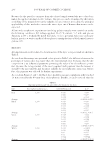
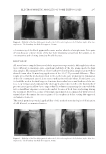
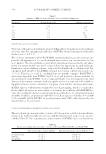
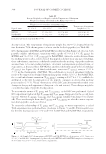
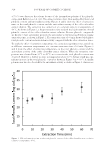
JOURNAL OF COSMETIC SCIENCE 296 Because the d ye particles can move from the colored sample toward the not-colored one under the applied external electric voltage, this process can be visualized by distortion or shifting of the margin between the samples. In case it moves noticeably, the principal applicability of this method to extract the tattoo dyes out of human skin tissues can be expected. All microelec trophoretic experiments involving gelatin samples were carried out under the following conditions: DC voltage applied, 20–25 V current, 5–7 mA and process duration, 2,400 s. It should be noted that such, or close, potential values are used regu- larly in practice at various medical electrophoretic manipulations or biochemical investi- gations (13). RESULTS All e xperimen tal results related to determination of the dyes’ zeta potentials are shown in Table I. As seen from the average zeta potential values given in Table I, the difference between the potentials of various dyes was larger than the experimental error. It means that the dye composition is an infl uential parameter governing the value of its electrokinetic poten- tial. Because the zeta potential of the most popular black pigment was the largest, it should be the most mobile and the most suitable for electrophoretic extraction. There- fore, this pigment was selected for further experiments. As seen from Figures 4 and 5, the black dye’s mobility was quite signifi cant and it reached 10 mm even after the 40-min-long electrophoresis. Besides, it can be noticed that the Table I Experimental D ata and Calculated Zeta Potentials for the Dyes Dye Electrophoresis duration, s Level difference, m ζ, V Red 1,200 0.020 −0.135 0.020 −0.135 0.024 −0.162 Average 0.021 −0.142 ± 0.0119 Black 1,200 0.020 −0.135 0.024 −0.162 0.022 −0.148 0.026 −0.175 0.020 −0.135 Average 0.024 −0.151 ± 0.014 Green 1,200 0.018 −0.121 0.016 −0.108 0.022 −0.148 0.020 0.135 0.026 0.175 Average 0.0204 −0.138 ± 0.0194 White 1,200 0.012 −0.0810 0.016 −0.108 0.02 −0.135 0.02 −0.135 0.014 −0.0944 Average 0.064 −0.111 ± 0.0194

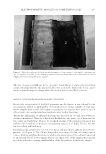
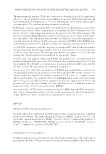
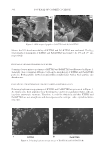
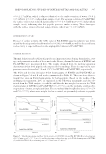
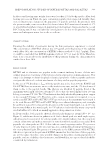
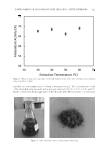
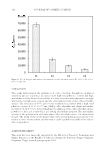
ELECTROPHORETIC MOBILITY OF SOME TATTOO DYES 297 color intensity of the black pigment becomes weaker after the electrophoresis. It is quite obvious because some portions of the dye were migrating away from the sample, so its concentration and coloring intensity should decrease. DISCUSSION Al l tested ta ttoo samples have revealed the negative zeta potentials, although their values were suffi cient to maintain quite signifi cant mobility of the dye grains inside the faux skin samples. The margin between colored and not-colored gelatin samples has moved for about 10 mm after 40-min-long application of the 20–25 V potential difference. These results prove that the method presented in this work looks quite promising for elimination of the old or unwanted tattoos alone or in combination with the others. In the latter case, it should be used at the fi nal stage to eliminate the residual traces and shadows of the tat- toos. Low voltages and comparatively short application time tested in the framework of present investigation allow one to expect that the volunteer requesting the removal of the tattoo should not experience serious discomfort because of local skin overheating during the treatment. However, a series of thorough experiments is recommended with tattooed animal skin to determine the exact regimes of electrophoresis before testing this approach on human volunteers. This result p romises potential applicability of this method in technologies of elimination of old, blurred, or unwanted tattoos. Figure 4. Mobility o f the black dye particles after the 2,400-s electrophoresis. Left, before right, after elec- trophoresis. The boundary has shifted for approx. 10 mm. Figure 5. Mobility of the black dye particles after the 2,400-s electrophoresis. Left, before right, after elec- trophoresis. The boundary has shifted for approx. 8 mm.
Purchased for the exclusive use of nofirst nolast (unknown)
From: SCC Media Library & Resource Center (library.scconline.org)