JOURNAL OF COSMETIC SCIENCE 298 REFERENCES ( 1) K. Burri s and K. Kim, Tattoo removal, Clin. Dermatol., 25(4), 388–392 (2007). (2) L. I. Nag a and T. S. Alster, Laser tattoo removal: an update, Am. J. Clin. Dermatol., 18(1), 59–65 (2017). (3) S. G. Ho and C. L. Goh, Laser tattoo removal: a clinical update, J. Cutan. Aesthet. Surg., 8(1), 9–15 (2015). (4) N. Khung e r, A. Molpariya, and A. Khunger, Complications of tattoos and tattoo removal: stop and think before you ink, J. Cutan. Aesthet. Surg., 8(1), 30–36 (2015). (5) N. Kluge r , S. Hakimi, and P. Del Giudice, Keloid occurring in a tattoo after laser hair removal, Acta Derm. Venereol., 89(3), 334–335 (2009). (6) P. D. Gr a ham, P. T. Elliott, and K. G. Gallagher, United States Patent 7179253B2, accessed February 20, 2019, https://patentimages.storage.googleapis.com/a6/49/ec/51058b4edf0876/US7179253.pdf. (7) L. Song, Z. Ning, and T. Min, The wettability with Ca2+ brine in a tight oil reservoir with zeta poten- tial, Pet. Sci. Technol., 36(24), 2106–2111 (2018). (8) A. M. Ja s trzebska, J. Karcz, R. Letmanowski, D. Zabost, E. Ciecierska, J. Zdunek, E. Karwowska, M. Siekierski, A. Olszyna, and A. Kunicki, Synthesis of the RGO/Al2O3 core-shell nanocomposite fl akes and characterization of their unique electrostatic properties using zeta potential measurements, Appl. Surf. Sci., 362, 577–594 (2016). (9) Z. Wu, J. Wu, R. Zhang, S. Yuan, Q. Lu, and Y. Yu, Colloid properties of hydrophobic modifi ed algi- nate: surface tension, ζ-potential, viscosity and emulsifi cation, Carbohydr. Polym., 181, 56–62 (2018). (10) H. J. Jac o basch, G. Baubock, and J. Schurz, Problems and results of zeta-potential measurements on fi bers, Colloid Polym. Sci., 263, 3–24 (1985). (11) J. T. G. Overbeek and P. H. Wiersema, “The Interpretation of Electrophoretic Mobilities,” in Electropho- resis: Theory, Methods and Applications. M. Bier. Ed. (Academic Press. London, New York, 1959), Vol. 1, pp. 1–52. (12) A. Strickle r and T. Sacks, Focusing in continuous-fl ow electrophoresis systems by electrical control of effective cell wall zeta potentials, Ann. N.Y. Acad. Sci., 209, 497–514 (2006). (13) D. Michaud, L. Cantin, D. A. Raworth, and T. C. Vrain, Assessing the stability of cystatin/cysteine proteinase complexes using mildly-denaturing gelatin-polyacrylamide gel electrophoresis, Electrophoresis, 17(1), 74–79 (1996).

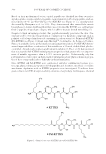
J. Cosmet. Sci., 70, 299–312 (November/December 2019) 299 Effect of Palmitic Acid Conjugation on Physicochemical Properties of Peptide KTTKS: A Preformulation Study SEYEDEH MARYAM MORTAZAVI, FARZAD KOBARFARD, HOWARD I. MAIBACH, and HAMID REZA MOGHIMI , Department of Pharmaceutics and Nanotechnology, School of Pharmacy, Shahid Beheshti University of Medical Sciences, Tehran, Iran, 1991953381 (S.M.M., H.R.M.), Department of Medicinal Chemistry, School of Pharmacy, Shahid Beheshti University of Medical Sciences, Tehran, Iran , 1991953381 (F.K.), Department of Dermatology, School of Medicine, University of California, San Francisco, California, 94115 (H.I.M.), Protein Technology Research Center, Shahid Beheshti University of Medical Sciences, Tehran, Iran, 1991953381 (H.R.M.) Accepted for publication September 21, 2019. Synopsis Lys–Thr–Thr–Lys–Ser (KTTKS) minimally crosses the skin because of hydrophilicity therefore, its palmitoyl derivative, palmitoyl-KTTKS (Pal-KTTKS), is used in cosmetic products. In spite of this, there is insuffi cient information on its physicochemical properties and the effects of palmitoylation on such properties. The aim of this study was to investigate these properties. Such information would help appropriate formulation development. KTTKS and Pal-KTTKS were synthesized and characterized for ultra violet (UV) absorption, structure [X-ray diffraction (XRD)], morphology (electron microscopy), birefringence (polarized light microscopy), partitioning, solubility, thermal behavior (melting, thermogravimetric analysis, and differential scanning calorimetry), surface activity, critical micelle concentration (CMC, by tensiometry), and stability. KTTKS and Pal-KTTKS decomposed at about 154 and 150°C, respectively, and did not show a melting point before decomposition. The maximum UV absorbance of peptides was less than 200 nm. Both peptides showed birefringence, irregular fl ake morphologies, and hygroscopicity. KTTKS was freely soluble in water at room temperature (logP = -1.6 ± 0.15), indicating its hydrophilic nature. logP of Pal-KTTKS was calculated to be about 3.7, indicating a lipophilic compound. Pal-KTTKS showed surface activity with a CMC value of 0.024 ± 0.004 mM (19.25 ± 2.9 mg/L), whereas KTTKS did not show such surface activity. Palmitoylation demonstrated sharp peaks in the XRD pattern of KTTKS. KTTKS and Pal-KTTKS differ mainly in terms of chemical properties and show some similarity in physical properties. These results can be used for formulation developments. INTRO D UCTION Skin aging prevention is an attractive issue in the cosmetic industry. Antiaging products include retinoids, alpha hydroxy acids, moisturizers, antioxidants (such as L-ascorbic acid, niacinamide, α-tocopherol, and ubiquinone), and peptides (1). Address all correspondence to Hamid Reza Moghimi at hrmoghimi@sbmu.ac.ir and hrmoghimi@yahoo.com.
Purchased for the exclusive use of nofirst nolast (unknown)
From: SCC Media Library & Resource Center (library.scconline.org)