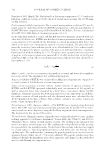
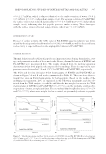
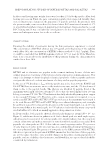
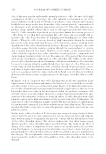
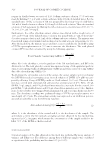
JOURNAL OF COSMETIC SCIENCE 316 reagent in distilled water at a ratio of 1:10. Sodium carbonate solution (7.5% w/v) was made by diluting 7.5 g of solid sodium carbonate with 100 mL of distilled water. For the standard curve of GA, a solution of GA was prepared by dissolving 0.1 g of solid GA in 100 mL of distilled water to obtain 1,000 mg/L of GA stock solution. Then the standard solutions of GA were made by diluting the GA solution into concentrations of 10, 20, 50, 70, 100, 250, and 500 mg/L. Furthe rmore, the coffee silverskin extract solution was diluted with a weight ratio of 1:10, and 500 μL of the diluted extract solution was mixed with 2.5 mL of the Folin– Ciocalteu reagent solution and 2 mL of the sodium carbonate solution. The mixture was then mixed using a vortex mixer and incubated in the dark at room temperature for 1 h. After the incubation, the mixture was poured into a cuvette and directly checked by using a UV-Vis spectrophotometer at 765 nm to measure the absorbance. The total phenol content (TPC) was then calculated by using the following equation: qDF Abs Total Phenolic Content (mg GAE/L) , m (1) wh ere Ab s is the absorbance, m is the gradient of the GA standard curve, and DF is the dilution factor. The total phenolic content was expressed in mg of GA equivalent per liter extract solution [mg Gallic Acid Equivalent (GAE)/L] and then converted to mg GAE/g dry coffee silverskin (mg GAE/g CS). To deter mine the antioxidant activity of the extract, the extract samples were tested using the DPPH free radical scavenging assay. A stock solution of DPPH (250 μM) was pre- pared by diluting 11 mg of DPPH powder in 20 mL ethanol (96% v/v). The stock solu- tion was covered with aluminum foil and stored at a temperature of 4°C. Next, 100 μL DPPH, 50 μL sample, and 850 μL ethanol were mixed in a test tube. For the control, 100 μL DPPH, 50 μL distilled water, and 850 μL ethanol were mixed in a test tube. Further- more, both test tubes were wrapped with aluminum foil and stored in a dark room for 30 min. The absorbance reading was performed using a UV-Vis spectrophotometer at a wavelength of 515 nm. The antioxidant activity was expressed as an inhibition percent- age and calculated by using the following equation: q100%, ( ) Antioxidant Activity % c s c A A A (2) where Ac is th e a bsorbance of the control and As is the absorbance of the sample. The antioxidant activity (the free radical scavenging activity) obtained by this method was expressed as IC50 (in ppm), which means the concentration of the sample needed to in- hibit 50% of the DPPH as the free radical. STATISTICAL ANALY SIS Statistical analy sis of the data obtained in this work was performed by using analysis of variance and Tukey test. The difference among data of different samples was considered as signifi cant if the probability was less than 0.05 (p 0.05).

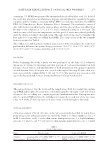
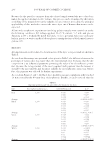
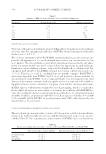
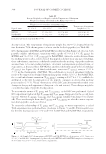
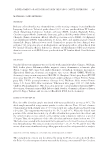
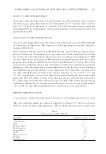
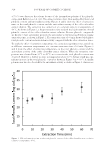
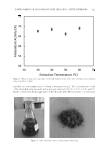
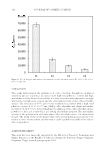
DEVELOPMENT OF ANTIOXIDANT SKIN GEL USING COFFEE SILVERSKIN 317 DRYING OF COFFEE SILVERSKIN EXTRACT To produce coffee silverskin extract in powder form, the coffee silverskin extract solution was dried using a spray dryer with an inlet temperature of 175°C and an outlet tempera- ture of 125°C with a feed fl ow of 16.7 mL/min. The coffee silverskin extract powder was then analyzed for its total phenolic content and antioxidant activity using the method as previously described. PREPARATION OF COFF EE SILVERSKIN SKIN GEL A basic gel was pre pared by using the cold mechanical method as described by Schmolka (17) with some modifi cations. The composition of the ingredients for the basic skin gel is shown in Table I (18). First, Carbomer 940 was d issolved in distilled water in a glass beaker and stirred using a mixer to obtain a gel. The mixing process was carried out at room temperature at 600 rpm for 20 min. To reduce the bubble, the gel was kept for 24 h at room temperature. TEA was then added to the gel and mixed. Methylparaben and propylparaben were dissolved in propylene glycol, whereas EDTA was dissolved in distilled water by stirring. Then, these solutions were added into the gel and stirred until a homogeneous mixture was attained. Finally, the coffee silverskin extract powder which was already dissolved in distilled water, was added into the gel, and stirred at room temperature for 20 min. The concentration of the coffee silverskin extract powder in the skin gel varied at 0.125%, 0.25%, 0.5%, and 1%. The total phenolic content of the skin gel was analyzed using the method described previously. The antioxidant activity of the skin gel was also analyzed and expressed as IC50 value using the method described previously. The pH of the gel was measured using a pH meter, whereas the viscosity was measured using a viscometer using spindle number 6 at a speed of 3 rpm. All measurements were carried out at room temperature. RESULTS AND DISCUSS ION TOTAL PHENOLIC CONT ENT AND ANTIOXIDANT ACTIVITY OF COFFEE SILVERSKIN EXTRACT SOLUTION The coffee silversk in sample was extracted using water–ethanol (50:50 w/w) as solvent at different extraction times and temperatures. Water–ethanol mixture with a weight ratio Table I Composition for the Basic Skin Gel Ingredient Composition (g/100 g water) Carbomer 940 1 TEA 1 Propylene glycol 15 Methylparaben 0.15 Propylparaben 0.05 EDTA 0.05 Ethanol (96% v/v) 5 Perfume 0.4 Distilled water 100
Purchased for the exclusive use of nofirst nolast (unknown)
From: SCC Media Library & Resource Center (library.scconline.org)