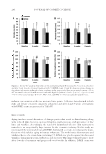
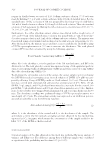
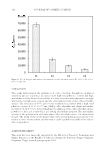
JOURNAL OF COSMETIC SCIENCE 324 CONCLUSION This study demonstrated the utilization of coffee silverskin through an optimized extraction process to produce an extract with high total phenolic content and high antioxidant activity. It was observed that the extraction time and temperature strongly affected the total phenolic content and the antioxidant activity of the coffee silverskin extract. The extraction at 40°C and 60 min resulted in an extract with a high total phenolic content of 31.15 ± 2.77 mg GAE/g coffee silverskin and a high antioxidant activity of 68.44 ± 0.76%. It was found that the addition of the coffee silverskin extract powder to a basic gel resulted in a gel having antioxidant property. The antioxidant activity of the gel increased with increasing coffee silverskin extract concentration in the gel. The result of this study showed that coffee silverskin has great potential to be used as a source of antioxidant and the extract can be applied as an additive for various skin care products. ACKNOWLEDGMENT This work has been fi nancially supported by the Ministry of Research, Technology and Higher Education of the Republic of Indonesia through the Penelitian Terapan Unggulan Perguruan Tinggi research grant program 2018. Figure 8. IC50 of skin gels with various concentrations of coffee silverskin extract (F1: 0.125%, F2: 0.25%, F3: 0.5%, F4: 1%).

DEVELOPMENT OF ANTIOXIDANT SKIN GEL USING COFFEE SILVERSKIN 325 REFE R ENCES (1) S. K. Mehta and S. J. T. Gowder, Members of Antioxidant Machinery and Their Functions (InTech, 2015), pp. 59–85, London, UK. (2) R. Randhir, Y. T. Lin, and K. Shetty, Phenolics, their antioxidant and antimicrobial activity in dark germinated fenugreek sprouts in response to peptide and phytochemical elicitors, Asia Pac. J. Clin. Nutr., 13(3), 295–307 (2004). (3) L. Shen and H. F. Ji, Is antioxidant supplement benefi cial? New avenue to explore, Trends Food Sci. Tech- nol., 68, 51–55 (2017). (4) M. Carocho, P. Morales, and I. C. F. R. Ferreira, Antioxidants: reviewing the chemistry, food applica- tions, legislation and role as preservatives, Trends Food Sci. Technol., 71, 107–120 (2018). (5) P. Farris, J. Krutmann, Y. H. Li, D. McDaniel, and Y. Krol, Resveratrol: a unique antioxidant offering a multi-mechanistic approach for treating aging skin, J. Drugs Dermatol., 12(12), 1389–1394 (2013). (6) S. I. Mussatto, E. M. S. Machado, S. Martins, and J. A. Teixeira, Production, composition, and applica- tion of coffee and its industrial residues, Food Bioprocess Technol., 4, 661–672 (2011). (7) M. Daglia, A. Papetti, C. Gregotti, F. Bertè, and G. Gazzani, In vitro antioxidant and ex vivo protective activities of green and roasted coffee, J. Agric. Food Chem., 48(5), 1449–1454 (2000). (8) A. F a rah, M. Monteiro, C. M. Donangelo, and S. Lafay, Chlorogenic acids from green coffee extract are highly bioavailable in humans, J. Nutr. 138(12), 2309–2315 (2008). (9) A. J . Zamora, S. Pastoriza, and J. A. R. Henares, Revalorization of coffee by-products. Prebiotic, anti- microbial and antioxidant properties, LWT - Food Sci. Technol., 61, 12–18 (2015). (10) Y. N arita and K. Inouye, High antioxidant activity of coffee silverskin extracts obtained by the treat- ment of coffee silverskin with subcritical water, Food Chem., 135(3), 943–949 (2012). (11) A. S . G. Costa, R. C. Alves, A. F. Vinha, S. V. P. Barreira, M. A. Nunes, L. M. Cunha, and M. B. P. P. Oliveira, Optimization of antioxidants extraction from coffee silverskin, a roasting by-product, having in view a sustainable process, Ind. Crops Prod., 53, 350–357 (2014). (12) L. F . Ballesteros, J. A. Teixeira, and S. I. Mussatto, Selection of the solvent and extraction conditions for maximum recovery of antioxidant phenolic compounds from coffee silverskin, Food Bioprocess Technol., 7, 1322–1332 (2014). (13) L. B resciani, L. Calani, R. Bruni, F. Brighenti, and D. Del Rio, Phenolic composition, caffeine content and antioxidant capacity of coffee silverskin, Food Res. Int., 61, 196–201 (2014). (14) S. T an, S. P. Kusumocahyo, and D. I. Widiputri, Pulverization of coffee silverskin extract as a source of antioxidant, IOP Conf. Ser. Mater. Sci. Eng., 162, 012027 (2017). (15) A. I . DeHond, P. Martorell, S. Genoves, D. Ramon, K. Stamatakis, M. Fresno, A. Molina, and M. D. del Castillo, Coffee silverskin extract protects against accelerated aging caused by oxidative agents, Mole- cules, 21, 721 (2016). (16) F. R odrigues, A. P. de Oliveira, J. das Neves, B. Sarmento, M. H. Amaral, and M. B. P. P. Oliveira, Coffee silverskin: a possible valuable cosmetic ingredient, Pharm. Biol., 53(3), 386–394 (2015). (17) I. R . Schmolka, Artifi cial skin I. Preparation and properties of pluronic PF-127 gels for the treatment of burns, J. Biomed. Mater. Res., 6, 571–582 (1972). (18) R. R owe, P. Sheskey, and M. Quinn, Handbook of Pharmaceutical Excipients, 6th Ed. (Pharmaceutical Press, London, 2009). (19) A. O rphanides, V. Goulas, and V. Gekas, Effect of drying method on the phenolic content and antioxi- dant capacity of spearmint, Czech J. Food Sci., 31(5), 509–513 (2013). (20) H. L ambers, S. Piessens, A. Bloem, H. Pronk, and P. Finkel, Natural skin surface pH is on average below 5, which is benefi cial for its resident fl ora, Int. J. Cosmet. Sci., 28(5), 359–370 (2006).
Purchased for the exclusive use of nofirst nolast (unknown)
From: SCC Media Library & Resource Center (library.scconline.org)