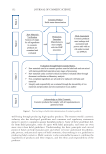
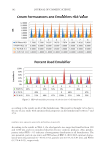
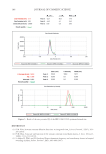
JOURNAL OF COSMETIC SCIENCE 176 aggregation formation generally decreasing. Using a measuring device, both size and zeta potential are measured and using the dynamic light scattering technique, the laser light from the edge of the sample cell is sampled. RHEOLOGY R heology i s one of the most important parameters in the formulation characterization stage. Rheological properties of cream formulation have signifi cant effects on physical stability and the sensation it creates during application by the consumer. Rheological properties of emulsion are defi ned by measuring their viscosity. Viscosity is briefl y the resistance of the emulsion to fl ow and is a key parameter to ensure stability and to achieve the desired fl ow. The viscosity of the emulsion varies in proportion to the viscosity of the outer phase. If the emulsion is non-Newtonian or viscoelastic, it changes relative to the viscosity of the outer phase and is evaluated momentarily with velocity. Lipophilic com- pounds with medium molecular weight, such as wax and long-chain fatty alcohols, affect the viscosity of the oil phase of the emulsion. Besides, thanks to extensive experiments, they help select a suitable viscosity enhancer, which also takes into account the cream spread and tactual feel. THE MoS Th e safety margin is one of the crucial factors in the toxicological evaluation of topical cosmetics and pharmaceutical products. The reason for this is to prevent undesired con- centrations from reaching the skin as a result of the absorption of substances in the for- mulation. Safety evaluation is remarkable in cases where skin structure and barrier properties, such as baby rash, are impaired. Therefore, the systemic exposure dose (SED) of each substance that makes up the BBC formulation should be evaluated. While calcu- lating the exposure dose to be considered, the absorption area, the degree of skin rash, and the frequency and duration of use of the formulation are important. If a compound has either high molecular weight and high hydrophilic or hydrophobic properties, it is thought to have low penetration into the skin (20,21). SC is an absorption preventive barrier for hydrophilic compounds and, when its integrity is broke down, there is an in- crease in absorption of hydrophilic compounds (22,23). EXPERIMENT AL MATERIAL V itamin E (Sigma Aldrich, Gillingham, Dorset, United Kingdom), Dehymuls PGPH (BASF, Ludwigshafen, Germany), beeswax (Kale Chemicals, Istanbul, Turkey), Article 83 V (Croda, East Yorkshire, United Kingdom), zinc oxide, paraffi n wax, magnesium sulfate, paraffi n oil, cetyl ester, sodium borate, Vaseline (Spermaceti), BHT (Doğa Pharmaceuticals, Istanbul, Turkey), D-panthenol (provitamin B5) (Parkoteks, Istanbul, Turkey), EDTA, glycerin, shea butter (Coral Chemistry, IL), calendula oil (New Directions, Fordingbridge,

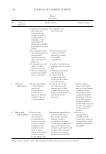
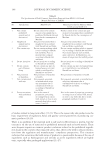
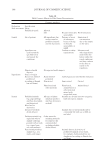
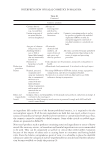
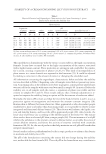
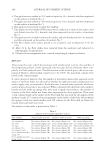
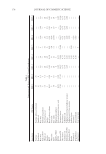
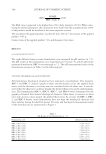
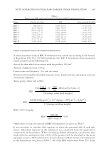
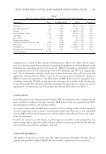
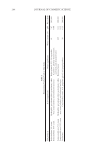
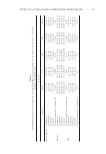
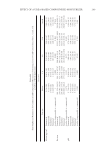
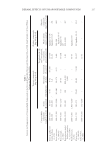
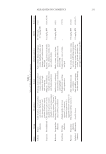
NEXT-GENERATION NATURAL BABY BARRIER CREAM FORMULATIONS 177 United Kingdom), and olive oil (Herbarium, Istanbul, Turkey) (all other solvents and the items were cosmetic or pharmaceutical purity). Zeta-Sizer (Malvern ZS-50, United Kingdom), homogenizer (Silverson, Chesham, United Kingdom), vortex (Heidolph, Schwabach, Germany), water bath (Bandelin, Berlin, Ger- many), weigh scale, incubator (Ohaus, Nänikon, Switzerland), microbiological HEPA fi lter cabinet (Metisafe, Ankara, Turkey), viscometer (Brookfi eld DV PRO II, London, United Kingdom), and pH meter (Heidolph) were used. METHOD Prep aration of cream formulation. The cream f ormulation is prepared by adding the water phase into the oil phase as w/o-type emulsion system. The substances that make up the oil phase (olive oil, lanolin, shea butter, beeswax, calendula oil, and emulsifi ers) are weighed from low to high in weight on an analytical balance and melted at 70°C until they are com- pletely liquefi ed. Similarly, w ater phase materials (magnesium sulfate, EDTA, glycerin, and water) are weighed and heated to 70°C, and after making sure that it mixes well, it is slowly poured over the oil phase and homogenized in a high-speed homogenizer for 30 min (around 2,000– 3,000 rpm). The mixture was cooled down to 40°C approximately half an hour later. Then, zinc oxide and vitamin E were added slowly on the emulsion and homogenized at 3,000 rpm for 30 min, and the process was completed. No antimicrobial protective agent was added (benzalkonium chloride, hydrogen peroxide, nitrofurazone, etc.) to the formulations to be suitable for the study. Also, essential oil and colorants were not added because of their un- wanted properties. Detailed formulation components and ratios are given in Table 1. CHARACTERIZATI ON OF CREAM FORMULATIONS Determination of pH values. The pH values of the formulation were measured with a pH meter, while the standard laboratory conditions were kept optimum each sample was repeated three times, and their average values were taken. Viscosity and rheological study. The rheologica l analysis was carried out using a device oper- ating on the principle of rotational viscometer. The torque from the device is applied to the spindle using a spring, and the deviation in the spring allows the viscosity of the liquid to be measured (between 0.05 and 1 rpm, 30–100 torque). Particle size and zeta potential (ζ) analysis. Particle/drople t sizes of the formulations were measured at room temperature (25 ± 2°C) at an angle of 173° using the zeta sizer instru- ment. During the same measurements, the zeta potentials (ζ) of the formulations were measured at 78.5 dielectric constant, with this device at 25 ± 2°C. Each sample was subjected to fi ve trials, and each trial was repeated fi ve times. HLB calculation. The H LB value is an i mportant factor for determining the amount of surfactant and cosurfactant required for a stable w/o-type emulsion. For this, Dehymuls PGPH HLB: 3.5 Lameform TGI HLB: 3.5 and cetyl ester wax HLB: 11.8 was used as a surfactant. First of all, the total RHLB (requiring HLB) value of the emulsion is calcu- lated by multiplying the HLB value of each component of the oil phase by the weight
Purchased for the exclusive use of nofirst nolast (unknown)
From: SCC Media Library & Resource Center (library.scconline.org)