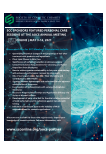
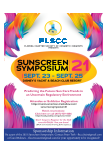
SUBMISSION DEADLINE : March 31st, 2021 Sponsorship Information Be a part of the 2021 Sunscreen Symposium. Contact Peter Toth - flsccchair@gmail.com or Carol Holmes – flscctreasurer@gmail.com for your opportunity to be recognized! Predicting the Future: Sun Care Trends in an Uncertain Regulatory Environment Attendee or Exhibitor Registration: https://events.american-tradeshow.com/ sunscreensymposium21 Hotels reservations: Click here or call (407) 939-4686 https://book.passkey.com/go/sunscreen21 Don’t forget to Register for the Golf event & GALA! See you there! (GALA event included in full reg, Golf is seperate.)

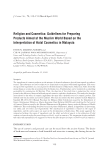
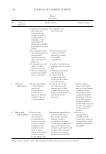
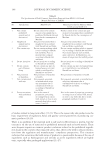
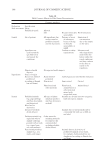
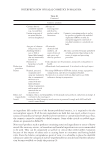
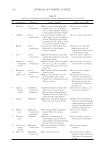
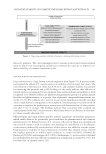
J. Cosmet. Sci., 72, 139–154 (March/April 2021) 139 Religion and Cosmetics: Guidelines for Preparing Products Aimed at the Muslim World Based on the Interpretation of Halal Cosmetics in Malaysia FATIN N. MAJDINA NORDIN and CHE W. JASIMAH WAN MOHAMED RADZI , Department of Science and Technology Studies, Faculty of Science and Programme of Applied Science and Islamic Studies, Academy of Islamic Studies, University of Malaya, Kuala Lumpur, Malaysia (F.N.M.N.) , Department of Science and Technology Studies, Faculty of Science, University of Malaya, Kuala Lumpur 50603, Malaysia (C.W.J.W.M.R.) Accepted for publication November 15, 2020. Synopsis The ingredients of cosmetic products are the mixture of chemical substances derived from natural or synthetic sources. The substances are used as either active (functional) or excipient (additional) ingredients. The source of origin of the ingredients is a critical point for the determination of halal status. Halal is an Arabic word that means things or actions that are permitted by the Islamic law. A halal product can be interpreted as something permissible for consumption by Muslims. Thus, the objective of this study was to understand the critical points for the differences between halal and general cosmetics, and their classifi cations. This study also identifi es issues related to the safety of cosmetic ingredients that may affect the halal status of a cosmetic product. The method used was document and content analyses. The main documents that were analyzed include Malaysian Standard MS 2634:2019, Manual Procedure for Malaysia Halal Certifi cation issued by the Department of Islamic Development Malaysia or Jabatan Kemajuan Islam Malaysia (JAKIM), and Guidelines for the Control of Cosmetic Products issued by the National Pharmaceutical Regulatory Agency under the Ministry of Health of Malaysia. This study fi nding describes four critical points of differences, namely, (i) ingredient, (ii) processing, (iii) safety, and (iv) ethics and responsibility. The classifi cation of ingredients is based on the origin of ingredients, and the safety aspect can assist in the determination of halal status. This study suggested the integration between the origin of ingredients, and the safety and ethical aspects in the evaluation of halal cosmetic to better describe the practical aspect of halal–tayyib in cosmetics. The integration of safety and halal, and ethics and responsibility are suggested to better describe the practical aspect of halal–tayyib in cosmetics. INTRODUCTION The use of cosmetic and personal care can be traced from the ancient history. The desire of both men and women to look beautiful and attractive is among the driving factors for Address all correspondence to Fatin N. Majdina Nordin at fatinmajdina@um.edu.my and Che W. Jasimah Wan Mohamed Radzi at jasimah@um.edu.my.
Purchased for the exclusive use of nofirst nolast (unknown)
From: SCC Media Library & Resource Center (library.scconline.org)