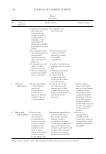
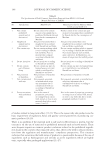
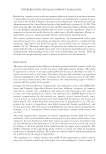
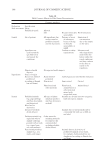
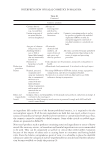
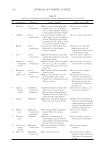
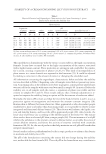
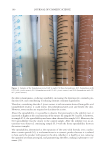
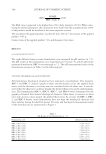
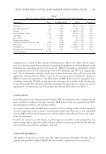
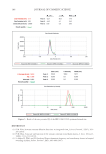
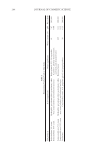
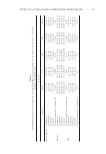
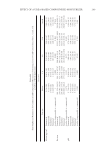
JOURNAL OF COSMETIC SCIENCE 210 No adverse reactions were rep orted or observed in any of the treatment groups. In both cohorts, participants’ satisfaction with treatment was higher for the commercial products (3.85 ± 0.80 vs. 3.66 ± 0.91), and this difference was statistically signifi cant (p = 0.042). However, the price of commercial products was slightly higher (Table I). DISCUSSION This was a pilot study t o investiga te the effect of a urea-based compounded moisturizer on barrier function, compared with similar commercial product. The results showed that both moisturizers had appropriate and comparable effects on skin barrier function. How- ever, commercial products led to better improvement in TEWL and skin hydration 4 h after single application. In both groups, compounded and co mmercial products were water-in-oil emulsions (appropriate pharmaceutical formulation for xerosis) and contained urea and hydro- philic petrolatum as the main active ingredients. Urea is a natural endogenous hume ctant which replaces water in low humidity conditions and maintains a fl uidic SC (11,12). Topical formulations with urea concentrations of 5–10%, previously, showed to improve hydration and water retention. In addition, urea can increase the amount of free water in conditions of high humidity (13). In concordance with our fi ndings, improvement in skin hydration using topical urea has been reported within the fi rst hour of application, reaching to the maximum level of 4–6 h following one dose application (14,15). In addition to moisturizing prope rties, 10% urea has recently been shown to improve skin barrier function in healthy volunteers associated with the elevated expression of genes involved in SC homeostasis, including the Filaggrin gene-encoding fi laggrin protein (16). Concentrations less than 10% have been also shown to strengthen the skin barrier in a series of other studies (17). Hydrophilic petrolatum is compose d of cetyl stearyl alcohol, white Vaseline, and wool wax alcohols (18). High molecular weight hydrocarbons, lanolin alcohols, and acids form an inert layer on the skin, leading to a reduction in TEWL. Thus, occlusion is the most predictable mechanism by which water loss is reduced from the skin. The results of the current study confi rmed the Nasrollahi et al. (19) report, where treatment with a commercial urea 5% hydrophilic petrolatum product resulted in a signifi cant improvement in SC hydration and TEWL in patients with atopic dermatitis. Despite similar main ingredients, there were some differences in the composition of excipients of two creams, which can be the reason for the slight variation of their effects on skin barrier function. Commercial formulation contained phenoxyethanol, which is a permeation enhancer and promotes permeation of active ingredients by enhancing diffu- sion or solubility to pass through the SC (20). Usually, this preservative is not used in pharmacies for compounding preparations. In fact, at pharmacies, most compounding products are prepared as preservative free for short time usage. Polyacrylamide C13–14 isoparaffi n Laureth-7 is another excipient used in test commercial products, which is a rheology modifi er, stabilizer, thickener, and emulsifi er. It could form a polymerized adhesive fi lm on the skin surface which is responsible for the occlusive effect and helps reduce the TEWL (as shown in the current study). A report by Couteau

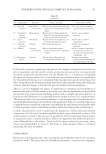
EFFECT OF A UREA-BASED COMPOUNDED MOISTURIZER 211 et al. (21) also confi rmed our results, where 5% urea-based formulation containing poly- acrylamine C13–14 isoparaffi n showed better moisturizing effect than formulation with- out this excipient. Lower water content of compounded formulation could be another factor which may affect the moisturizing effect of the product. Kim et al. (22) reported better moistening effect after the application of vehicles containing higher water contents. In the indus- trial scale, it is preferred to increase the water content of semisolids as an available and inexpensive ingredient to manage their operating margin. Hence, polyacrylamide C13–14 isoparaffi n Laureth-7 was used to stabilize the fi nished product and prevent any phase separation due to high content of water. At pharmacies, more hydrophilic petrolatum and minimum water are used to inhibit any instability. Dissimilar homogeneity of formula tions is another variation factor. Incorporation of in- gredients in the compounded product is manual, which may cause uneven spread of in- gredients in preparation, leading to insuffi cient occlusion and increasing the TEWL. In addition, the manufacturing company and pharmacist may provide their ingredients from different sources with dissimilar quality, which may interfere with their therapeutic effects. Four hours after single applicati on of moisturizers (where participants were not allowed to wash the treated area), the levels of skin surface lipids were relatively higher in the application site of compounded products. This increase was signifi cant in the group using 10% urea cream. It displays that commercial products are less greasy and leave little residue on skin after 4 h. Less oily formulas probably cause superior spreadability and cosmetic acceptability (6), as the present study approved. Another noteworthy point is the increased skin pH after the 1-week application of both products. It is probably due to high pH of formulations (Table I) because of alkaloid characteristics of urea, affecting skin barrier during repeated applications. The elevated pH in skin decreases lipid processing in SC, disturbs organization of the lipid bilayers, and increases serine protease activity. The mentioned process affects barrier homeostasis and SC cohesion negatively, and consequently aggravates xerosis condition (23–25). The formulations differed in pH. A potential reason is that the source of ingredients such as urea and hydrophilic petrolatum could be different in these two types of prod- ucts. Second, in commercial products, there are benzoic acid esters which reduce the pH of formulation, but this ingredient was not added in compounded products because the pharmacist at pharmacy usually does not add preservative to compounded prod- ucts. However, Danby et al. (26) reported the same effect of two emollient with pH 4.92 and 7.34 on skin pH because the pH-buffering capacity of skin has been reported to be good. We describe a methodological approach to compare compounded and commercial moisturizers. Two commonly prescribed formulations containing similar vehicle and active ingredients were used. To decrease the effect of by-products, a simple formula- tion with limited moisturizing agent and few excipients were selected. The other limitation is the small number of participants and short term of follow-up, despite the fact that the fi ndings were signifi cant. The framework of this study could be ap- plied for comparing more complicated formulations in larger sample sizes to provide better understanding.
Purchased for the exclusive use of nofirst nolast (unknown)
From: SCC Media Library & Resource Center (library.scconline.org)