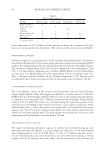
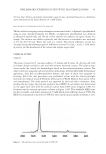
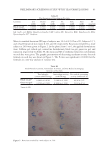
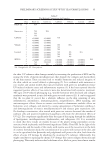
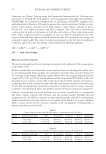
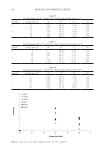
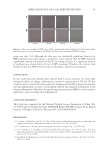
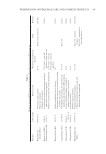
65 PRELIMINARY SCREENING STUDY WITH TEA FORMULATIONS the skin. UV enhances skin damage mainly by increasing the production of ROS and by raising the levels of matrix metalloproteases that degrade the collagen and elastin fibers of the skin matrix. These reactions lead to wrinkle formation and reduced integrity of the skin, which are overall defined as photoaging (5). It is confirmed with numerous in vitro studies and animal models that topical treatment with green tea polyphenols reduce UV-induced oxidative stress and inflammatory response (5). It has been reported that the suggested positive effects of tea extracts were also determined with systemic treatment. The signs of UV-induced photoaging (e.g., wrinkle formation were decreased and collagen synthesis) were promoted in mice fed with green tea seed extracts (21). It can be suggested that the tea plant (C sinensis) has a wholistic influence on the skin consisting of anti- inflammatory, antioxidative, immunoregulatory, antiproliferative, DNA repairing, and anticancerogenic effects. Green tea extract was found to demonstrate anabolic effects on hyaluronic acid, collagen, and elastin by causing upregulation of hyaluronan synthase-2, and downregulations of matrix metalloproteinase-9 and elastase gene expressions (20). On histologic examination, skin treated with green tea extracts decreased the number of sunburn cells and protected epidermal Langerhans cells from the detrimental effects of UV (22). Tea components significantly delay the signs of skin aging through the inhibition of lipoxygenase, metalloproteinase, hyaluronidase, and collagenase (23). It is reasonable to claim that these results are mainly because of the plant’s strong antioxidant activity associated with its phenolic and flavonoid ingredients (Tables II and III). In the light of the literature data and the results of this study, with routine use of the tea extracts in the form of cosmetic formulations daily, the concentration of tea actives will increase in the skin, and it can be speculated that flavonoids and polyphenols will protect the skin, both from the effects of acute UV damage by absorbing the incoming UV radiation. Additionally, this might contribute to repairing the chronic UV damage that causes collagen destruction and photoaging. This study indicates that both forms of tea, black or green, have almost similar Table V The Multiple Comparisons for Formulas Day Black tea Green tea Caffeine Vehicle Control SPF 50 Black tea 1 2 3 NA Green tea 1 2 3 NS NS NS NA Caffeine 1 2 3 0.0001 0.0001 0.0001 0.0001 0.0001 0.0001 NA Vehicle 1 2 3 0.0001 0.0001 0.0001 0.0001 0.0001 0.0001 NS NS NS NA Control 1 2 3 0.0001 0.0001 0.0001 0.0001 0.0001 0.0001 NS NS NS NS NS NS NA SPF 50 1 2 3 =0.0083 NS NS =0.0114 =0.0332 NS 0.0001 0.0001 0.0001 0.0001 0.0001 0.0001 0.0001 0.0001 0.0001 NA NA: Nonapplicable NS: Nonsignificant.

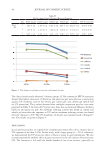
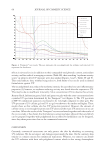
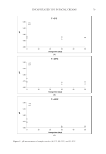
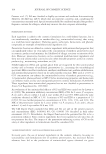
66 JOURNAL OF COSMETIC SCIENCE effects in vitro and in vivo. In addition to their comparable total phenolic content, antioxidant activity, and free radical scavenging activities (Table III), their resulting “erythema severity scores” in subjects after UV exposure were also similar (Figures 2 and 3, Tables IV and V). This could indicate that, without being selective, both forms of tea can be used in dermal formulations against UV. The tea polyphenols may reduce the erythema intensity because they have anti-inflammatory properties (5) however, no erythema reducing activity was found after the exposure to UV. This may be due to insufficient time (only 2 d) or concentration (3%) to observe this activity. Kenyan black, Indonesian green, black and green tea gels with the same concentration have a similar UV spectrum determined by the Transpore® test (Figure 4). The UV spectrum of SPF 50 commercial sunscreen was found to be very high compared to other gels. The UV spectrum of 2% caffeine gel and 5% tea gel was shown to be similar and higher. These results show us that caffeine also has UV protection potential. However, the amount of caffeine in tea is not enough for protection UV alone and the main UV protectors in tea are catechins. When the results of the Transpore® test are evaluated together with the results of the in vivo study, it has shown that formulations containing fewer physical filters and which can be prepared together with polyphenols for an effective formulation can be designed, since they show protection close to the commercial sunscreen. CONCLUSION Currently, commercial sunscreens can only protect the skin by absorbing or scattering UV radiation. We do not expect any damage repair inside the skin. On the contrary, skin toxicity is a major concern for commercial sunscreens. Whereas, tea extracts can absorb the UV radiation with their rich polyphenol content which is also strong chromophore ____Black Tea Gel (3%) _____Kenyan Black Tea Gel (3%) _____Green Tea Gel (3%) _____Black Tea Gel (5%) _____Green Tea Gel (5%) _____Indonesian Green Tea Gel (3%) _____Caffeine Gel (0.3%) _____Caffeine Gel (2%) _____Gel-Base _____SPF 50 Commercial Sunscreen Figure 4. Transpore® test results. The axis represents the wavelength and the ordinate (each interval 0.2) represents the absorbance.
Purchased for the exclusive use of nofirst nolast (unknown)
From: SCC Media Library & Resource Center (library.scconline.org)