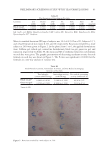
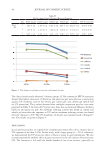
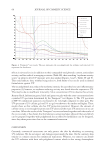
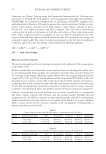
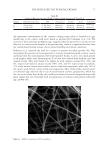
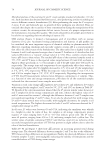
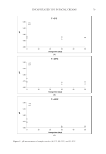
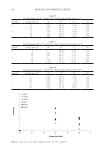
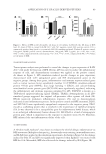
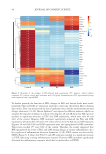
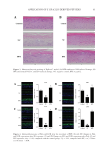
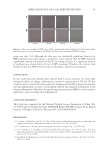
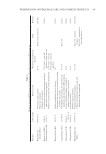
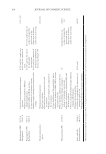
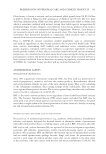
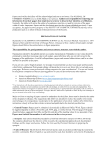
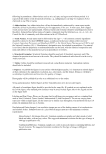
63 PRELIMINARY SCREENING STUDY WITH TEA FORMULATIONS Mean ± standard deviation (SD) age of subjects was 34.4 ± (8.1). Out of 21, Subjects 12, 5, and 4 had Fitzpatrick skin types II, III, and IV, respectively. Reactions revealed by a male subject at 24 h were given in Figure 2. In the photo, from 1 to 6, the applied formulations were: Caffeine gel, vehicle gel, control (no formulation), black tea gel, green tea gel, and sunscreen respectively. In Table IV, the mean and SD of erythema values for each formula on each day were given. The graphic presentation of decreasing erythema severity for each formula on each day was shown in Figure 3. The F ratio was significant (0.0001) for the formulas in a one-way analysis of variance test. Figure 2. Reactions revealed by a male subject at 24 h. Table II The Quantities of Catechins in Tea Gels Catechins GA (mM) EGCG (mM) CAF (mM) EC (mM) EGC (mM) ECG (mM) TF (mg/mL) Black tea gel 0.0060 0.8900 0.0005 0.1900 0.3000 0.0600 0.1500 Green tea gel 0.0020 0.8700 0.0005 0.1700 0.3000 0.0500 0.0000 GA: Gallic acid, EGCG: Epigallocatechingallat, CAF: Caffeine, EC: Epicatechin, EGC: Epigallocatechin, ECG: Epicatechingallat, TF: Theaflavin. Table III Total Phenolic Contents, Antioxidant Activities, and Free Radical Scavenging Activities of Tea Gels Total phenolic content (mM TR/mg) Antioxidant activity (mM TR/mg) Free radical scavenging activity (inhibition %)Black tea gel* 4.9800 ± 0.8760 5.0480 ± 0.5450 49.96 ± 3.87 Green tea gel* 4.2700 ± 0.7650 8.5680 ± 1.7650 51.02 ± 0.54 *mean ± SD.

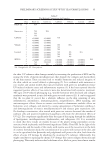
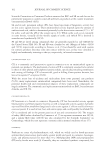
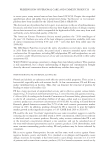
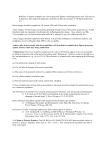
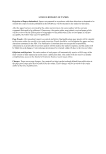
64 JOURNAL OF COSMETIC SCIENCE The clinical study results observed 3 distinct groups: (1) The commercial SPF 50 sunscreen showed the highest protection (2) black tea and green tea gels were effective in protecting against UV erythema and (3) the vehicle gel, control gel, and caffeine gel (which had no UV protection). The p values obtained after multiple comparison post hoc tests were presented in Table V. In terms of UV protection, there was no statistical difference between black tea and green tea gels. No erythema reducing activity was found in control and vehicle gel areas after the exposure to UV and no erythema reducing activity was found after the exposure to UV. The UV absorbance of all gels was examined with a Transpore® test. The results are given in Figure 4. DISCUSSION In our previous studies, we reported the erythema prevention effect of tea extracts due to UV exposure of the skin (13,14). In this study, with a larger group (n =21) of volunteers, we demonstrated the UV protective effect of black or green tea gel formulations. We also recently reported the anabolic effect of green tea extract in the cell cultures of keratinocytes (20). The literature is rich with the health benefits of tea or tea extracts, especially on Table IV The Erythema Grades Obtained Based on Formulas Day Black tea gel Green tea gel Caffeine gel Vehicle gel Control SPF 50 sunscreen Mean ± SD 1 1.81 ± 1.5 1.76 ± 1.6 5.62 ± 2.0 6.57 ± 1.6 6.62 ± 1.8 0.10 ± 0.30 2 1.29 ± 1.3 1.43 ± 1.6 5.48 ± 2.0 6.48 ± 1.7 6.52 ± 1.6 0.00 ± 0.00 3 0.67 ± 1.1 1.05 ± 1.6 4.10 ± 2.5 4.86 ± 2.3 5.05 ± 2.0 0.00 ± 0.00 Figure 3. The change in erythema severity for each formula by time.
Purchased for the exclusive use of nofirst nolast (unknown)
From: SCC Media Library & Resource Center (library.scconline.org)