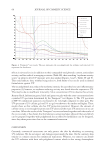
81 ENCAPSULATED TTO IN FACIAL CREAMS CONCLUSION This study has raised awareness of important aspects of the incorporation of encapsulated TTO in facial cosmetic creams. The selected conditions of encapsulation through the electrohydrodynamic process produce homogeneous fibers. Since no microbial growth occurred, all the formulated creams analyzed were microbiologically stable and free of both spoilage and pathogenic bacteria, were recorded. In addition, color and pH measurements indicated that the formulations present similar quality characteristics that are not affected by time storage. Within the limits of this study, it can be concluded that incorporation of TTO in facial cosmetic creams leads to safe products in terms of microbial growth and acceptable characteristics because the measured properties remained stable. These conclusions are primarily attributed to the suitable encapsulation technique followed to properly produce TTO structures. In fact, the final cream formulations with encapsulated TTO do not present undesirable changes in color, odor, or emulsion stability they are microbiologically stable and present similar properties with the creams without TTO during storage. In terms of their microbiological aspects and quality characteristics, the suggested formulations are suitable for use as cosmetic products. The encapsulation method used in this study, the electrohydrodynamic process, could be applied to encapsulate several plant extracts to overcome the numerous difficulties presented during their incorporation in cosmetic products. Usually, these problems refer to either undesirable color or odor of the plant extracts or in formulation issues due to their unwanted lipophilic or lyophobic character. The electrohydrodynamic process could be the key for encapsulated formulations with desired structure and properties without damaging the valuable thermosensitive compounds usually selected as additives in cosmetic products. REFERENCES (1) W. A. Żukiewicz-Sobczak, P. Adamczuk, P. Wróblewska, J. Zwoliński, J. Chmielewska-Badora, E. Krasowska, E. M. Galińska, G. Cholewa, J. Piątek, and J. Koźlik, Allergy to selected cosmetic ingredients, Postepy Dermatologii i Alergologii. 30(5), 307–310 (2013). (2) E. M. Warshaw, H. J. Buchholz, D. V. Belsito, H. I. Maibach, J. F. Fowler, R. L. Rietschel, K. A. Zug, C. G. Mathias, M. D. Pratt, D. Sasseville, F. J. Storrs, J. S. Taylor, V. A. Deleo, and J. G. Marks, Allergic patch test reactions associated with cosmetics: retrospective analysis of cross-sectional data from the North American Contact Dermatitis Group, 2001–2004, J. Am. Academy of Dermatol., 60(1), 23–38 (2009). (3) R. Wolf, D. Wolf, B. Tüzün, and Y. Tüzün, Contact dermatitis to cosmetics, Clinics in Dermatol., 19(4), 502–515 (2001). (4) L. Leistner, Basic aspects of food preservation by hurdle technology, Int. J.Food Microbiol., 55(1–3), 181– 186 (2000). (5) S. Papageorgiou, A. Varvaresou, E. Tsirivas, and C. Demetzos, New alternatives to cosmetics preservation, J. Cosmet. Sci., 61(2), 107–123 (2010). (6) A. Varvaresou, S. Papageorgiou, E. Tsirivas, E. Protopapa, H. Kintziou, V. Kefala, and C. Demetzos, Self-preserving cosmetics, Int. J. Cosmet. Sci., 31(3), 163–175 (2009). (7) S. Chouhan, K. Sharma, and S. Guleria, Antimicrobial activity of some essential oils-present status and future perspectives, Medicines. 4(3), 58 (2017). (8) P. S. X. Yap, B. C. Yiap, H. C. Ping, and S. H. E. Lim, Essential oils, a new horizon in combating bacterial antibiotic resistance, Open Microbiol. J., 8, 6–14 (2014).

82 JOURNAL OF COSMETIC SCIENCE (9) S. Burt, Essential oils: their antibacterial properties and potential applications in foods—a review. Int. J. of Food Microbiol., 94(3), 223–253 (2004). (10) N. Pazyar, R. Yaghoobi, N. Bagherani, and A. Kazerouni, A review of applications of tea tree oil in dermatology, Int. J. Dermatol., 52(7), 784–790 (2013). (11) C. F. Carson, K. A. Hammer, and T. V. Riley, Melaleuca alternifolia (T. Tree) oil: a review of antimicrobial and other medicinal properties, Clin. Microbiol. Rev., 19(1), 50–62 (2006). (12) M. Michalak, Plant-Derived Antioxidants: Significance in Skin Health and the Ageing Process, Int J Mol Sci., 23(2):585, 1–24 (2022). (13) J. Reichling, J. Fitzi, K. Hellmann, T. Wegener, S. Bucher, and R. Saller, Topical tea tree oil effective in canine localised pruritic dermatitis--a multi-centre randomised double-blind controlled clinical trial in the veterinary practice, DTW. Deutsche tierärztliche Wochenschrift. 111(10), 408–414 (2004). (14) R. P. Vieira, A. R. Fernandes, T. M. Kaneko, V. O. Consiglieri, C. A. SdO. Pinto, C. S. C. Pereira, A. R. Baby, and M. V. R. Velasco, Physical and physicochemical stability evaluation of cosmetic formulations containing soybean extract fermented by Bifidobacterium animalis, Braz. J. Pharm. Sci., 45(3), 515–525 (2009). (15) C. F. Carson, K. A. Hammer, and T. V. Riley, Melaleuca alternifolia (T. Tree) oil: a review of antimicrobial and other medicinal properties, Clin. Microbiol. Rev., 19(1), 50–62 (2006). (16) T. Muta, A. Parikh, K. Kathawala, H. Haidari, Y. Song, J. Thomas, and S. Garg, Quality-by-design approach for the development of nano-sized tea tree oil formulation-impregnated biocompatible gel with antimicrobial properties, Pharm., 12(11), 1091 (2020). (17) L. Banes-Marshall, P. Cawley, and C. A. Phillips, In vitro activity of Melaleuca alternifolia (tea tree) oil against bacterial and Candida spp. isolates from clinical specimens, Br. J. of Biomed. Sci., 58(3), 139–145 (2001). (18) J. May, C. H. Chan, A. King, L. Williams, and G. L. French, Time–kill studies of tea tree oils on clinical isolates, J. Antimicrob. Chemother., 45(5), 639–643 (2000). (19) L. Halcón and K. Milkus, Staphylococcus aureus and wounds: a review of tea tree oil as a promising antimicrobial, Am. J. Infect. Control, 32(7), 402–408 (2004). (20) D. Larson and S. E. Jacob, Tea tree oil. Dermatitis: Contact, Atopic, Occupational, Drug, 23(1), 48–49 (2012). (21) Z. Khalil, A. L. Pearce, N. Satkunanathan, E. Storer, J. J. Finlay-Jones, and P. H. Hart, Regulation of wheal and flare by tea tree oil: complementary human and rodent studies, J. Invest. Dermatol., 123(4), 683–690 (2004). (22) C. Brand, S. L. Townley, J. J. Finlay-Jones, and P. H. Hart, Tea tree oil reduces histamine-induced oedema in murine ears, Inflammation Res., 51(6), 283–289 (2002). (23) A. Herman, A. P. Herman, B. W. Domagalska, and A. Młynarczyk, Essential oils and herbal extracts as antimicrobial agents in cosmetic emulsion, Indian J. Microbiol., 53(2), 232–237 (2013). (24) A. Lohani, A. Verma, H. Joshi, N. Yadav, and N. Karki, Nanotechnology-based cosmeceuticals, ISRN Dermatol., 843687 (2014). (25) I. T. Carvalho, B. N. Estevinho, and L. Santos, Application of microencapsulated essential oils in cosmetic and personal healthcare products – a review, Int. J. Cosmet. Sci., 38(2), 109–119 (2016). (26) C. Maes, S. Bouquillon, and M. L. Fauconnier, Encapsulation of essential oils for the development of biosourced pesticides with controlled release: a review, Molecules. 24(14), 2539 (2019). (27) N. Bhardwaj and S. C. Kundu, Electrospinning: A fascinating fiber fabrication technique, Biotechnol. Adv., 28(3), 325–347 (2010). (28) Y. Ge, J. Tang, H. Fu, Y. Fu, and Y. Wu, Characteristics, controlled-release and antimicrobial properties of tea tree oil liposomes-incorporated chitosan-based electrospun nanofiber mats, Fibers and Polymers. 20(4), 698–708 (2019). (29) T. T. T. Nguyen, C. Ghosh, S. G. Hwang, N. Chanunpanich, and J. S. Park, Porous core/sheath composite nanofibers fabricated by coaxial electrospinning as a potential mat for drug release system, Int. J. Pharm., 439(1–2), 296–306 (2012).
Purchased for the exclusive use of nofirst nolast (unknown)
From: SCC Media Library & Resource Center (library.scconline.org)