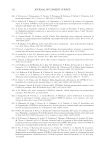
109 PRESERVATION OF PERSONAL CARE AND COSMETIC PRODUCTS (10) S. Nassau and L. Fonacier, Allergic contact dermatitis. Med. Clin. North Am., 104(1), 61–76 (2020). (11) M. A. Pastor-Nieto, F. Alcántara-Nicolás, V. Melgar-Molero, R. Pérez-Mesonero, A. Vergara-Sánchez, A. Martín-Fuentes, P. González-Muñoz, and E. de Eusebio-Murillo, Conservantes en productos de higiene y cosméticos, medicamentos tópicos y productos de limpieza doméstica en España. Actas Dermosifiliogr. 108(8), 758–770 (2017). (12) N. Halla, I. P. Fernandes, S. A. Heleno, P. Costa, Z. Boucherit-Otmani, K. Boucherit, A. E. Rodrigues, I. C. F. R. Ferreira, and M. F. Barreiro, Cosmetics preservation: A review on present strategies. Molecules, 23(7), 1–41, (2018). (13) L. Lu, Establishing authority in the clean beauty industry [Internet]. Glossy. 2021 [cited 2021 Dec 7]. Available from: https://www.glossy.co/beauty/case-study-establishing-authority-in-the-clean-beauty-industry/. (14) C. B. Rubin and B. Brod, Natural does not mean safe—The dirt on clean beauty products. JAMA Dermatol., 155(12), 1344–1345 (2019). (15) C. Hennigan, COVID-19 increases demand for safe BPC products [Internet]. Mintel. 2020 [cited 2020 Jul 8]. Available from: https://www.mintel.com/blog/beauty-market-news/covid-19-increases-demand-for- safe-and-reliable-bpc-products (16) S. M. Choi, T. H. Roh, D. S. Lim, S. Kacew, H. S. Kim, and B. M. Lee, Risk assessment of benzalkonium chloride in cosmetic products. J. Toxicol. Environ. Health B Crit. Rev., 21(1), 8–23 (2018). (17) European Union, Regulation (EC) No 1223/2009 of the European Parliament and of the Council of 30 November 2009 on cosmetic products [Internet]. Nov 30, 2009. Available from: https://eur-lex.europa. eu/legal-content/EN/TXT/PDF/?uri=CELEX:32009R1223&from=EN (18) J. L. J. Jing, T. Pei Yi, R. J. C. Bose, J. R. McCarthy, N. Tharmalingam, and T. Madheswaran, Hand sanitizers: A review on formulation aspects, adverse effects, and regulations. Int. J. Environ. Res. Public Health, 17(9), 3326 (2020). (19) E. Ortega Morente, M. A. Fernández-Fuentes, M. J. Grande Burgos, H. Abriouel, R. Pérez Pulido, and A. Gálvez, Biocide tolerance in bacteria. Int. J. Food Microbiol., 162(1), 13–25 (2013). (20) M. Stratford and T. Eklund, Organic acids and esters. In: Food Preservatives [Internet]. Russell NJ, Gould GW, editors. 2003 [cited 2021 Mar 24]. Berlin: Springer US. p. 48–84. (21) J. J. Lucchini, J. Corre, and A. Cremieux, Antibacterial activity of phenolic compounds and aromatic alcohols. Res. Microbiol., 141(4), 499–510 (1990). (22) B. Fang, M. Yu, W. Zhang, and F. Wang, A new alternative to cosmetics preservation and the effect of the particle size of the emulsion droplets on preservation efficacy. Int. J. Cosmet. Sci., 38(5), 496–503 (2016). (23) W. Johnson, W. F. Bergfeld, D. V. Belsito, R. A. Hill, C. D. Klaassen, D. Liebler, J. G. Marks, Jr., R. C. Shank, T. J. Slaga, P. W. Snyder, and F. A. Andersen, Safety assessment of 1,2-glycols as used in cosmetics. Int. J. Toxicol., 31(5), suppl, 147S–168S (2012). (24) D. Poger and A. E. Mark, Effect of triclosan and chloroxylenol on bacterial membranes. J. Phys. Chem. B, 123(25), 5291–5301 (2019). (25) D. P. Stites, G. Brecher, L. Schmidt, and F. M. Berger, Suppressive effects of chlorphenesin on lymphocyte function in mice and humans. Immunopharmacology, 2(1), 39–49 (1979). (26) CIR, Final safety assessment on the safety assessment of alkyl glyceryl ethers as used in cosmetics [Internet]. 2011 [cited 2021 Mar 24]. Available from: https://www.cir-safety.org/sites/default/files/ ethylh122011finalx.pdf (27) W. Johnson, W. F. Bergfeld, D. V. Belsito, R. A. Hill, C. D. Klaassen, D. Liebler, J. G. Marks, Jr., R. C. Shank, T. J. Slaga, P. W. Snyder, and F. A. Andersen, Safety assessment of alkyl glyceryl ethers as used in cosmetics. Int. J. Toxicol., 32(5_suppl), 5S–21S (2013). (28) S. Langsrud, K. Steinhauer, S. Lüthje, K. Weber, P. Goroncy-Bermes, and A. L. Holck, Ethylhexylglycerin impairs membrane integrity and enhances the lethal effect of phenoxyethanol. PLOS ONE, 11(10), e0165228 (2016). (29) D. Nemes, R. Kovács, F. Nagy, M. Mező, N. Poczok, Z. Ujhelyi, Á. Pető, Feher, F. Fehér, J. Váradi, M. Vecsernyés, and I. Bácskay, Interaction between different pharmaceutical excipients in liquid dosage forms—Assessment of cytotoxicity and antimicrobial activity. Molecules, 23(7), 1827 (2018).

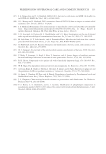
110 JOURNAL OF COSMETIC SCIENCE (30) J. Bernatoniene, R. Masteikova, J. Davalgiene, R. Peciura, R. Gauryliene, R. Bernatoniene, D. Majiene, R. Lazauskas, G. Civinskiene, S. Velziene, J. Muselik, and Z. Chalupova. Topical application of Calendula officinalis (L.): Formulation and evaluation of hydrophilic cream with antioxidant activity. J. Med. Plant Res., 5(6), 868–877 (2011). (31) R. Gaffar, N. Sazali, and F. Majidi, Colour reduction and anti-microbial evaluation of pre-treated cashew leaves extract. J. Chem. Nat. Resour. Eng., 2, 1–9 (2008). (32) A. Herman, A. P. Herman, B. W. Domagalska, and A. Młynarczyk, Essential oils and herbal extracts as antimicrobial agents in cosmetic emulsion. Indian J. Microbiol., 53(2), 232–237 (2013). (33) D. A. Kiken and D. E. Cohen, Contact dermatitis to botanical extracts. Am. J. Contact Dermatitis, 13(3), 148–152 (2002). (34) I. Manou, L. Bouillard, M. J. Devleeschouwer, and A. O. Barel, Evaluation of the preservative properties of thymus vulgaris essential oil in topically applied formulations under a challenge test. J. Appl Microbiol., 84(3), 368–376 (1998). (35) N. Y. O. Muyima, G. Zulu, T. Bhengu, and D. Popplewell, The potential application of some novel essential oils as natural cosmetic preservatives in an aqueous cream formulation. Flavour Fragr. J., 17(4), 258–266 (2002). (36) C. M. Schempp, E. Schöpf, and J. C. Simon. [Plant-induced toxic and allergic dermatitis (phytodermatitis)]. Hautarzt., 53(2), 93–97 (2002). (37) E. L. Simpson, S. V. Law, and F. J. Storrs, Prevalence of botanical extract allergy in patients with contact dermatitis. Dermatitis, 15(2), 67–72 (2004). (38) K. F. Thomson and S. M. Wilkinson, Allergic contact dermatitis to plant extracts in patients with cosmetic dermatitis. Br. J. Dermatol. 142(1), 84–88 (2000). (39) ANSM, Les produits cosmétiques non rincés contenant du phénoxyéthanol ne doivent pas être utilisés sur les fesses des enfants de 3 ans ou moins [Internet]. 2019 [cited 2020 Mar 12]. Available from: https:// ansm.sante.fr/S-informer/Points-d-information-Points-d-information/Les-produits-cosmetiques-non- rinces-contenant-du-phenoxyethanol-ne-doivent-pas-etre-utilises-sur-les-fesses-des-enfants-de-3-ans- ou-moins-Point-d-Information (40) ANSM, Evaluation du risque lié à l’utilisation du phénoxyéthanol dans les produits cosmétiques [Internet]. 2012 [cited 2020 Mar 12]. Available from: https://ansm.sante.fr/S-informer/Points-d- information-Points-d-information/Concentration-de-phenoxyethanol-dans-les-produits-cosmetiques- Point-d-information (41) P. Gilbert, E. G. Beveridge, and P. B. Crone, Effect of 2-phenoxyethanol upon RNA, DNA and protein biosynthesis in Escherichia coli NCTC 5933. Microbios., 28(111), 7–17 (1980). (42) P. Gilbert, E. G. Beveridge, and P. B. Crone, Effect of phenoxyethanol on the permeability of Escherichia coli NCTC 5933 to inorganic ions. Microbios.,19(75), 17–26 (1977). (43) P. Gilbert, E. G. Beveridge, and P. B. Crone, Inhibition of some respiration and dehydrogenase enzyme systems in Escherichia coli NCTC 5933 by phenoxyethanol. Microbios., 20(79), 29–37 (1977). (44) H. Alexandre, B. Mathieu, and C. Charpentier, Alteration in membrane fluidity and lipid composition, and modulation of H(+)-ATPase activity in Saccharomyces cerevisiae caused by decanoic acid. Microbiology (Reading), 142(3), 469–475 (1996). (45) S. C. Ricke, Perspectives on the use of organic acids and short chain fatty acids as antimicrobials. Poult. Sci., 82(4), 632–639 (2003). (46) A. P. Golin, D. Choi, and A. Ghahary, Hand sanitizers: A review of ingredients, mechanisms of action, modes of delivery, and efficacy against coronaviruses. Am. J. Infect. Control,48(9), 1062–1067 (2020). (47) CIR. Annual Review of Cosmetic Ingredient Safety Assessments: 2005/2006. Int. J. Toxicol., 27(1), 77– 142 (2008). (48) Ziosi P, Manfredini S, Vandini A, Vertuani S. Caprylyl Glycol/Phenethyl Alcohol Blend for Alternative Preservation of Cosmetics. Cosmet. Toiletries, 128(8), 538–549 (2013). (49) W. Johnson, W. F. Bergfeld, D. V. Belsito, R. A. Hill, C. D. Klaassen, D. C. Liebler, J. G. Marks, Jr., R. C. Shank, T. J. Slaga, P. W. Snyder, and F. A. Andersen, Safety assessment of benzyl alcohol, benzoic acid and its salts, and benzyl benzoate. Int. J. Toxicol., 36(3), suppl, 5S–30S (2017).
Purchased for the exclusive use of nofirst nolast (unknown)
From: SCC Media Library & Resource Center (library.scconline.org)