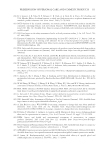
111 PRESERVATION OF PERSONAL CARE AND COSMETIC PRODUCTS (50) B. S. Lennerz, S. B. Vafai, N. F. Delaney, C. B. Clish, A. A. Deik, K. A. Pierce, D. S. Ludwig, and V. K. Mootha, Effects of sodium benzoate, a widely used food preservative, on glucose homeostasis and metabolic profiles in humans. Mol. Genet. Metab., 114(1), 73–79 (2015). (51) SCCP, Opinion of the scientific committee on cosmetic products and non-food products intended for consumers concerning benzoic acid and sodium benzoate. SCCNFP/0532/01, final [Internet]. 2002 [cited 2021 Mar 24]. Available from: https://ec.europa.eu/health/ph_risk/committees/sccp/documents/ out166_en.pdf. (52) CIR, Final report on the safety assessment of sorbic acid and potassium sorbate. J. Am. Coll. Toxicol., 7(6), 837–880 (1988). (53) European Commission, Commission implementing decision (EU) 2016/110 of 27 January 2016 not approving triclosan as an existing active substance for use in biocidal products for product type 1 [Internet]. Jan 28, 2016. Available from: https://eur-lex.europa.eu/legal-content/EN/TXT/PDF/?uri=CE LEX:32016D0110&from=EN. (54) FDA, Safety and effectiveness of consumer antiseptic rub products topical antimicrobial drug products for over-the-counter human use [Internet]. 2016. Available from: https://www.fda.gov/media/129482/ download. (55) V. S. Sreevidya, K. A. Lenz, K. R. Svoboda, and H. Ma, Benzalkonium chloride, benzethonium chloride, and chloroxylenol -Three replacement antimicrobials are more toxic than triclosan and triclocarban in two model organisms. Environ Pollut., 235, 814–824 (2018). (56) W. Johnson, W. F. Bergfeld, D. V. Belsito, R. A. Hill, C. D. Klaassen, D. C. Liebler, J. G. Marks, Jr., R. C. Shank, T. J. Slaga, P. W. Snyder, and F. A. Andersen, Safety assessment of chlorphenesin as used in cosmetics. Int. J. Toxicol., 33(2), suppl, 5S–15S (2014). (57) SCC, Reports of the Scientific Committee on Cosmetology (Ninth Series). (European Communities, Luxembourg 2000), p. 975. (58) C. Jianmei, L. Bo, C. Zheng, S. Huai, L. Guohong, and G. Cibin, Identification of ethylparaben as the antimicrobial substance produced by Brevibacillus brevis FJAT-0809-GLX. Microbiol. Res., 172, 48–56 (2015). (59) W. M. Zhang, W. Wang, J. J. Zhang, Z. R. Wang, Y. Wang, W. J. Hao, and W. Y. Huang, Antibacterial constituents of hainan morinda citrifolia (Noni) leaves. J. Food Sci., 81(5), M1192–M1196 (2016). (60) FDA, GRAS substances (SCOGS) database [Internet]. FDA. FDA 2013 [cited 2020 Jul 9]. Available from: https://www.fda.gov/food/generally-recognized-safe-gras/gras-substances-scogs-database (61) G. Deza and A. M. Giménez-Arnau, Allergic contact dermatitis in preservatives: current standing and future options. Curr. Opin. Allergy Clin. Immunol., 17(4), 263–268 (2017). (62) CIR, Amended Safety Assessment of Parabens as Used in Cosmetics [Internet]. 2019. Available from: https://www.cir-safety.org/sites/default/files/Parabens_0.pdf (63) A. Lim, Back to science: Will COVID-19 encourage consumers to change their tune about parabens? [Internet]. 2020. [cited 2020 Jul 23]. Available from: https://www.cosmeticsdesign-asia.com/ Article/2020/05/13/Will-COVID-19-encourage-consumers-to-change-their-tune-about-parabens. (64) B. Dréno, T. Zuberbier, C. Gelmetti, G. Gontijo, and M. Marinovich, Safety review of phenoxyethanol when used as a preservative in cosmetics. J. Eur. Acad. Dermatol. Venereol., 33, suppl 7, 15–24 (2019). (65) DEPA, Survey and health and environmental assessment of preservatives in cosmetic products [Internet]. 2015 [cited 2019 Nov 12]. Available from: https://www2.mst.dk/Udgiv/ publications/2015/05/978-87-93352-19-3.pdf. (66) SCCS, Opinion on Phenoxyethanol, SCCS/1575/16 [Internet]. 2016. Available from: https://ec.europa.eu/ health/scientific_committees/consumer_safety/docs/sccs_o_195.pdf. (67) GVR GRR, Cosmetic preservative market worth $458.8 Million by 2024 [Internet]. 2016 [cited 2020 Jul 9]. Available from: https://www.grandviewresearch.com/press-release/global-cosmetic-preservative-market. (68) K. Lawan, M. Kanlayavattanakul, and N. Lourith, Antimicrobial efficacy of caprylyl glycol and ethylhexylglycerine in emulsion. J. Health Res., 23(1), 1–3 (2009).

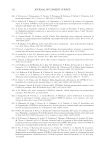
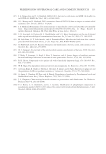
112 JOURNAL OF COSMETIC SCIENCE (69) A. Varvaresou, S. Papageorgiou, E. Tsirivas, E. Protopapa, H. Kintziou, V. Kefala, C. Demetzos, Self- preserving cosmetics. Int. J. Cosmet. Sci., 31(3), 163–175 (2009). (70) O. Atolani, M. T. Baker, O. S. Adeyemi, I. R. Olanrewaju, A. A. Hamid, O. M. Ameen, S. O. Oguntoye, and L. A. Usman, COVID-19: Critical discussion on the applications and implications of chemicals in sanitizers and disinfectants. Excli J., 19, 785–799 (2020). (71) A. Nostro, M. A. Cannatelli, I. Morelli, A. D. Musolino, F. Scuderi, F. Pizzimenti, V. Alonzo, Efficiency of Calamintha officinalis essential oil as preservative in two topical product types. J. Appl. Microbiol., 97(2), 395–401 (2004). (72) A. Carbone-Howell, N. Stebbins, and K. Uhrich, Poly (anhydride-esters) comprised exclusively of naturally occurring antimicrobials and EDTA: antioxidant and antibacterial activities. Biomacromol., 15, 1889–1895 (2014). (73) O. B. Hughes, A. D. Maderal, and A. Tosti, Preservative sensitization—safety with and safety without. Curr. Treat Options Allergy., 3(4), 345–358 (2016). (74) P. Orús, L. Gomez-Perez, S. Leranoz, and M. Berlanga, Increasing antibiotic resistance in preservative- tolerant bacterial strains isolated from cosmetic products. Int. Microbiol., 18(1), 51–59 (2015). (75) K. Schmidlin, S. Sani, D. I. Bernstein, and L. Fonacier, A hands-on approach to contact dermatitis and patch testing. J. Allergy Clin. Immunol. Pract., 8(6), 1883–1893 (2020). (76) E. Yim, K. L. Baquerizo Nole, and A. Tosti, Contact dermatitis caused by preservatives. Dermatitis. 25(5), 215–231 (2014). (77) J. G. DeKoven, E. M. Warshaw, K. A. Zug, H. I. Maibach, D. V. Belsito, D. Sasseville, J. S. Taylor, J. F. Fowler, Jr., C. G. T. Mathias, J. G. Marks, M. D. Pratt, M. J. Zirwas, and V. A. DeLeo, North American contact dermatitis group patch test results: 2015–2016. Dermatitis. 29(6), 297–309 (2018). (78) J. G. DeKoven, E. M. Warshaw, D. V. Belsito, D. Sasseville, H. I. Maibach, J. S. Taylor, D. Sasseville, J. F. Fowler, C. G. T. Mathias, V. A. DeLeo, M. D. Pratt, J. G. Marks, and A. F. Fransway. North American contact dermatitis group patch test results 2013–2014. Dermatitis. 28(1), 33–46 (2017). (79) D. Donà, C. Di Chiara, and M. Sharland, Multi-drug-resistant infections in the COVID-19 era: a framework for considering the potential impact. J. Hosp. Infect., 106(1), 198–199 (2020). (80) H. Getahun, I. Smith, K. Trivedi, S. Paulin, and H. H. Balkhy, Tackling antimicrobial resistance in the COVID-19 pandemic. Bull. World Health Organ., 98(7), 442–442A (2020). (81) A. K. Murray, The novel coronavirus COVID-19 outbreak: Global implications for antimicrobial resistance. Front Microbiol., 11, 1020 (2020). (82) S. Kampmeier, H. Tönnies, C. L. Correa-Martinez, A. Mellmann, and V. Schwierzeck, A nosocomial cluster of vancomycin resistant enterococci among COVID-19 patients in an intensive care unit. Antimicrob. Resist Infect. Control, 9(1), 154 (2020). (83) A. Mahmood, M. Eqan, S. Pervez, H. A. Alghamdi, A. B. Tabinda, A. Yasar, K. Brindadevi, and A. Pugazhendhi, COVID-19 and frequent use of hand sanitizers human health and environmental hazards by exposure pathways. Sci. Total Environ., 742, 140561 (2020). (84) P. Nori, W. Szymczak, Y. Puius, A. Sharma, K. Cowman, P. Gialanella, M. Corpuz, I. Gendlina, and Y. Guo, Emerging co-pathogens: New Delhi metallo-beta-lactamase producing enterobacterales infections in New York City COVID-19 patients. Int. J. Antimicrob. Agents, 56(6), 106179 (2020). (85) A. D. Porretta, A. Baggiani, G. Arzilli, V. Casigliani, T. Mariotti, F. Mariottini, G. Scardina, D. Sironi, M. Totaro, S. Barnini, and G. P. Privitera, Increased risk of acquisition of New Delhi metallo-beta- lactamase-producing carbapenem-resistant enterobacterales (NDM-CRE) among a cohort of COVID-19 patients in a teaching hospital in Tuscany, Italy. Pathogens. 9(8), 1–4 (2020). (86) B. Tiri, E. Sensi, V. Marsiliani, M. Cantarini, G. Priante, C. Vernelli, L. A. Martella, M. Costantini, A. Mariottini, P. Andreani, P. Bruzzone, F. Suadoni, M. Francucci, R. Cirocchi, and S. Cappanera, Antimicrobial stewardship program, COVID-19, and infection control: spread of carbapenem-resistant klebsiella pneumoniae colonization in ICU COVID-19 patients. What did not work? J. Clin. Med., 9(9), 1–8 (2020).
Purchased for the exclusive use of nofirst nolast (unknown)
From: SCC Media Library & Resource Center (library.scconline.org)