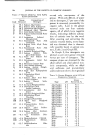
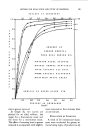
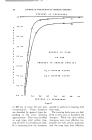
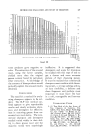
COLD WAVE LOTIONS CUTANEOUS AND SYSTEMIC EFFECTS 233 ligible incidence and sensitizing po- tential. In addition to the lotion, a lock of the subject's hair was in- cluded under the patch, in testing some of the subjects. This was done in order to determine the re- activity of any chemical product which may have been formed by the action of the waving lotion upon the hair. No skin reactions oc- curred. Neither the size nor the de- gree of saturation of the patch in- duced any reactions, when tests were performed with a wide varia- tion in these factors. Patch tests and physical examinations were also performed on 931 individuals, many of whom were factory employees engaged in the manufacture of, and in constant or frequent contact with, cold wave preparations. Not one of these individuals gave evi- dence of any skin condition or of systemic disease in any way refer-. able to intimate contact with the lotions. A preliminary study of employment statistics had shown this group to be a representative cross section of the population and not a selected, immune or "hard- ened" group. When 863 individuals of the group were patch tested, 16 showed weakly positive reactions. Upon retesting 15 of them, only two were again positive. One of the latter had been intimately and frequently exposed to the cold wave !otio_n_s for over two years without any evidence of adverse effects. The other individual had five cold permanent waves without any cu- taneous reactions. Examinations made of the scalps of 174 women undergoing actual waves with the waving materials showed no ad- verse effects. Each of these women previously had from one to twenty cold waves. These subjects were patch tested immediately before the administration of a cold wave and read 24 and 48 hours thereafter. A weakly positive reaction occurred in but one individual. It is of interest that this individual was then undergoing her fourth cold permanent wave. No untoward ef- fects resulted from either the present applications or from her three pre- ceding cold waves. The beauty parlor operator had been instructed to bathe the scalp with the lotion, in order to obviate the criticism that unusual care had been employed in giving the permanent wave. The data obtained from this study em- phasizes anew the precept that 'skin reactivity to patch testing should be evaluated only in con- junction with actual usage experi- ence. Thorough physical and laboratory examinations of 226 individuals ex- posed in varying degrees to cold wave lotions failed to disclose evi- dence of any acute or chronic condi- tion which might indicate the pres- ence of disease of the liver, the kidneys, or the hematopoietic sys- tem. The results of complete blood studies followed a standard distribution curve similar to that seen in general clinical practice. Urinalyses were considered to be within a normal range. In view of previous reports of liver damage due to contact with cold wave lotions,

234 JOURNAL OF THE SOCIETY OF COSMETIC CHEMISTS special attention was given to tests of liver function. A very complete battery of liver function tests was devised and performed on all avail- able subjects. These studies in- cluded the cephalin cholesterol floc- culation, vitamin K response, and the bromsulphalein retention tests, and urinary urobilinogen and co- proporphyrin excretion studies. The results of the cephalin cholesterol flocculation tests which were ob- tained on the en'tire group of 226 subjects were scrutinized critically. All individuals with borderline posi- tive reactions were subjected to careful physical examination and further laboratory procedures as described in the body of this report. Only one subject had both a two plus cephalin cholesterol floccula- tion and a slight retention of brom- sulphalein (12.5 per cent), but was symptomatically negative and showed no abnormalities on physi- cal examination. With this one exception, the results of these stud- ies were within the normal range and could not be construed as in- dicative of liver damage. Physical examinations were performed on all available subjects showing any de- viation whatever from the normal on any of the laboratory tests. No significant abnormalities were found. This is not surprising, how- ever, in a group of individuals who worked daily and who, generally speaking, were in good health. In view of the results described in this report, dermatitis or systemic toxic manifestations following con- tact with cold wave lotions should be carefully verified before being accepted as indicating a causal re- lationship. On the basis of these studies, it may be concluded that cold wave preparations used in this investiga- tion exhibited a low level of cutane- ous irritation and a low sensitizing potential. Cutaneous reactions from contact with or exposure to these materials are of a negligible incidence. In the literature, at- tention has been directed to findings of toxic manifestations, primarily of a hepatotoxic nature, resulting from the use of cold wave prepara- tions. Carefi•l and intensive studies of a clinical and laboratory nature do not support this contention. No evidence of systemic toxicity from frequent exposure to cold wave solutions was found. It is further concluded that cold wave lotions of the composition used in this study are safe for general use. BIBLIOGRAPHY (1) Definition adopted by the Committee on Cosmetics, American Medical Associa- tion, January, 1949. (2) Beek, C. H., "Skin Eruptions Caused by Thioglycolic Acid Used in Cold Waving Process," Nederlands. Tiidschr. Geneesk., Amsterdam, 91, 2500, (i947). (3) Cotter, L. H., "Thioglycolic Acid Poison- ing in Connection with the 'Cold Wave' Process," 7. glm. Med. glssoc., 1:31, 592 (1946). (4) Hcwell, J. B., "Contact Dermatitis Cold Permanent Waving," ,4rch. Derma- toL and SyphiloL, 49, 432 (1944). (5) Behrman, H. T., Combes, F. C., Weiss- berg, G., Mulinos, M. G., and Hurwitz, M. M., "The Cold Permanent Hair- Waving Process," 5 e. ,4m. Med. ,4ssoc., 140, 1208, (1949). (6) Siegel and Meltzer, "Patch Tests Ver- sus Usage Tests, with Special Refer- ence to Volatile Ingredients," ,4rch. DermatoL and SyphiloL, 57, 660 (1948).
Purchased for the exclusive use of nofirst nolast (unknown)
From: SCC Media Library & Resource Center (library.scconline.org)