234 JOURNAL OF THE SOCIETY OF COSMETIC CHEMISTS special attention was given to tests of liver function. A very complete battery of liver function tests was devised and performed on all avail- able subjects. These studies in- cluded the cephalin cholesterol floc- culation, vitamin K response, and the bromsulphalein retention tests, and urinary urobilinogen and co- proporphyrin excretion studies. The results of the cephalin cholesterol flocculation tests which were ob- tained on the en'tire group of 226 subjects were scrutinized critically. All individuals with borderline posi- tive reactions were subjected to careful physical examination and further laboratory procedures as described in the body of this report. Only one subject had both a two plus cephalin cholesterol floccula- tion and a slight retention of brom- sulphalein (12.5 per cent), but was symptomatically negative and showed no abnormalities on physi- cal examination. With this one exception, the results of these stud- ies were within the normal range and could not be construed as in- dicative of liver damage. Physical examinations were performed on all available subjects showing any de- viation whatever from the normal on any of the laboratory tests. No significant abnormalities were found. This is not surprising, how- ever, in a group of individuals who worked daily and who, generally speaking, were in good health. In view of the results described in this report, dermatitis or systemic toxic manifestations following con- tact with cold wave lotions should be carefully verified before being accepted as indicating a causal re- lationship. On the basis of these studies, it may be concluded that cold wave preparations used in this investiga- tion exhibited a low level of cutane- ous irritation and a low sensitizing potential. Cutaneous reactions from contact with or exposure to these materials are of a negligible incidence. In the literature, at- tention has been directed to findings of toxic manifestations, primarily of a hepatotoxic nature, resulting from the use of cold wave prepara- tions. Carefi•l and intensive studies of a clinical and laboratory nature do not support this contention. No evidence of systemic toxicity from frequent exposure to cold wave solutions was found. It is further concluded that cold wave lotions of the composition used in this study are safe for general use. BIBLIOGRAPHY (1) Definition adopted by the Committee on Cosmetics, American Medical Associa- tion, January, 1949. (2) Beek, C. H., "Skin Eruptions Caused by Thioglycolic Acid Used in Cold Waving Process," Nederlands. Tiidschr. Geneesk., Amsterdam, 91, 2500, (i947). (3) Cotter, L. H., "Thioglycolic Acid Poison- ing in Connection with the 'Cold Wave' Process," 7. glm. Med. glssoc., 1:31, 592 (1946). (4) Hcwell, J. B., "Contact Dermatitis Cold Permanent Waving," ,4rch. Derma- toL and SyphiloL, 49, 432 (1944). (5) Behrman, H. T., Combes, F. C., Weiss- berg, G., Mulinos, M. G., and Hurwitz, M. M., "The Cold Permanent Hair- Waving Process," 5 e. ,4m. Med. ,4ssoc., 140, 1208, (1949). (6) Siegel and Meltzer, "Patch Tests Ver- sus Usage Tests, with Special Refer- ence to Volatile Ingredients," ,4rch. DermatoL and SyphiloL, 57, 660 (1948).

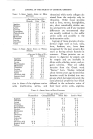
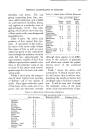
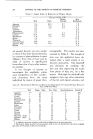
CHEMICAL CLASSIFICATION OF KERATINS* By RICHARD J. BLOCK Department of Biochemistry, New York Medical College, Flower and Fifth .dyehue Hospitals, New York, 29, N.Y. IT •s BECOMES6 increasingly apparent that the total proteins of an homologous series of tissues have a remarkably constant amino acid composition. Table 1 shows the amino acid patterns of washed and fat-extracted muscle proteins from rived, have the same amino acid pattern. An analogous situation appears to hold in the case of milk from the few species that have been investigated (Table 2). Of the twelve amino acids studied only cystine appears to show a significant TABLE 1--SOME AMII•O Acres xs Musc•.• PROTEII•S , Gm. per 16 Gm. of N.-- , Beef Chicken Frog Fish Shrimp Arginine 6.9 6.9 6.6 6.4 6.6 Histidine 2.3 2.3 2.1 2.3 1.8 Lysine 8.1 8.4 8.0 9.0 8.3 Tyrosine 4.3 4.2 4.7 4.4 4.7 Tryptophan 1.4 1.3 1.4 1.4 1.2 Phenylalani ne 4.9 3.9 4.7 4.5 4.8 'Cystine 0.9 0.8 0.9 0.7 1.0 Methionine 3.1 3.4 3.2 3.8 3.4 Serine 5.4 4.7 6.3 4.0 4.0 Threonine 4.6 4.7 4.9 4.2 4.0 Leucine 9.2 ...... 7.3 ... Isoleucine 4.8 ...... 5.0 ... Valine 6.0 ...... 5.6 ... various classes of vertebrates--- mammals, birds, amphibia, fish, and crustacea. It will be seen that within the experimental error of the method there is no difference in amino acid pattern over practically the entire range of animals. Thus the total proteins of muscle, from whatever animal .they may be de- * Presented at the May 19, 1950 Meeting in New York City. deviation. Table 3 shows that even the amino acid patterns of entire animals and birds are, likewise, very similar. The collagens and elastins, obtained from mammals, marsup- ials, birds, amphibia, and fish have been analyzed for eighteen amino acids under strictly comparable conditions. Of all the collagens and elastins studied, only fish skin collagen showed a significant devia- 235
Purchased for the exclusive use of nofirst nolast (unknown)
From: SCC Media Library & Resource Center (library.scconline.org)