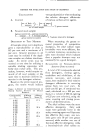
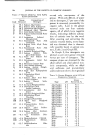
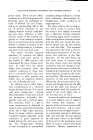
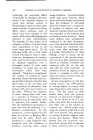
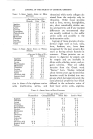
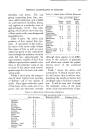
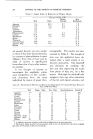
238 JOURNAL OF THE SOCIETY OF COSMETIC CHEMISTS TABLE 7--AMINO ACIDS IN KERATINS OF HUMAN ORIGIN Hair Gm. per 16 Gm. of N- Dental Nails Enamel Skin Epithelium Arginine 9.6 10.0 9.7 7.9 Histidine 0.9 0.5 0.9 1.9 Lysine 2.6 2.8 2.8 7.1 Tyrosine 3.1 .... 5.0 Tryptophan 0.7 .. 0.5 Phenylalanine 2.7 6'.•2 2.9 Cystine 16.0 1• ]9 0.6 3.5 Me thionine 1.0 1.0 1.0 1.0 Serine 7.6 .... 17.0 Threonine 7.2 .. 3.5 Glutamic Acid 14.8 1• 17 .. 15.9 Aspartic Acid 8.0 8.4 .. 8.4 Proline ...... 3.3 tal enamel keratin are very similar to those of the other human keratins, its content of phenylalanine is quite different from that of hair and its yield of cystinc is significantly lower than that of any other eukera- tin studied. It was thought of interest to investigate the qualitative amino acid composition of five ectoder- mal structures from the same individual by means of paper chro- matography. The results are sum- marized in Table 8. The sample of skin was the epithelial layer ob- tained after a mild attack of ex- foliative dermatitis. The dandruff was obtained by combing the hair and then separating the scales from pieces of hair, etc., by a fine screen. Althcugh the dandruff only weighed a few mg. after extraction of the fat with lipold solvents, suf- TABLE 8--APPROXIMATE MOLECULAR RATIOS oI• AMINO AciDS oF VARIOUS HUMAN KERATIN (ALL fROM ONE MAN) Hair Finger Nails Toe Nails Skin Epithelium Dandruff Arginine -3- * 13 + -3- 10t Histidine + 10 q- q- 17 Lysine q- 10 q- q- 15 Tyrosine q- 11 12 q- 10 Phenylalanine 10 10 12 10 11 Cystine 25 21 20 3 10 Methionine q- q- Serine + i6 i6 + Threonine q- 14 17 q- 10 Leucines q- 11 11 4- 10 Valine 15 14 13 11 10 Glycine 10 11 10 15 13 Alaninc + 14 15 q- 10 Glutamic Acid q- 10 10 q- 11 Aspattic Acid + 10 11 q- 12 Proline 25 22 23 10 24 * q- indicates presence ofamino acid with no indication as to concentration. t The lowest molar quantity of each amino acid in any of the proteins has been the value of 10 except in the case of cystine. assigned

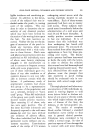
CHEMICAL CLASSIFICATION OF KERATINS 239 ficient material was obtained for this evaluation. Hydroxyproline was not found on any of the chromatograms. The over-all picture one obtains from the chromatograms is that there is a similarity in the amino acid com- position of these tissue proteins except for proline and cystine which are present in markedly smaller quantities in skin than in any of the other proteins. Dandruff occupies an intermediate position between skin and hair and nails with respect to cystine but is similar to the latter tissues in its content of proline. Skin may contain signifi- cantly larger quantities of glycine and lysine. It should be recalled that skin is probably not an euker- atin. In conclusion, then, although it is recognized that the eukeratins dis- cussed in this paper are heterogene- ous proteins, it is believed that two major conclusions may be reached: first, in contrast to many other homologous tissue proteins, eukera- tins show a wider range in their pattern of the 'majority of their amino acid components and, sec- ondly, that they show a remarkable constancy in the molecular ratios of histidine to lysine to arginine. BIBLIOGRAPHY The literature on the methods used for the determinations pre- sented here and many of the results are taken from "The Amino Acid Composition of Proteins and Foods" by R. J. Block and D. Boll- ing, 2nd edition, Springfield, Ill., Charles C Th6mas (1951). ANNUAL MEETING SOCIETY OF COSMETIC CHEMISTS December 6, 1951 Biltmore Hotel New York City Make Your Hotel Reservations Early Complete Program to be Announced Later
Purchased for the exclusive use of nofirst nolast (unknown)
From: SCC Media Library & Resource Center (library.scconline.org)