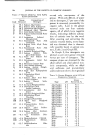
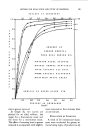
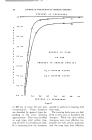
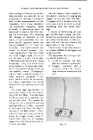
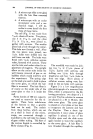
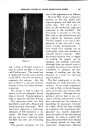
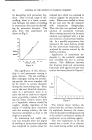
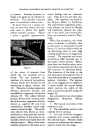
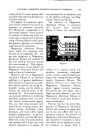
COLLOIDAL MAGNESIUM ALUMINUM SILICATE IN COSMETICS 253 coslty will be 41/,. times greater than would be expected from the behavior of either material. The degree of mechanical agita- tion will also influence the rate of at- tainment of maximum viscosity. The Mixmaster, comparable to a slow-speed Lightnin' mixer, requires 15 minutes to obtain the same vis- cosity that is obtained in 3 minutes using a Waring Blendor which gives the greatest agitation of commonly used laboratory equipment. Magnesium Aluminum Silicate forms stable o/w emulsions with mineral oil and vegetable oils. A 3 per cent dispersion of Magnesium Aluminum Silicate will emulsify 35 per cent medium viscosity mineral oil or raw linseed oil. With slightly greater amounts of raw linseed oil, Magnesium Aluminum Silicate will tend to form w/o emulsions. However, the use of Magnesium Aluminum Silicate as an emulsion stabilizer is of greater significance. This function is based on its protec- tive colloid activity, its strong hy- drophilic nature, and its ability to thicken the external phase of the emulsion (9). Very small amounts are extremely effective in stabilizing emulsions prepared with non-ionic and anionic surface-active agents. This has been demonstrated with hand lotions, shaving creams, deo- dorant lotions, dentifrices, cream shampoos, and many other typical cosmetic preparations. A particu- lar o/w emulsion, at a low pH, emul- sified with 3 per cent polyoxyethyt- ene stearate and 1.2 per cent cetyl alcohol, separated in 6 weeks. It was stabilized for an indefinite time by the addition of 0.4 per cent Mag- nesium Aluminum Silicate. The addition of Magnesium Aluminum Silicate to emulsions will increase their viscosity. Figure 2 shows the relative vis- EMULSION 3% M.A.S. Figure cosities of a typical liquid o/w emulsion containing triethanol- amine stearate, isopropylpalmitate, water, and varying amounts of'Mag- nesium Aluminum Silicate. The addition of 0.5, 1, 2, or 3 per cent Magnesium Aluminum Silicate shows regular viscosity increases. Five-tenths per cent gives only a slight increase, whereas 5 per cent Magnesium Aluminum Silicate in this emulsion would give almost a cream consistency. The fact that the viscosity of dis- persions of Magnesium Aluminum Silicate will increase on aging does not in any way affect their use in emulsions because the amount of Magnesium Aluminum Silicate usu- ally required in emulsions is below that which shows significant viscos- ity increases on aging. This is

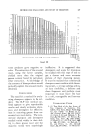
254 JOURNAL OF THE SOCIETY OF COSMETIC CHEMISTS clearly seen in Figure 2 in which viscosity is plotted against time in days. The viscosity aging curves are nearly parallel for both the con- trol and the emulsions containing Magnesium Aluminum Silicate. The emulsion containing 5 per cent Magnesium Aluminum Silicate is omitted from this graph for practical reasons. However, it too has a vis- cosity aging curve nearly parallel to the control emulsion containing no Magnesium Aluminum Silicate. The phenomenon of flocculation is another interesting property. As is true of all colloids--the particles of Magnesium Aluminum Silicate re- main in suspension by virtue of the negative polarity by which they mu- tually repel each other. If the par- ticles are to be allowed to coalesce into aggregates and therefore floccu- late, the negative charge on each particle must be neutralized. How- ever, this is not the complete story. The stability of a hydrophilic col- loid is not only a function of its elec- tric charge but it is also held in sus- pension by hydration. Therefore, the flocculating electrolytes must de- hydrate the expanded particles and also adjust the charge to permit co- alescence upon contact (10). This explains why Magnesium Aluminum Silicate is stable over a wide range of pH and why relatively large amounts of electrolytes are required to cause flocculation. Organic solvents flocculate Mag- nesium Aluminum Silicate primarily by dehydration. The amount of solvent that can be tolerated de- pends on its polarity, its selective- ness for water, and its molecular size. Some work with solvents was done in connection with the formulation of a creamy nail polish remover. A 3 per cent Magnesium Aluminum Silicate dispersion was compatible with a 40 per cent total mixture of diethylene glycol monoethyl ether, ethylene glycol monoethyl ether, and butyl acetate. It might be pos- sible to have a much higher solvent content with a thickener that would actually swell in the solvent mixture. Base exchange compounds made with Magnesium Aluminum Silicate are now being studied for this prop- erty. The formation of Magne- sium Aluminum Silicate gels in mix- tures of water and glycols is possible, but there are definite limitations to the amount of glycol. A 4 per cent Magnesium Aluminum Silicate dis- persion can be prepared in water containing 40 per cent glycerin or 30 per cent polyethylene glycols. In several cases Magnesium Alu- minum Silicate has been used in par- tially flocculated form to give opac- ity and thickening. As we have discussed, the flocculation can be controlled by pH and factors contrib- uting to dehydration. To understand the function of Magnesium Aluminum Silicate as a suspending agent, we must visualize the particles of the material to be suspended as being distributed in the water between the Magnesium Alu- minum Silicate particles. There- .fore, they would be surrounded by negative charges and so prevented from coalescing and settling. With
Purchased for the exclusive use of nofirst nolast (unknown)
From: SCC Media Library & Resource Center (library.scconline.org)