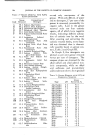
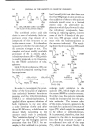
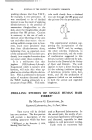
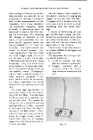
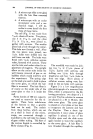
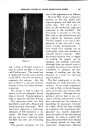
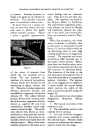
COLLOIDAL MAGNESIUM ALUMINUM SILICATE IN COSMETICS 251 to a pencil. Actually, however, its length and depth are of colloidal di- mensions. This peculiar structure gives it tremendous surface area. To prove that it is a unique col- loid, we must first discuss the min- erals used to obtain this highly refined finished product. Figure 1 gives a graphic representation ':....!Silicate j {• ':'Aluminum Silica• •n•ori!loni•) .- Figure 1 of the series of minerals from which the raw materials are se- lected. The raw materials are members of a .series of isomorphous silicates which were formed by the weathering of glassy volcanic ash (5). The-series includes magnesium silicates, aluminum silicates, and intern•'ediate magnesium aluminum sili6ates (7). The refined finished product derives from one end mem- ber of the series, magnesium silicate, known as saponite (8) and from intermediate members whose mag- nesium content is high. The alumi- num silicate end, known as mont- morillonite or bentonite (6), and ad- jacent members of the series are un- suitable, therefore excluded from the refined product. Many of the inter- mediate minerals in this series are of recent finding and' are relatively rare. They have not yet been clas- sified. The saponites are found in the Mojave Desert in California. The intermediate magnesium alumi- num silicates are found in Nevada and California, whereas the other end of the series, the montmorillo- nites, are commonly found in Wyo- ming. With a few exceptions, this whole series of silicates is swellable that is, they have an expandable crystal lattice (7), but the colloid which we are discussing owes its very high swelling properties to its magnesium content. The saponites•and mont- morillonites differ basically also in the shape of their crystals. '. Bento- nites have the familiar platy struc- ture whereas saponites have the rod- like structure we described before. This distortion of the plate to the rod takes place all along the line of intermediate products as magnesium replaces aiumindm. The .xgteater size of the magnesium ion ri•sults in a strain within the crystal lattice which restricts the width .of the plate but permits growth along the length (3.). Let us enumerate now what makes Magnesium Aluminum Silicate unique. 1. The natural occurrence of the minerals is rare. 2. The expandable lattice in the rod-like form is unusual. 3. It is one of the few inorganic materials that occurs naturally in the colloidal state. Metallic oxides can exist as colloids but must be proc- essed to reach this size range.

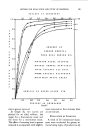
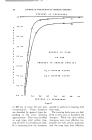
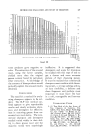
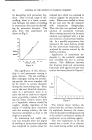
252 JOURNAL OF THE SOCIETY OF COSMETIC CHEMISTS 4. --and most important, the re- fined product, Magnesium Alumi- num Silicate, is a more than additive blend of minerals. An example of this is found in the control of starch-sugar conversion by the adsorption of the enzyme. Magnesium Aluminum Silicate is four times as effective as would be predicted from the activity of each component. Magnesium Aluminum Silicate is processed to a drum dried flake of i/2 millimeter average particle size. Considerable research was involved before the flake form was selected. The flake form contributes ease of handling and speed of rehydration. Magnesium Aluminum Silicate pow- ders formed by spray drying or ex- trusion, pack in the dry form and ball up when wet. The flake form seems to give the expandable crystal lattice its optimum chance for hy- dration. It is interesting to note that mixtures of Magnesium Alumi- num Silicate dispersions and other materials, such as solid polyethylene glycols, precipitated calcium sili- cate, methyl cellulose, and alumi- num chlorohydroxide can be proc- essed to the flake form and will give materials with unusual properties. Magnesium Aluminum Silicate flakes will occupy 36 times their vol- ume after saturation with water. In other words, 2 gm. of Magnesium Aluminum Silicate will occupy 72 cc. after swelling in 100 cc. water. The swelling property is reversible therefore, it can be dried and re- hydrated any number of times. The crystal lattice actually expands by the penetration of water and re- tracts when dried. Theoretically, if the lattice were expanded com- pletely this silicate would disperse into units of molecular thickness and all the surfaces could be regarded as external (4). The thickening properties can be visualized if one considers that the particles become bulky as their crys- tal lattice expands and the en- veloped water moves with the par- ticle. Then the volume of free water is reduced and the mass as- sumes a viscous consistency. At 4 per cent solids the immediate viscosity of a Magnesium Aluminum Silicate dispersion prepared at room temperature is about 300 cp. At 5 per cent it is about 1000 cp.* In any one solids range, maximum vis- cosity can be obtained by heating and aging. Dispersions prepared hot (70øC.) will increase their vis- cosity on aging at a faster rate than if prepared cold. An initial increase in viscosity with heat is particularly significant when Magnesium Alu- minum Silicate is mixed with other materials. For example, when polyethylene glycol, molecular weight 6000, and Magnesium Alu- minum Silicate are blended dry and then dispersed in hot water, the vis- * Procedure for preparing these disper- siolls: 1. Weigh out the proper amount of Mag- nesium Aluminum Silicate after compensat- ing for moisture content (6 to 10 per cent). 2. Add the Magnesium Aluminum Sili- cate slowly to the water (at room tempera- ture) and mix on the Waring Blendor for 3 minutes. 3. Take the 6-minute reading on the Bra- bender Recording Viscosimeter, operating at 105 r.p.m., using the double ttag paddle. Convert Brabender units to centipoises.
Purchased for the exclusive use of nofirst nolast (unknown)
From: SCC Media Library & Resource Center (library.scconline.org)