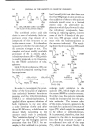
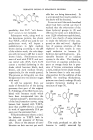
244 JOURNAL OF THE SOCIETY OF COSMETIC CHEMISTS washing whereas that from T.H.T., for example, is very persistent. It was considered to be of decided interest to see the result of applying dihydrolawsone in the presence of ammonium thioglycollate to the skin, since the thioglycollate should produce free SH groups. Caution is necessary in the use of such a mixture since blistering of the skin can and often does occur: the re- sulting reddish-orange stain is, how- ever, much more persistent than that from dihydrolawsone alone, indicating that, as expected, more of the compound (VI) has been pro- duced iron complex formation does not occur under these conditions. It is a well-known fact that juglone [5 (8)-hydroxy- 1,4-naph- thaquinone] which is isomeric with lawsone, will stain skin when ap- plied as its colorless dihydro-deriva- tire. This is attributed to the same series of reactions discussed above for T.H.T. leading ultimately to a structure of type (VII). This mole- cule could clearly form a chelated iron salt through the OH group and the quinone O in the peri position. o (VII) The experimental evidence sup- porting the incorporation of the colorless T.H.T. and, by analogy, the other colorless triphenols, to give dyed materials, and the mode of combination suggested in this lecture, has been submitted for pub- lication in the ]ournal of the Society of Dyers and Colorists. The work appears to have a direct bearing on (a) the coloring (oxidative dyeing) of keratinous proteins (skin, hair, wool), and (b) the production of pigments (which are not melanins) in both the animal and vegetable kingdoms. SWELLING STUDIES OF SINGLE HUMAN HAIR FIBERS* By MILTON G. ECKSTP. OM, Raymond Laboratories, Inc., St. Paul, Minn. Tins p^pEu will be divided into two sections. The first portion will contain a description of the swelling apparatus which has been * Presented at the December 5, 1950, Meeting, New York City. used at Raymond Laboratories. In the second payt, the results of sev- eral actual experiments will be given and discussed, especially in their relation to cold permanent waving. Early work on transverse hair

244 JOURNAL OF THE SOCIETY OF COSMETIC CHEMISTS washing whereas that from T.H.T., for example, is very persistent. It was considered to be of decided interest to see the result of applying dihydrolawsone in the presence of ammonium thioglycollate to the skin, since the thioglycollate should produce free SH groups. Caution is necessary in the use of such a mixture since blistering of the skin can and often does occur: the re- sulting reddish-orange stain is, how- ever, much more persistent than that from dihydrolawsone alone, indicating that, as expected, more of the compound (VI) has been pro- duced iron complex formation does not occur under these conditions. It is a well-known fact that juglone [5 (8)-hydroxy- 1,4-naph- thaquinone] which is isomeric with lawsone, will stain skin when ap- plied as its colorless dihydro-deriva- tire. This is attributed to the same series of reactions discussed above for T.H.T. leading ultimately to a structure of type (VII). This mole- cule could clearly form a chelated iron salt through the OH group and the quinone O in the peri position. o (VII) The experimental evidence sup- porting the incorporation of the colorless T.H.T. and, by analogy, the other colorless triphenols, to give dyed materials, and the mode of combination suggested in this lecture, has been submitted for pub- lication in the ]ournal of the Society of Dyers and Colorists. The work appears to have a direct bearing on (a) the coloring (oxidative dyeing) of keratinous proteins (skin, hair, wool), and (b) the production of pigments (which are not melanins) in both the animal and vegetable kingdoms. SWELLING STUDIES OF SINGLE HUMAN HAIR FIBERS* By MILTON G. ECKSTP. OM, Raymond Laboratories, Inc., St. Paul, Minn. Tins p^pEu will be divided into two sections. The first portion will contain a description of the swelling apparatus which has been * Presented at the December 5, 1950, Meeting, New York City. used at Raymond Laboratories. In the second payt, the results of sev- eral actual experiments will be given and discussed, especially in their relation to cold permanent waving. Early work on transverse hair
Purchased for the exclusive use of nofirst nolast (unknown)
From: SCC Media Library & Resource Center (library.scconline.org)