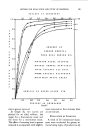
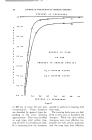
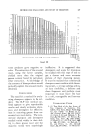
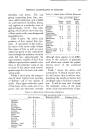
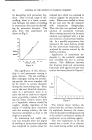
METHOD FOR EVALUATION AND STUDY OF SHAMPOOS 227 •n•s• R•OYA• wx•n o.•o• ol, AC•IVS Graph III • • eo so 3o oo some products gave negative re- sults. The extraction of the scoured wool, using the latter samples, yielded more than the original grease content found by petroleum ether extraction. A knowledge of the contents of these products would probably explain the unusual results obtained. CONCLUSIONS The need foi- a method for evalu- ating shampoos appears to be evi- dent. The B-P test method out- lined appears to give reproducible results and clearly evaluates sham- poos and detergents for effective- ness in removing grease from un- scou/-ed raw wool skeins. The com- mercial shampoos and detergents studied varied widely in their abil- ity to clean grease wool and the majority tested were surprisingly ineffective. It is suggested that detergents and soaps for shampoos be studied with this type of test to get a clearer and more accurate picture of their cleansing power. It must be realized that commercial shampoos must combine with cleans- ing power, a strong sudsing action, an easy rinsibility, a delicate and clean fragrance and perhaps most important it must leave the hair in a soft, manageable and lustrous condition. LITERATURE CITED I. (1) Year Book of the Am. Assoc. of Tex. Chemists & Colorists, Vol. XXVI, New York, Howes Publ shing Co., Inc. (1950). (2) Bacon, O. C., •tm. Dyestuff Reptr., 34, 556 (1945). (3) Clark, J. R., and Holland, V. B., Ibid.,36, 734 (1947). (4) F[ett, L. H., Chern. Eng. News, 26, 1368 (19i8). (5) Harris, J. C., •t.S.T.M. Bull., 140, 6 141, 49 (1946). (6) Holland, V. B., and Pettea, A., •trn. Dyestuff Reptr., 32, 534 (1943). (7) McCutch-

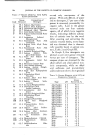
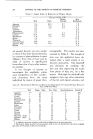
228 JOURNAL OF THE SOCIETY OF COSMETIC CHEMISTS II. III. IV. eon, J. W., Soap Sanit. Chemicals, 25, No. 5, 83 (1949). (8) Powney, J., and Feuell, A. J., Research, 2, 331 (1949). (9) Schwartz, A. M., and Perry, J. W., "Surface Active Agents," New York, Interscience Publishers, Inc. (1949), p. 316. (10) Sisley, J.P. (translated by Wood, J.P.), .aim. Dye- stuff Reptr., 36, 457 (1947). (11) Utermohlen, W. P., Jr., and Wallace, E. L., Textile Research •., 17, 670 (1947). (12) Van Zile, B. S., Oil & Soap, 20, 55 (1943). (13) Woodhead, J. A., Vitale, P. T., and Frantz, A. J., Ibid., 21, 333 (1944). Lambert, J. M., and Sanders, H. L., Ind. Eng. Chem., 42, 1388 (1950) 5 t. Am. Oil Chemists' Soc., 27, 153 (1950). Crowe, J. B., Am. Dyestuffs Reptr., 32, 237 (1943). (1) Chwala, A., "Textilhilfsmittel," Vienna, Julius Springer (1939), pp. 101, 438. (2) Furry, M. S., Mc- Lendon, V. I., Aler, M. E., Am. Dye- stuff Reptr., 37, 751 (1948). (3) Mc- Bain, J. W., "Advances in Colloid Science, I," edited by Kraemer, E. O., New York, Interscience Publishers, Inc., (1942), p. 99. (4) Preston, W C., •. Phys. & Colloid Chem., 52, 84 (1948). (5) Rhodes, F. H., and Brainard, S. W., Inc., Ind. Eng. Chem., 21, 60 (1929). (6) Williams, E. T., Brown, C. B., and Oakley, H. B., "Wetting and Detergency," 2nd edition, New York, Chemical Publishing Co.. of New York, Inc. (1939), p. 163. VII. VIII. V. (1) Ackley, R. R., Ann. N.Y. Acad. &i.,46, 519 (1946). (2) Armstrong, L. J., et aL, Am. Dyestuff Rept•., 37, 596 (1948). (3) Clark, J. R., and Hol- land, V. B., Ibid., 36, 734 (1947). (4) Gruntfest, I. J., and Young, E. M., y. Am. Oil Chemists' Soc., 26, 236 (1949). (5) Harris, J. C., A.&T.M. Bull., 140, 76 141, 49 (1946). (6) Schwartz, A.M., y. Am. Oil Chemists' Soc., 26, 212 (1949). (7) Utermoh- len, W. P., Jr., and Wallace, E. L., Textile Research J., 17, 670 (1947). (8) Utermohlen, W. P., jr., Fischer, E. K., Ryan, M. E., and Campbell, G. H., Ibid., 19, 489 (1949). (9) Vaughn, T. H., and Smith, C. E., •. Am. Oil Chemists' Soc., 2,5, 44 (1948). (10) Vaughn, T. H., Hill, E. F., Smith, C. E., McCoy, L. R., and Simpson, J. E., Ind. Eng. Chem., 41, 112 (1949). (11) Vaughn, T. H., Vittone, A., Jr., and Bacon, L. R., Ibid.,3& 1011 (1941). (12) Wiegand, W. B.,Ibid.,29, 953 (1937). VI. (1)Leonard, E. A., and Beck, L., Am. Dyestuff Reptr., 38, Apr. 18 (1949). (2) Leonard, E. A., and Winch, A. R., Rayon, Jan. (1949). (3) Leonard, E. A., and Winch, A. R., Am. Dyestuff Reptr., 37, Mar. 22 (1948). (4) LaFleur, K. S., Ibid., 39, 385 (1950). (5) Wool Scouring Com- mittee, Ibid., 39, 813 (1950). Weitkamp, A. W., y. Am. Chem. Soc. 67, 447 (1945). Lundgren, H., Manuscript in prepa- ration. COLD WAVE LOTIONS THEIR CUTANEOUS AND SYSTEMIC EFFECTS* By HOWARD T. BEHRMAN, M.D. .4ssistant Clinical Professor of Dermatology, New York University College of Medicine, New York, N.Y. A COSMETIC IS A preparation which is applied to the skin or its appendages in order to alter its appearance, to protect it, to beau- * Presented at the December 8, 1949, Meeting, New York City. tify, or to promote attractiveness (1). It is because of this external application that manufacturers are prone to believe that the rules and regulations governing the manufac- ture and sale of cosmetic products
Purchased for the exclusive use of nofirst nolast (unknown)
From: SCC Media Library & Resource Center (library.scconline.org)