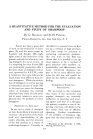
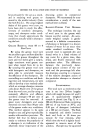
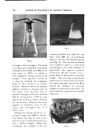
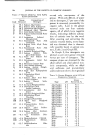
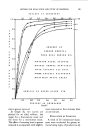
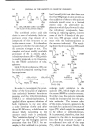
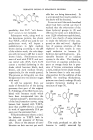
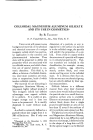
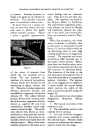
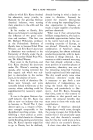
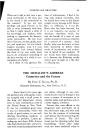
242 JOURNAL OF THE SOCIETY OF COSMETIC CHEMISTS R R OH •OH •----' H --'-• OH OH OH OH (I) (II) R = ß CH2. CH(NH. COW). CO. NHR' (R' is part of the protein residue) The combined amino acid side chain is now of relatively little im- portance since ring closure of a compound of this structure to an indole cannot occur. It is therefore immaterial whether the side chain of (I) contains nitrogen or not. The simplest and most readily available prototype of (I) is clearly 2,4,5- trihydroxytoluene (R = CHa),which is readily prepared, as its triacetate, by the •Thiele acetylation of tolu- quinone. 1,2,4-Trihydroxybenzene (II) can be similarly prepared starting from benzoquinone. O CH• %•% /i , plus O H,,SO4 or HC104 ß In order to investigate th e' p•ssi- biiity of the formalion of pigments (not melanins) between keratioous proteins and the trihydroxytol'Uene (T.H.T.) or trihydroxybenzene, I applied dilute aqueous solutions of both triphenols to my own skin a color develops slowly and after about 10-24 hours a dark brown to almost black (according to the amount used) stain is produced. This" ' ' ox•danve dyeing" or "quinone tannage" (as the biologists call it) presumes that the T.H.T. for ex- ample, is first oxidized to a quinone, but I would point out that there are few free SH groups in skin protein so that addition of these to the quinone molecule would occur to a limited extent only. An alternative ex- planation which I put forward is that the trihydroxy compounds, func- tioning as reducing agents, convert some of the S--S bonds of the pro- tein into SH groups which then react with the hydroxyquinone in the manner indicated. The result- ing thiotrihydroxytoluene (III)could CHa HO• SR __,.0% OH + [ + 2RSH OH SR X'•OoH%O • RSH CHa [0] HOASR • •OI-] OH acid CH.• hydrolysHHO•o) -- OH undergo ready oxidation to the quinone (IV), which might also add the second RSH in a similar manner. In either case, the quinone molecule would be incorporated into the pro- tein molecule. The intense color of the stains, however, appears to be too dark for a quinonoid structure of type (IV) which might be expected to be yellow or yellowish-brown. It is presumed, therefore, that iron present in the skin is incorporated into the final structure to give a co-ordinated iron salt of the type (V), which was almost black the O CH, %•SR t(IV) i 'CH• CHq. C0.0• A .....
(CHa'COhO :i•-, t•f)O. CO. CH.• O. CO. CH•

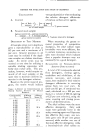
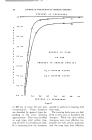
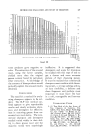
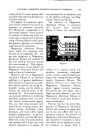
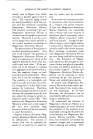
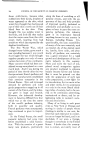
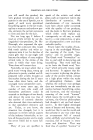
OXIDATIVE DYEING OF KERATINOUS PROTEINS 243 Fen i '] • (v) possibility that Fe• "salt forma- tion" occurs is not excluded. Subsequent work, using wool as the keratinous protein, has shown that T.H.T., which was used for our preliminary work, will impart a reddish-brown to light medium brown dyeing according to the pH of the solution used the color deep- ens with increase in pH but is never brown- black. Simultaneous treat- ment 6f wool with T.H.T. and vari- ous metal salts (Fe•, Cu•, Co•t) causes a marked darkening in the shade which becomes black, dark browrl and dark medium brown,7 respectively, for the metals quoted. The process on living skin can thus t•e •õeparated into two distinct stages with wool. It will be apparent from our mode of formulation of the dyeing processes that part of the original S--S linkings of the fiber have com- bined with benzene nuclei which have been incorporated into the "colored molecule" determinations of the load/extension curves, using human hair treated with T.H.T., show that at pH 4 tl•ere is a change in work of approximately 13.4•per cent over the untreated hair. :: Tfihydroxybenzene'shows a simi- lar behavior to T.H.T. both in absence and presence" of Ferrous salt.' Data on the amount of corn5: bination on hai? are not yet avail- able but are being determined. It is anticipated that results similar to the above will be obtained. It was not until the work described above had been carried out that I realized that the orientation of the three hydroxyl groups in (I).and (II) was the same as in dihydrolaw- sone (1,2,4-trihydroxyn aphthalene), and it was clearly of some interest to study the behavior of this com- pound on skin and wool. Applica- tion of aqueous solutions of this triphenol to skin results in very rapid oxidation to lawsone (2- hydroxy-l,4-naphthquinone), pre- sumably because of an oxidase system in the skin. The dyeing of wool from an aqueous solution im- parts an orange shade but in pres- ence of ferrous ammonium sulfate a dark, medium brown shade results. In lawsone there is only one avail- able position for the addition of the RSH the resulting thiohydroxy- quinone can clearly undergo Fe salt complex formation leading to a structure of type (V). O 0 © [o] OH OH O RSH (vi) :• ß The- stain, produged on,,:skin by lawsone is readily removed by o OH [O ] OH SR SR _ OH O
Purchased for the exclusive use of nofirst nolast (unknown)
From: SCC Media Library & Resource Center (library.scconline.org)