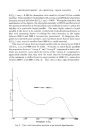
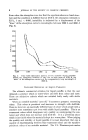
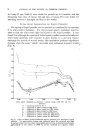
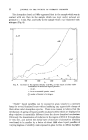
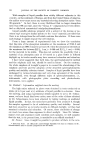
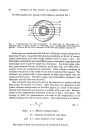
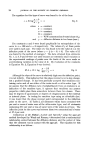
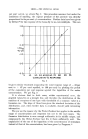
12 JOURNAL OF THE SOCIETY OF COSMETIC CHEMISTS The absorption band at 5.85/• appeared first in the sample which was in contact with air, then in the sample which was kept under reduced air pressure ( 1 mm. Hg), and lastly in the sample which was blanketed with nitrogen (Fig. 8). 02• o1( AD Fig. 8. Increase in the optical density at 5.85 /• as the result of ultra-violet irradiation of medicinal liquid paraffin: ß in air, X in an evacuated quartz vessel, (•) under a blanket of nitrogen. "Stable" liquid paraffins can be exposed in glass vessels to a mercury. lamp for several hundred hours without suffering any appreciable change of their ultra-violet absorption spectra. There is no reason to believe that the mechanism of ageing of liquid paraffin in glass bottles which are displayed in shop windows is essentially different from the above described mechanism. Obviously the transmission of radiation in the region of 2710 • through glass is very low, and indeed the initial rate of increase of absorption intensity was found to be smaller by a factor of about 1000 when liquid paraffins of varying degrees of stability were exposed in glass bottles in diffuse daylight.

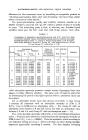
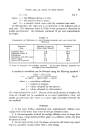
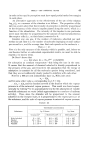
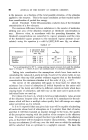
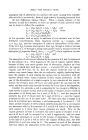
SPECTROPHOTOMETRY AND MEDICINAL LIQUID PARAFFIN This reduced access of radiation in the region of 2710 • gives the impression as if an incubatory period were required for "stable" liquid paraffins exposed to daylight when their spectra are examined at fortnightly intervals until after a period of 8 to `0 weeks (about 1,400 to 1,500 hours) their ultra-violet absorption also begins to increase. Once the chemical reaction of the "Group B" compounds has been initi- ated, it proceeds slowly even in darkness after the termination of the ultra- violet irradiation and at about twice this reduced rate in diffuse daylight. The "Group B" compounds belong to three classes .' (1) alkylated asym- metrical octahydrophenanthrenes and alkylated tetrahydrophenanthrene, (2) viscous liquids with infra-red absorption bands which are indicative of esters, and (3) petroleum sulphonates. Sub-groups B (2) and B (3) form the bulk of the "Group B" compounds. From the saturation levels which the ultra-violet intensity reaches at 2710 2• and at 24.00 2• as the result of ultra- violet irradiation of medicinal liquid paraffin, its content of "Group A" and "Group B" compounds can be estimated on the assumption that the "Group A" compounds have a value E(1%, 1 cm.) ~ 24 at 2710 J• and the "Group B" compounds E(1%, 1 cm.) ~52 at about 2490 2•. The content of "Group B" compounds is approximately one-tenth of the content of "Group A" molecules in stable materials. SPECTROPHOTOMETRIC EVIDENCE OF DEHYDROGENATION OF NAPHTHENE MOLECULES The experimental factors which affect the reproducibility and repeat- ability of the B.P. Acid Test were examined in detail in an M.Sc. thesis by Miss Martin entitled, "The Physical Meaning of the British Pharmacopeeia Acid Test." There is, in addition to the often discussed influence of slight variations in both the strength of sulphuric acid and the vigour of shaking a sample during test, the difficulty that the result of the B.P. Acid Test will depend upon the age of the sample. For the same material different acid numbers are obtained when it is tested immediately on receipt from the plant, and xvhen it is tested one month later. If the Acid Test were doing the job which it was originally designed to do, then the acid would react as long as unsaturated bodies are present in the oil. Reaction should cease immediately when the last unsaturated molecule has been used up. The ten-minute period for the Acid Test has been arbitrarily arrived at as a convenient testing time. Ninety-six per cent sulphuric acid has been proved to continue its action for ten minutes at varying rates according to the quality of the oil. Ninety-seven per cent acid reacts much more vigorously in some cases, and there is doubt whether this activity indicates the presence of unsaturated bodies since it appears more likely that the strong acid dehydrogenates some of the naphthenes in the oil, thus
Purchased for the exclusive use of nofirst nolast (unknown)
From: SCC Media Library & Resource Center (library.scconline.org)