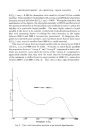
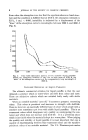
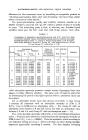
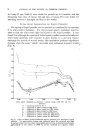
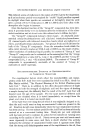
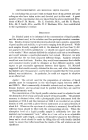
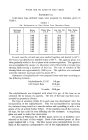
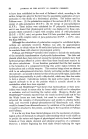
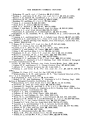
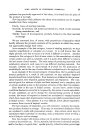
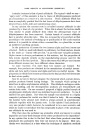
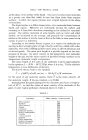
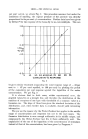
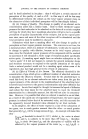
WATER AND OIL RATIO OF COLD CREAM 21 EXPERIMENTAL Cold cream type ointment bases were prepared by formulae given in Table 1. TABLE 1 CM. INGREDIENTS OF COLD CREAM TYPE OINTMENT BASES Ointment Number 1 2 3 4 5 6 7 8 9 lO Borax U.S.P. 0'48 0-48 0'48 0'48 0'48 0'48 0'48 0'48 0'48 0'48 White Wax U.S.P. 8.3 8.3 8.3 8.3 8.3 8.3 8.3 8.3 8.3 8.3 Liq. Pet. Oil U.S.P. 8-3 16.6 25.0 33.3 41.6 50.0 58-3 66.6 75.0 83.3 Dist. Water U.S.P. 83 '3 75-0 66'6 58'3 50.0 41-6 33'3 25'0 16'6 8-3 In each case the oil and wax were melted together and heated to 65 ø C. The borax was dissolved in distilled water at 65 ø C. The aqueous phase was then gradually added to the oil phase with constant agitation. The agitation was accomplished by means of a laboratory stirrer fitted with a circular type stirring blade having a diameter of four cm. The rate of rotation of the stirring blade was approximately 1,500 r.p.m. The agitation was continued until the ointment base had cooled to about 35 ø C. Ointments of sulphathiazole were prepared from each base according to the following formula: Sulphathiazole, U.S.P. 5.0 gm. Cold Cream Base 45.0 gm. To make 50.0 gm. The sulphathiazole was levigated with about five gm. of the base on an ointment tile by means of a spatula. The rest of the base was then incor- porated by geometric dilution. The type of emulsion (Table 2) in each case was determined • after the incorporation of the sulphathiazole. This was accomplished by spreading the ointment being tested on a smooth surface and sprinkling it with a few grains of the oil soluble Sudan Yellow. If the emulsion was of the water-in- oil type, the dye could be seen diffusing into the ointment. A magnifying glass was used to make this observation. Ten pieces of Whatman, No. 40 filter paper, seven cm. in diameter, were selected on the basis of their weight. Each of the selected pieces of filter paper weighed 340 .-Jr 5 mg. The filter papers were numbered from 1 to 10. Each of the numbers corresponded to one of the sulphath!azole ointments.

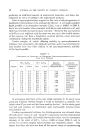
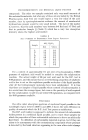
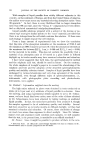
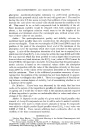
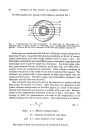
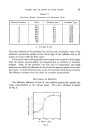
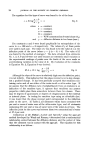
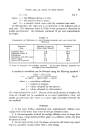
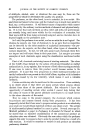
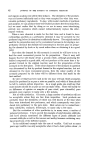
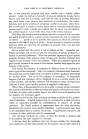
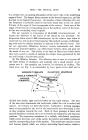
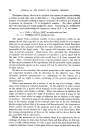
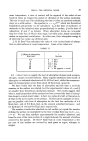
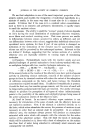
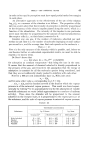
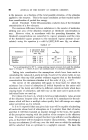
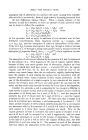
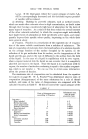
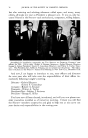
22 JOURNAL OF THE SOCIETY OF COSMETIC CHEMISTS The filter papers were placed in Petri dishes as shown in Fig. 1. Fig. 1. Experimental unit with components: P---Petri dish, F--filter paper, Z--- indicated zone, C•glass cylinder, O--ointment, and I--irregularlity which should be ignored. D and d are the outer diameters of the zone and cylinder respectively. Each paper was moistened with 0.50 mi. of Ehrlich's solution prepared by dissolving 2.0 gm. of paradimethylaminobenzaldehyde in 50 ml. of concen- trated hydrochloric acid with enough distilled water to make a litre. The Petri dish containing the moistened filter paper was placed in a large desiccator containing water to prevent rapid loss of moisture. Ten hollow glass cylin- ders, approximately 25 mm. in diameter, and 6 mm. long, were filled with a portion of the ten sulphathiazole ointments. Each cylinder containing an ointment was placed in the centre of one of the numbered filter papers. The ointment was pressed with a clean spatula to make firm contact with the moistened filter paper. The filter papers were immediately returned to the desiccator and the time was recorded. The ointments were allowed to stay in the desiccator in contact with the filter paper for exactly two hours. After this time, the diameters of the yellow coloured zones formed on the filter papers as a result of the sulpha- thiazole were measured as accurately as possible with a mm. rule. Measure- ments of two perpendicular diameters as shown in Fig. 1 were made. The average of these two measurements was used in the computation of the diffusion distance for the two-hour period. The computation is as follows: D--d Y -- 2 Eq. 1. where and y ---- diffusion distance (mm.), D = diameter of indicated zone (mm.), d = outer diameter of the cylinder. The results of three determinations are tabulated in Table 2.
Purchased for the exclusive use of nofirst nolast (unknown)
From: SCC Media Library & Resource Center (library.scconline.org)