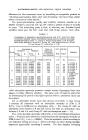
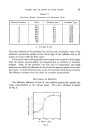
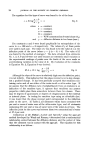
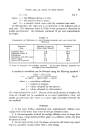
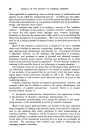
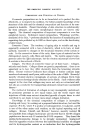
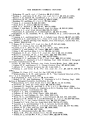
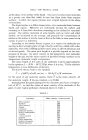
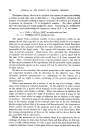
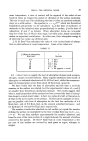
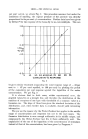
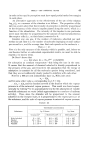
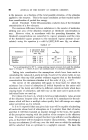
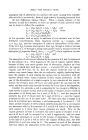
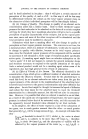
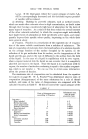
WATER AND OIL RATIO OF COLD CREAM 25 y•= kx Eq. 4. where y ---- the diffusion distance in mm., x •- the period of time in hours, and k = a constant which varies with the ointment base used. In this equation, the value of k is an indication of the diffusion rate in each case. The ointments listed in Table 3 were prepared as described by Lockie and Sprowls. 2 All ointments contained l0 per cent sulphathiazole by weight. TABLE 3 COMPARISON OF DIFFUSION OF THE CHROMATOGRAPHIC AND THE AGAR GEL METHODS Ointment Base Carbowax Base Vanishing Cream B Petrolatum Petrolatum with 30% water Beeler's Base Aerosol OT Emulsion Diffusion in mm. by Filter Paper Method 3.8 8'5 O. O. 7.8 3.5 Coefficient of x 13'3 10'6 0.! 0.! 11.0 13.3 f A trace of diffusion was actually reported. All recorded diffusion distances are averages of two determinations. A statistical correlation can be obtained using the following equation:" ,,Zxy -(2:x) (2:y) r= Eq. 5. 'V' (nZ'x • -- (,.Sx•) (n,.Sy• -- (Z'y)'•) where r •- correlation coefficient, n -• number of samples, x == values obtained by one method, and y =: values obtained by other method. The value obtained for r is 0-7. Because of the small number of samples, the value of r should not be considered as an exact quantitative value, but merely an indication that there is a rather high correlation between the two methods. SUMMARY 1. It has been further established that sulphathiazole diffuses more rapidly from oil-in-water than water-in-oil type emulsion bases. 2. A chromatographic method for testing diffusion rates of drugs from ointment bases, using moistened filter paper as a diffusion media, has been described in detail. 3. On the basis of this work, the phase reversal in cold cream type emul- sions is a gradient change rather than a step change.

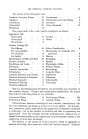
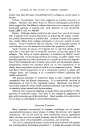
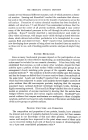
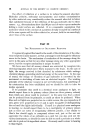
26 JOURNAL OF THE SOCIETY OF COSMETIC CHEMISTS 4. Two methods of testing diffusion from various ointment bases have been compared and correlated. REFERENCES I Salisbury, R., Leuallen, E. E., and Chavkin, L. T., f. Am. Pharm. Assoc., Sci. Ed., 411, 117 (1954). I Lockie, L. D., and Sprowls, J. B., Ibid., 38, 222 _(1949•. * Huyck, C. L., Hirose, R. S., and Reyes, P. A., J•, •/d. 3õ, 129 (1946). l Waud R. A., and Ramsay, A. C., Can. Med. Assoc. J., 48,121 (1943). •3•n•d•iH• j•-, and Kemp, C. R¾,-J:•t4•-P•ar-m-•/ssoc. - Sci:--Ed :,-'I•'•'5 (1946). e Howard, R. W., New E•gl. J. •¾oeed., 14, 649 (1946). ? Izgu, E., and Lee, C. O., .[. •lm. Pharm. Assoc., Prac. Ed., 15,396 (1954). s Daniels, F., "Mathematical Preparation for Physical Chemistry," New York, McGraw-Hill Book Co., Inc. (1928), p. 227. s Scarborough, J. B., and Wagner. R. W., "Fundamentals of Statistics," Boston, Ginn and Co. (1948), p. 44. THE EMERGING COSMETIC INDUSTRY PAUL G. I. LAUFFER, Ph.D.* A lecture delivered at the 15th December, 1955, meeting of the Society in New York Dr. Lauffer surveys the subjects of the articles published in the "JournaP' showing the development of a "cosmetic chemistry." He welcomes the increasing interest in cosmetic science, surveys some branches of that science and suggests fields for useful future work where present knowledge is inadequate. THE TENTH anniversary of our Society seems a fitting occasion for a bird's-eye view ooe the Society's scientific and technological activities, and for an attempt to describe and delineate the body of cosmetic chemistry that is gradually taking form. A study of the papers presented at meetings of the Society will give an indication of our members' interests. The first five volumes of the Journal of the Society of Cosmetic Chemists include substantially all the papers presented at the meetings of the American Society, the British Society, and the Chicago Chapter, from 1945 to mid- 1954. These five volumes contain 170 papers, by 172 different individuals. One author's name appears on five papers, two on four, five on three, and eleven on two. * The George W. Luff Co., Inc., 34-12, 36th Avenue, Long Island City 6, N.Y.
Purchased for the exclusive use of nofirst nolast (unknown)
From: SCC Media Library & Resource Center (library.scconline.org)