SPREADING, HLB, AND EMULSION STABILITY By P^u•, B• c•Ev,, PH.D.* Presened yanuary 6, 1960, New York Chapter THE CONCEPT of balance in the molecular structure of emulsifying agents is more than twenty-five years old. For example, Clayton (1) has drawn attention to a series of patents dating back to 1933 in which palmityl alcohol is compared with palmityl hydrogen sulfate as an anti- spattering agent in margarine. It is pointed out that in this application the hydrophilic character of the hydroxyl group of the alcohol is completely neutralized by the long fatty chain. On the other hand, the sulfate group is a sufficiently strong hydrophile so that the desired surface active proper- ties are exhibited. It is concluded that in a given homologous series there is a point or range in which the hydrophile and lipophile characteristics are so balanced that an optimum efficiency is reached for the particular appli- cation. From a qualitative point of view, this concept is intuitively acceptable. Unfortunately, since it is qualitative, it is.of little help in the practical formulation of emulsions. Approximately ten years ago, Griffin (2) introduced the concept of HLB number as a guide to the evaluation of emulsifier efficiency, the letters HLB standing for hydrophile-lipophile balance. In this system, a scale of numbers is used to describe the nature of the emulsifier, low HLB numbers corresponding to lipophilic (oil soluble) agents, and high HLB numbers corresponding to hydrophilic (water-soluble) agents. Originally, these HLB numbers were determined by a laborious deter- mination of emulsion stability (2), but it has been shown that, in a great many cases, they may be calculated from analytical or composition data with a fair degree of precision (3). An especially useful concept which arises concomitantly with that of HLB is that of "required HLB." This refers to the fact that it can be shown that emulsions involving certain oil phases possess a maximum stability at a specific HLB which is evidently characteristic of the oil phase in question. In the intervening years, a number of other systems of characterizing * Atlas Powder Company, Chemical Research Dept., Wilmington 99, Del. 325

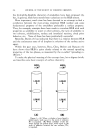
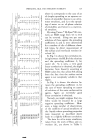
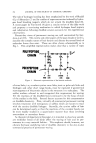
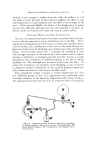
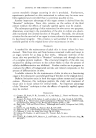
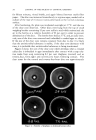
326 JOURNAL OF THE SOCIETY OF COSMETIC CHEMISTS the hydrophile-lipophile character of emulsifiers have been proposed (4), but, in general, these have merely been variations on the HLB system. More important, much time has been devoted to an attempt to find a correlation between the more-or-less empirical HLB number and some fundamental property of the emulsifiers preferably a surface property. Thus, for example, attempts have been made to correlate HLB with such properties as solubility in water or other solvents, the ratio of solubility in two solvents, solubilization, surface and interfacial tensions, cloud point behavior, etc. None of these has been particularly successful. Recently, Davies (5) has indicated that there is a relation between HLB and the coalescence rates of oil droplets in solutions of the surface active agent. Within the past year, however, Ross, Chen, Becher and Ranauto (6) have shown that HLB is quite closely related to the mutual spreading properties of the two phases, as measured by the so-called "spreading co- efficient." To make the physical meaning of this concept clear, let us digress briefly and describe some basic concepts of surface chemistry. AREA AREA I CM* I LIQUID A LIQUID A LIQUID A LIQUID B (A) Figure 1.--(A) When a cylinder of pure liquid is pulled apart, work equal to the work of cohesion /fc is required. (B) When cylinders of two dif- ferent liquids are pulled apart, work equal to the work of adhesion between the two surfaces, W,•, is required.
Purchased for the exclusive use of nofirst nolast (unknown)
From: SCC Media Library & Resource Center (library.scconline.org)