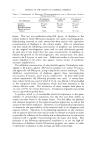
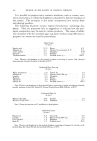
350 JOURNAL OF THE SOCIETY OF COSMETIC CHEMISTS with methyl alcohol. Mix thoroughly and filter the solution rapidly through a Buchner funnel containing a Whatman No. 1 filter paper into a 500-ml. filter flask. Retain the flitrate for analysis. Pipette a 2-ml. aliquot of the flitrate into a 50-ml. volumetric flask. Pipette 20 ml. of ethyl alcohol into the flask and place the flask and con- tents in the constant temperature bath for five minutes. Add 1 ml. ferric chloride solution and swirl the flask to mix the contents thoroughly. Three minutes later remove the flask from the bath, pour the solution into a 23 ml. cell of the Fisher Electrophotometer, and note the A scale reading exactly four minutes after the addition of the ferric chloride solution. From the calibration curve read the percentage of diaphene in the sample. A separate calibration curve will be required on each grade of base soap. ANTIMICROBIAL ACTIVITY The in vitro activity of diaphene has been determined against a wide spectrum of microbes using standard toxic dilution test techniques. Table 2 summarizes the data collected. TABLE 2--INHIBITING CONCENTRATION OF DIAPHENE AGAINST VARIOUS MICRO•SRGANISMS Inhibiting Inhibiting Concentration, Concentration, Micro6rganism p.p.m. Micro6rganism p.p.m. Bacillus subtilis O. 5 Rhizoctonia solani 1 Micrococcus pyogenes var. Sclerotinia fructicola 1 * aureus O. 5 Sclerotinia rolfsii 1 * Micrococcus albus O. 5 Candida albicans 1 Sarcina lutea 1 Trychophyton mentagrophytes 1 Streptococcus f aecalis 5 Microsporum rubrum 1 Proteus ammoniae 10 Microsporum audouini 1 P seudomonas aeru ginosa 10 Salmonella typhosa 5 •lerobacter aerogenes O . 5 Salmonella choleraesuis 5 Bacillus ammoniagenes O. 5 Salmonella schottmulleri 5 ,'Ispergillus niger 10 Escherichia coli 10 Bot. cinerea 1 Sclerotinia sclerotinium 1' ,'llternaria solani 1 Fusarium oxysporum 1 Penicillium italicum 10 Stemphylium sp. 1 Rhizoctonia nigricans 1 Lactobacillus casei 2 * Spore germination test. It can be seen that the antiseptic composition is effective against a wide variety of gram-positive bacteria, as well as certain gram-negative bac- teria and fungi. The inhibitory concentration is frequently less than that reported for many other soap bacteriostats and cutaneous antimicrobials. The good activity against Micrococcus pyogenes var. aureus is particularly noteworthy, for this micro 3rganism is most abundant in the resident skin flora. The effective inhibition of Pseudomonas aeruginosa, Escherichia coli and Trychophyton mentagrophytes at relatively low concentrations is most interesting.

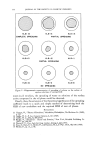
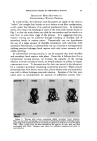
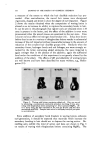
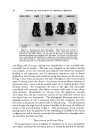
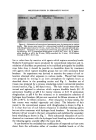
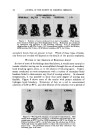
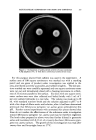
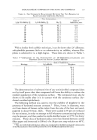
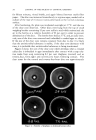
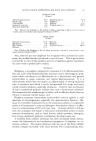
SALICYLANILIDE COMPOSITION FOR SOAPS AND COSMETICS 351 The over-all effectiveness of diaphene against pathogenic fungi con- tributes to its superiority over many other antimicrobials currently used in soaps and certain topical products. In addition, preliminary experiments using the A.O.A.C. sporicide procedure have demonstrated the ability of diaphene to kill various bacterial spores. Furthermore, it has been shown that diaphene maintains its activity against Micrococcus pyogenes var. aureus in the presence of blood and blood serum. Table 3 compares diaphene and hexachlorophene, U.S. P. against L. casei using wood fiber disc techniques with pooled saliva. TA•3•E 3--Poot. E•) SALIVA S'rUDIF•S WITH l,actobaci//us Casei Bacteria Count Active Agent Under Disc* Diaphene, 0.08% 0 Hexachlorophene, 0.0s% 100 Control T N T C *Using wood fiber discs dipped in pooled saliva containing the percentage of active agent indicated and placed on nutrient agar containing L. casei. Table 4 compares diaphene and hexachlorophene U.S. P. against gram-positive and gram-negative bacteria using 10-ram. paper discs dipped into an alkaline solution of 0.1 per cent antiseptic. These discs are rinsed, dried and cultured for twenty-four hours at 37øC. in nutrient agar. TABLE 4--COMPARISON OF DIAPHENE AND HEXACHLOROPHENE AGAINST GRAM-PosITIVE AND GRAM-NEGATIVE BACTERIA M. pyogenes Test Material var. aureus E. coli S. typhi. Control No zone No zone No zone Diaphene 21 mm. 1 mm. 2 mm. Hexachlorophene 16 min. No zone No zone Table .5 compares diaphene, hexachlorophene U.S. P. and phenyl mercuric lactate against pathogenic fungi using 10-mm. paper discs dipped into an alkaline solution of 0.1 per cent antiseptic. These discs are rinsed, dried and cultured for forty-eight hours at 37øC. in Sabouraud agar seeded with a mycelial suspension of the fungus. Figure 1 is a photograph of an agar plate seeded with Micrococcus pyo- genes var. aureus. Filter paper discs, 12 mm., were saturated with a 10 per cent soap solution and placed on the agar surface. Soap containing 0.3 per cent diaphene produced zones of 7 ram., while three competitive medicated soaps containing such agents as bithionol U.S. P., hexachloro- phene U.S. P. and trichlorocarbanilid produced zones of 3 to 4 min. In view of the fact that diaphene is less soluble than certain of these bac- teriostats, the greater zone of inhibition is probably not due to simply a greater diffusion of the antiseptic into the surrounding aqueous environ- ment, but to superior antibacterial activity. No resistance phenomena were observed with Micrococcus pyogenes var. aureus in growth media containing subinhibitory concentrations of dia-
Purchased for the exclusive use of nofirst nolast (unknown)
From: SCC Media Library & Resource Center (library.scconline.org)