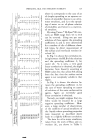
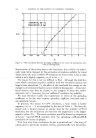
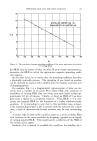
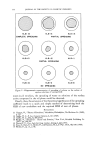
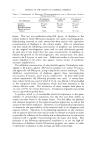
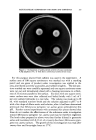
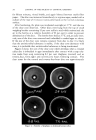
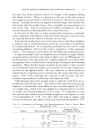
354 JOURNAL OF THE SOCIETY OF COSMETIC CHEMISTS Conversion of the inhibition coefficients into gamma of active agent showed that the upper layers of the skin down to 210 microns contained more than 100•, of active agent. Since it must be assumed that a large part of the substance remained on the skin surface an accurate determina- tion of the quantity in these layers was not undertaken. In the following six slices down to a depth of 420 microns we found 10 gamma and down to 630 microns we still found 5 gamma. Under the conditions of our experi- ments there was no dependence on the time nor on the nature of the vehicle. We must assume that these experiments demonstrate the penetrability of the active agent. By penetration we refer to material imbedded in the philosebaceous apparatus and sudoriferous ducts. Diaphene was demon- strated to be present in these deeper layers in concentrations of fifty to one hundred times more than the quantity necessary for inhibition in the in vitro tests. The use of fresh calfskin provides a simplified and efficient method of evaluating soap or detergent bars containing bacteriostats. Skin disc substantivity tests may be conducted by applying aqueous solutions of the lather of an antiseptic treated bar to fresh calfskin and subjecting the treated skin to clear water leaching for five minutes. In performing this test a section of fresh calfskin (free of wrinkles) about 3 X 4 in. is subjected to a washing procedure in the same manner that the back of the hand might be washed using the treated soap either in liquid form or as a lather. The treated skin is then rinsed thoroughly with moderate rubbing in a manner similar to washing the hands. When this treatment is completed discs are cut out of the center portion of the calfskin piece with an instrument such as a cork borer. The resulting discs are placed on nutrient agar with the epidermis side down. The agar is previously seeded with Micrococcus pyogenes var. aureus. After incuba- tion at 37 ø for twenty-four hours zones of inhibition are read and compared with the controls. Using this fresh calfskin method, one can demonstrate the synergistic relationship between 5,4'-dibromosalicylanilide and 3,5,4'-tribromosalicyl- anilide. Skin substantivity tests were conducted by applying 5 per cent aqueous solutions of soap containing 0.5 per cent (based on the soap) of 5,4'- dibromosalicylanilide (5,4'-di BrSA) or 3,5,4'-tribromosalicylanilide (3,5,4'- tri BrSA), or mixtures thereof, to fresh calfskin and subjecting the treated skin to clear water leaching for five minutes. Then, the skin discs were placed on nutrient agar, seeded with Micrococcus pyogenes var. aureus, and incubated at 37øC. for twenty-four hours. The results of these tests, shown in Table 6, demonstrate that mixtures containing 65 per cent to 98 per cent of the tribromo derivative are unexpectedly and unusually high in antibacterial action. This discovery is the subject of a patent referred to previously (4).

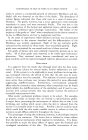
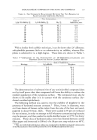
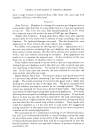
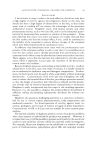
SALICYLANILIDE COMPOSITION FOR SOAPS AND COSMETICS TABLE 6--THE SYNEKGISTIC RELATIONSHIP BETWEEN THE Two BROMINATED SALICYLANILIDES COMPOSING DIAPHENE 355 -Test Composition. Zone of 3,5,4'-Tri-BrSA, % 5,4'-Di-BrSA, % Br, % Inhibition, mm. 0 100 43.1 o. 0 25 75 45.7 3.0 60 40 49.2 5.5 75 25 50.8 6.5 80 20 51.3 6.5 90 10 52.3 6.5 93 7 52.6 6.4 95 5 52.8 6.3 98 2 53.1 6.0 100 0 53.3 5.0 With a similar fresh calfskin technique, it can be shown that 5,4'-dibromo- salicylanilide possesses little or no substantivity on calfskin, whereas Dia- phene is substantive to a high degree. These data are shown in Table 7. TABLE 7--COMPARISON OF THE SUBSTANTIVITY OF 5,4'-DIBKOMOSALICYLANILIDE AND DIAPHENE USING THE FKESH CALFSKIN METHOD , .Zone of Inhibition Rinsings 5,4'-diBrSA Diaphene 1 9.5 14.0 2 3.0 8.0 3 1.0 6.0 4 0.2 5.2 5 0.0 5.0 6 0.0 5.0 7 0.0 5.0 8 0.0 5.0 9 0.0 5.0 10 0.0 5.0 The demonstration of substantivity of any antimicrobial compound does not by itself prove that that compound will have the ability to reduce the resident population of the cutaneous surface. The compound must also be shown to be stable after it is in contact with the cutaneous surface (hy- drated cornified epithelium). The following method was used to test the stability of diaphene•in the presence of hydrated stratum corneum.* Discs, 9 min. in diameter, were cut from sheets of human callus taken from the sole of the foot and sand- papered to about 0.4: min. thick. These were soaked in 95 per cent ethanol for ten minutes, in order to attempt to kill whatever contaminating bacteria may be present, and then soaked in sterile distilled water at 37øC. for thirty minutes. These discs of hydrated callus were then blotted between sterile filter paper and immersed in 100 mi. of a 10 per cent soap solution at 40øC. * This test with hydrated human callus was conducted in the Dermatological Laboratories of the Massachusetts General Hospital by Dr. Irvin H. Blank and Elsie Sylvester.
Purchased for the exclusive use of nofirst nolast (unknown)
From: SCC Media Library & Resource Center (library.scconline.org)