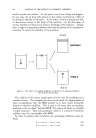
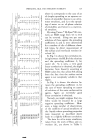
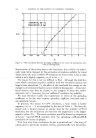
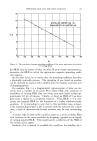
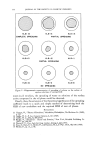
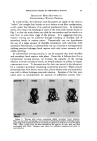
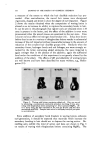
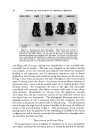
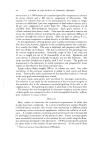
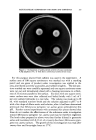
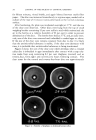
356 JOURNAL OF THE SOCIETY OF C¸SMFTIC CHEMISTS for fifteen minutes, rinsed briefly, and again blotted between sterile filter paper. One disc was immersed immediately in tryptose agar, seeded with a culture of the type of micrococci commonly found on the normal cutaneous surface. After hardening, the plate was incubated overnight at 37øC. and the size of the clear zone observed. Other discs were hung from the top of small weighing bottles containing 13 per cent sulfuric acid which maintained the air in the bottles at a relative humidity of 93 per cent in order to prevent dehydration of the discs. The bottles were held at 37øC. and, at daily inter- vals, one of the discs was removed and imbedded in seeded agar as above. If the size of the clear zone remains constant from disc to disc it is likely that the antimicrobial substance is stable if the clear zone decreases with time, it is probable that antimicrobial substance is being inactivated. Figure 2 shows the size of the clear zone which develops when a treated callus disc is imbedded in agar immediately after contact with a soap solu- tion made from soap containing 0.5 per cent diaphene (control) and at twenty-four, forty-eight and seventy-two hours following contact. The clear zones for the control and twenty-four-hour discs are approximately .,., ß %" ? Oorf'r'o! 'h.%•.. :"7•: . 7. . t -• .'.• :•.., ':?.' ..... ,G Figure 2.--Stability of diaphene on hydrated human callus.

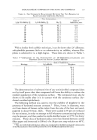
SALICYLANILIDE COMPOSITION FOR SOAPS AND COSMETICS 357 the same size, which indicates little or no change in the diaphene during this period of time. There is a decrease in the size of the clear zone at forty-eight hours, but there is no further decrease tot the seventy-two-hour period. Actually, the clear zone appears somewhat larger after seventy-two hours than after forty-eight hours this is probably an inconsistency in a test of this type. This test indicates the stability of diaphene in the pres- ence of hydrated cornified epithelium for seventy-two hours. A few tests of this type on other antimicrobial substances, commonly used in soap, have indicated less stability for these substances, but more tests are required before any definite statement can be made. From the above laboratory tests, it has been shown that when diaphene is added to soap it is both substantive to the skin and stable in the presence of cornified epithelium. It is, therefore, probable that the use of a soap containing diaphene will lower the resident population of the cutaneous surface. This reduction can be shown by the following handwashing tests. A soap containing 0.3 per cent diaphene was evaluated on eight subjects using the split-use procedure described by Quinn, Voss and Whitehouse (7). In this procedure, the soap under test is applied regularly to one hand while the opposite hand is covered with a neoprene glove during the handwashing operation. When the first hand is washed, the procedure is then reversed by covering this hand with a glove and using the control soap without bac- teriostat on the opposite hand. Per cent reduction in bacterial flora is determined by comparing counts obtained by the usual wash basin tech- niques. After twelve washings over a period of only five days, the anti- bacterial soap produced a median per cent reduction of 80. Table 8 presents data from another study in which the serial basin test as modified by Cade (8) was used. The results of this study demonstrate that diaphene is considerably more effective than hexachlorophene U.S. P. on a weight basis, with 0.5 per cent diaphene in soap equivalent in activity to 2.0 per cent hexachlorophene U.S. P. in soap. It is important to note also that the skin substantivity of diaphene appears to be superior to that of hexachlorophene U. S.P. Two days after returning to regular soap without bacteriostat, the subjects using soap with hexachlorophene U.S. P. TABLE 8 COMPARISON OF DIAPHENE AND HEXACHLOROPHENE USING A SERIAL BASIN HAN•)WASI-•ING TEST Reduction 2 Days Subjects Reduction After 7 Days, % After Regular Soap, % Hexachlorophene Soap •% 2% •% 2% 33 61 0 38 Diaphene Soap 0.5% •.0% 0.5% •.0% 10 76 80 65 71
Purchased for the exclusive use of nofirst nolast (unknown)
From: SCC Media Library & Resource Center (library.scconline.org)