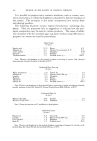
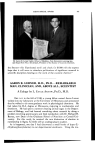
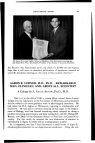
368 JOURNAL OF THE SOCIETY OF COSMETIC CHEMISTS intense hyperpigmentation because of excessive tyrosinase action in the metastatic tumors. When there is a lack of tyrosinase, as in albinism, melanin cannot form. However, the etiology of gray hair and vitiligo is unknown. Melatonin, recently isolated from bovine pineal glands, is a potent lighten. ing agent of frog and fish melanocytes and may play a role in the hypopigmentation of vitiligo and gray hair. It is of interest that melatonin, which was studied primarily for its ability to lighten frog melanocytes, is the first methoxyindole to be found in mammalian tissue and the first N-acetyl com- pound that has greater biologic activity than the amine from which it was derived. To what extent can we control skin color? It is possible to produce marked hyperpigmentation in many people by using either the psoralens orally followed by exposure of the skin to sunlight or by injecting MSH. Although MSH works quite well it is difficult to get this material at the present time. A nonmelanin type of hyperpigmentation may be obtained by applying one of the dihydroxyacetone products to the skin. Often it is possible to produce desired hyperpigmentation i• normal per- sons. But it is not yet possible to initiate controlled hypopigmentation. In some individuals monobenzylether of hydroquinone applied locally will cause depigmentation. However, this chemical is not always consistent in its action and it is a sensitizing agent. It is still too early to know what melatonin will do. From basic considerations it is reasonable to expect that some day it may be practical to lighten or darken skin color at will. A SURVEY OF DR. AARON B. LERNER'S CONTRIBUTIONS TO THE KNOWLEDGE OF MELANIN AND MELANOGENESIS IN ORDER TO ACQUAINT the membership of the SOCiETy or COSMETIC C•,EM•STS more fully with the scientific contributions of the 1959 Special Award winner, Dr. Aaron B. Lerner, the Literature Review Committee has prepared the following summary of Dr. Lerner's work. Dr. Lerner's contributions to our knowledge of melanin biochemistry be- gan in 1940 while he was doing some research under the direction of Dr. L. Earle Arnow. However, for a more complete understanding, it will be necessary to include some earlier studies. For almost sixty years (1), it has been recognized that melanin is formed intracellularly from tyrosine by enzymatic oxidation. The enzyme tyrosinase, the catalyst for the oxida- tion of tyrosine, has been identified in plants, insects and marine animals.

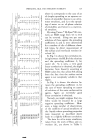
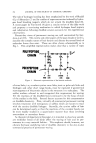
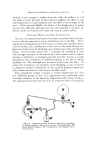
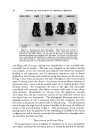
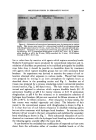
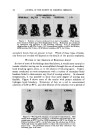
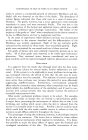
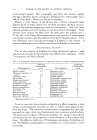
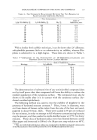
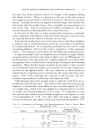
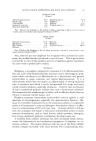
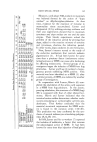
SIXTH SPECIAL AWARD 369 However, until about 1940, melanin in mammals was believed formed by the action of "dopa oxidase" on dihydroxyphenylalanine. At that time, evidence for the existence of tyrosine in mammalian tissue accumulated. Lerner and Fitzpatrick (2) by utilizing existing evidence and their own experiments showed that in mammals tyrosinase and dopa oxidase are one and the same enzyme. Their kinetic experiments solved the problem of the induction period by proving that dopa, added to the reaction mixture of tyrosine and tyrosinase, shortens the induction period. Ih other words, dopa catalyzes its own formation. Next, Lerner's interest turned to the study of the endocrine mechanism that controls melanin pigmentation (3). It had been known for some time that a pituitary factor (melanocyte stimu- lating hormone or MSH) can cause skin darkening by affecting melanocytes. Several groups of in- vestigators began the isolation of MSH from hog pituitaries. Lerner and Lee (4) isolated a homo- geneous protein exhibiting MSH activity. This material was later identified as a-MSH (5) after a similar protein, •-MSH, was isolated by another group of investigators. In cooperation with Lerner, Harris (6) com- pleted the elucidation of the amino acid sequence in a-MSH from hog pituitary. In the accom- panying tabulation, the structure of a-MSH (hog) (B) is compared with that of other related hor- mones. Harris and Lerner indicated that the terminal serine residue determines whether mela- nocyte stimulating or corticotrophic activity pre- dominates. They further concluded that the essential structural requirement for MSH activ- ity is found in the common series 4-10 (E). This prediction was later confirmed by the syn- thesis of several melanocyte stimulating polypep- tides (F, G, H) (11). In 1958, Lerner and his co-workers (7) reported the isolation of melatonin, a factor that reverses the physiological action of MSH. It had been known for some time that injection of beef pineal
Purchased for the exclusive use of nofirst nolast (unknown)
From: SCC Media Library & Resource Center (library.scconline.org)