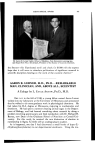
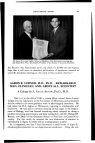
366 JOURNAL OF THE SOCIETY OF COSMETIC CHEMISTS ACTH. Thus, pure ACTH has some MSH-like act}vity, although the converse is not true. Aaron isolated and determined the detailed structure of human ACTH and showed that it also had MSH-like activity. The relationship of MSH to human skin pigmentation was brought out in further experiments done in Aaron's laboratory. These studies showed that human skin could be darkened, both in vitro and in vivo, by contact with MSH. The next advance came in 1958, when Aaron and his collaborators at Yale reported the presence in the pineal glands of cattle of an agent that, in contrast to MSH, caused lightening of melanocytes. This substance was named melatonin. Aaron has shown that it occurs also in human pineal glands. He and other scientists working with him at Yale and at the Upjohn Company proved that melatonin was the relatively simple compound, N-acetyl-5-methoxytryptamine. Aaron's laboratory has found melatonin in the peripheral nerves of man, monkey and cow. He has suggested that it may play a role in the transmission of nerve impulses and in the patho- genesis of vitiligo and malignant melanomas. Aaron recently has published some interesting observations on the mech- anism of action of MSH. When this hormone is added to pigment cells, the melanin-containing granules clumped around the nucleus stream throughout the cytoplasm so that the cell becomes darkened. These granules also contain tyrosinase. When they are dispersed, the active surfaces containing tyrosinase are increased and the rate of melanin for- mation increases, leading to an increase in the actual amount of melanin present. The important speculation is that MSH probably accomplishes this without penetration into the cell. It may change the permeability of the cell wall, allowing ionic exchanges to be altered. This, in turn, may lead to a gel-sol change in the cytoplasm, with resulting dispersion of granules. It is easy to show, for example, that the granules of frog melan- ocytes disperse in solutions of low pH or low osmotic activity. Hence, for this hormone at least,the intact cell is required to demonstrate activity. Marge and Aaron Lerner have other interesting accomplishments. For instance, although Marge completed her residency and her boards in derma- tology, and works part time as Assistant Clinical Professor of Dermatology at Yale, the couple have four delightful children, ranging in age from 3 to 8 years. Marge has published several successt•l children's books dealing with medical subjects. I understand several more are in the offing, in- cluding one on pigmentation! Aaron enjoys making things with his hands and repairing his children's toys. The Cenco-Lerner laboratory jack is becoming standard equipment in most laboratories. Interesting varia- tions of this useful gadget, including a micro model and a power-operated one, are in the developmental stages. Truly this is a unique couple!

SIXTH SPECIAL AWARD 367 I wish to congratulate the Soc•v.T¾ OF Costar. Tin C•Emsq's, which has honored both itself and Dr. Lerner in its choice of the 1960 recipient of its award. I cannot even begin to express my pride in the accomplish- ments of this man who started his graduate career in my small laboratory at Minnesota. I can only say, "Aaron, you've done a damned good job!" SKIN COLOR By AARON B. LERNER, M.D. AI•i• or us are aware of the great importance of skin color from socio- logic, cosmetic and protective standpoints. Several years ago a soci- ologist, himself a Negro, emphasized to me that the single most important characteristic to know about a person is his color. That is, skin color is even more important than age or sex. Usually there are no cosmetic prob- lems pertaining to pigmentation as long as one possesses uniform coloring. However, an abnormal increase or decrease in melanin pigmentation, either in a patchy or homogeneous distribution, always is of great concern to the affected individual. In some instances these pigment changes may indicate the existence of a systemic disease. Protection of the skin from sunlight is maintained largely through the presence of melanin in the epidermis. In spite of some claims that keratin thickening is the major source of light protection, it is probable that the most important barrier to light damage is melanin. For all these reasons it is necessary to know how melanin is formed and how various factors produce abnormalities in pigmentation. In man the copper-containing enzyme, tyrosinase, catalyzes the oxidation of tyrosine to melanin in the cytoplasm of melanocytes. Tyrosinase can be made more active by exposing the skin to sunlight. Oral ingestion of psoralen de- rivatives before light exposure will markedly enhance new pigment forma- tion. Another but not desirable way of increasing tyrosinase action is administration of inorganic arsenic. Recently it wa• shown that injection of the melanocyte stimulating hormones (a- and •-MSH) obtained from the pituitary gland can produce marked darkening. This augmentation of skin color probably results from both an increase in the dispersion of melanin granules throughout the cytoplasm of melanocytes and from an increase in tyrosinase action. In pregnant women, in patients with adreno- cortical insufficiency and in some patients with pituitary tumors hyper- pigmentation develops largely on the basis of increased release of MSH from the pituitary gland. A few patients with malignant melanoma develop
Purchased for the exclusive use of nofirst nolast (unknown)
From: SCC Media Library & Resource Center (library.scconline.org)