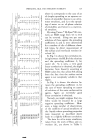
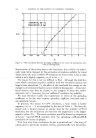
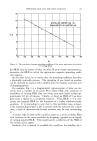
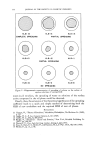
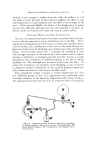
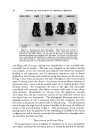
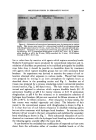
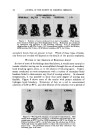
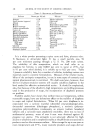
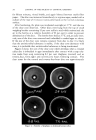
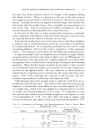
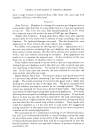
346 JOURNAL OF THE SOCIETY OF COSMETIC CHEMISTS current metabolic changes occurring in risc is precluded. Furthermore, experiments performed on skin maintained in culture may be more care- fully regulated and controlled than is sometimes possible in vivo. Another important advantage of this organ system is derived from the "flotation" technique. Since skin remains on the surface of the fluid culture medium the effects of topically applied agents may be studied. The subsequent grafting of skin maintained in vitro serves two purposes. Alterations occurring in the metabolism of the skin in culture are observ- ably translated into altered function of the graft. Secondly, the ultimate criterion for the survival of an organ in tissue culture is the maintenance of its functional integrity. This criterion is well satisfied if the skin is suc- cessfully grafted to the original donor after maintenance in vitro. SUMMARY A method for the maintenance of adult skin in tissue culture has been devised. Skin from mice and from humans remained viable and intact in an organ system for as long as four weeks. Adequate nutrition of the intact skin was provided by a "flotation" technique and through the use of a complex protein medium. The structural integrity of the skin was retained by adding cortisone to the culture flasks so that the process of cellular dedifferentiation was inhibited. Further studies are in progress to evaluate the effects of halogenated steroids and related compounds on the process of differentiation in vitro. A reliable criterion for the maintenance of skin in vilro as a functioning organ is the subsequent successful grafting of the skin to the original donor. Definite limitations exist in both the organ culture system and its appli- cations. However, this technique permits the study and treatment of intact skin in tissue culture for several weeks. An important advantage of the "flotation" technique is that the effects of topically applied agents may be studied. REFERENCES (1) Conway, H., Stark, R. B., Lazzarini, A. A., and Sedar, J., Plastic and Reconstr. Surg., 15, 430 (1955). (2) Conway, H., Stark, R. B., Sedar, J., and Lazzarini, A. A., Surg. Forum, 6, 568 (1956). (3) Gaillard, P. J., "Preservation and Transplantation of Normal Tissues," CIBA Founda- tion Symposium, Boston, Little, Brown and Company (1954), p. 100. (4) Paul, John, "Cell and Tissue Culture," Edinburgh and London, I.ivingston Ltd. (1959), p. 164. (5) Gillette, R., and Findley, A., Transpl. Bull., 5, 124 (1958). (6) Edgerton, M. T., John Hopkins University: Personal Communication. (7) Cornman, J., Proc. Soc. Exptl. Biol. Med., 75, 355 (1950). (8) Gillette, R., Findley, A. and Conway, H., Transpl. Bull., In press. (9) Op. Cit. (10) Conway, H., Griffith, B. H., Shannon, J., and Findley, A., Plastic and Reconstr. Surg., 20, 103 (1957).

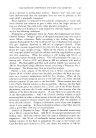
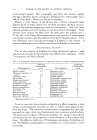
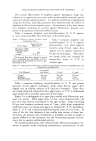
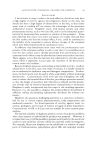
A NEW ANTISEPTIC BROMINATED SALICYLANILIDE COMPOSITION FOR SOAPS AND COSMETICS By HERBERT C. STECKER, PH.D.* and RICHARD E. FAUST, PH.D.t Presented May 12, 1960, New York City SALICYLANILIDE, a compound which is official in the National Formu- lary, has long been used as a lungicicle in textiles, and as an antifungal in the treatment of various skin infections (1). Schwartz and associates reported salicylanilide a most effective agent in the treatment of epidemic ringworm of the scalp caused by Microsporum audouini (2). Various polyhalogenated salicylanilides have recently been found to be more effective antifungals and to possess antibacterial activity as well (3, 4). The well-known Zinchlorundesal N.N.R. contains 5-chlorosalicyl- anilide, 5,3'-dichlorosalicylanilide and 5,4'-dichlorosalicylanilide among other active agents. The substitution of halogen groups confers anti- bacterial activity upon the parent molecule which unsubstituted exhibits very little antibacterial action. Taborksy, et al., recently reported that the salicylanilides of 3-nitro and 5-nitrosalicylic acid, halogenated by one, two or three halogens of various kinds in the aniline nuclei, possess a high degree of bacteriostatic and fungistatic activity (5). A recent patent describes 3,5,3',4'-tetrachlorosalicylanilide, a new substituted salicylanilide which has been recommended for soaps and cosmetics (6). PHYSICAL AND CHEMICAL PROPERTIES The halogenated salicylanilide composition we wish to describe consists of a patented synergistic mixture• of 5,4•-dibromosalicylanilide and 3,5,4 •- tribromosalicylanilide having the following structural formulas (4): OH OH I OH I OH Br Br 5,4'-dibromosalicy!anilide 3,5,4'-tribromosalicylanilide * Stecker Chemicals, Inc., Ridgewood, N.J. • Cuticura Laboratories, Malden, Mass. $ Available commercially as ASC-4.© 347
Purchased for the exclusive use of nofirst nolast (unknown)
From: SCC Media Library & Resource Center (library.scconline.org)