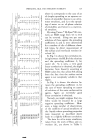
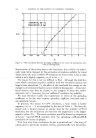
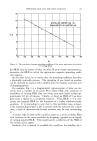
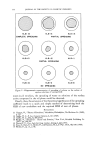
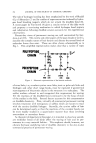
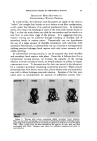
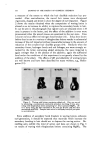
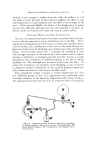
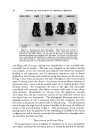
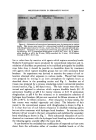
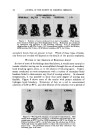
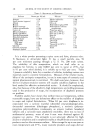
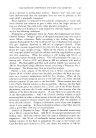
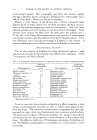
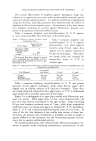
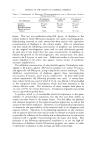
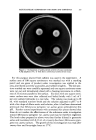
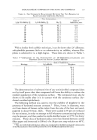
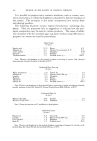
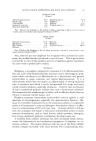
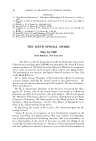
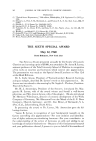
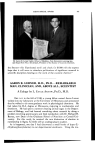
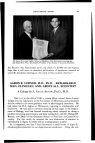
SIXTH SPECIAL AWARD 367 I wish to congratulate the Soc•v.T¾ OF Costar. Tin C•Emsq's, which has honored both itself and Dr. Lerner in its choice of the 1960 recipient of its award. I cannot even begin to express my pride in the accomplish- ments of this man who started his graduate career in my small laboratory at Minnesota. I can only say, "Aaron, you've done a damned good job!" SKIN COLOR By AARON B. LERNER, M.D. AI•i• or us are aware of the great importance of skin color from socio- logic, cosmetic and protective standpoints. Several years ago a soci- ologist, himself a Negro, emphasized to me that the single most important characteristic to know about a person is his color. That is, skin color is even more important than age or sex. Usually there are no cosmetic prob- lems pertaining to pigmentation as long as one possesses uniform coloring. However, an abnormal increase or decrease in melanin pigmentation, either in a patchy or homogeneous distribution, always is of great concern to the affected individual. In some instances these pigment changes may indicate the existence of a systemic disease. Protection of the skin from sunlight is maintained largely through the presence of melanin in the epidermis. In spite of some claims that keratin thickening is the major source of light protection, it is probable that the most important barrier to light damage is melanin. For all these reasons it is necessary to know how melanin is formed and how various factors produce abnormalities in pigmentation. In man the copper-containing enzyme, tyrosinase, catalyzes the oxidation of tyrosine to melanin in the cytoplasm of melanocytes. Tyrosinase can be made more active by exposing the skin to sunlight. Oral ingestion of psoralen de- rivatives before light exposure will markedly enhance new pigment forma- tion. Another but not desirable way of increasing tyrosinase action is administration of inorganic arsenic. Recently it wa• shown that injection of the melanocyte stimulating hormones (a- and •-MSH) obtained from the pituitary gland can produce marked darkening. This augmentation of skin color probably results from both an increase in the dispersion of melanin granules throughout the cytoplasm of melanocytes and from an increase in tyrosinase action. In pregnant women, in patients with adreno- cortical insufficiency and in some patients with pituitary tumors hyper- pigmentation develops largely on the basis of increased release of MSH from the pituitary gland. A few patients with malignant melanoma develop

SIXTH SPECIAL AWARD 367 I wish to congratulate the Soc•v.T¾ OF Costar. Tin C•Emsq's, which has honored both itself and Dr. Lerner in its choice of the 1960 recipient of its award. I cannot even begin to express my pride in the accomplish- ments of this man who started his graduate career in my small laboratory at Minnesota. I can only say, "Aaron, you've done a damned good job!" SKIN COLOR By AARON B. LERNER, M.D. AI•i• or us are aware of the great importance of skin color from socio- logic, cosmetic and protective standpoints. Several years ago a soci- ologist, himself a Negro, emphasized to me that the single most important characteristic to know about a person is his color. That is, skin color is even more important than age or sex. Usually there are no cosmetic prob- lems pertaining to pigmentation as long as one possesses uniform coloring. However, an abnormal increase or decrease in melanin pigmentation, either in a patchy or homogeneous distribution, always is of great concern to the affected individual. In some instances these pigment changes may indicate the existence of a systemic disease. Protection of the skin from sunlight is maintained largely through the presence of melanin in the epidermis. In spite of some claims that keratin thickening is the major source of light protection, it is probable that the most important barrier to light damage is melanin. For all these reasons it is necessary to know how melanin is formed and how various factors produce abnormalities in pigmentation. In man the copper-containing enzyme, tyrosinase, catalyzes the oxidation of tyrosine to melanin in the cytoplasm of melanocytes. Tyrosinase can be made more active by exposing the skin to sunlight. Oral ingestion of psoralen de- rivatives before light exposure will markedly enhance new pigment forma- tion. Another but not desirable way of increasing tyrosinase action is administration of inorganic arsenic. Recently it wa• shown that injection of the melanocyte stimulating hormones (a- and •-MSH) obtained from the pituitary gland can produce marked darkening. This augmentation of skin color probably results from both an increase in the dispersion of melanin granules throughout the cytoplasm of melanocytes and from an increase in tyrosinase action. In pregnant women, in patients with adreno- cortical insufficiency and in some patients with pituitary tumors hyper- pigmentation develops largely on the basis of increased release of MSH from the pituitary gland. A few patients with malignant melanoma develop
Purchased for the exclusive use of nofirst nolast (unknown)
From: SCC Media Library & Resource Center (library.scconline.org)