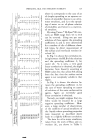
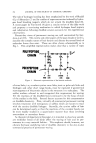
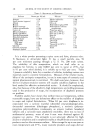
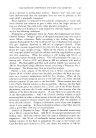
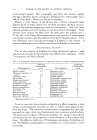
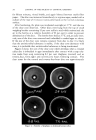
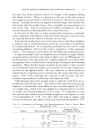
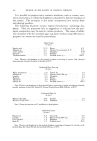
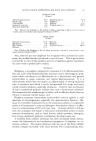
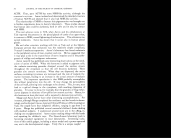
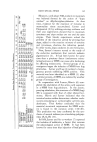
SIXTH SPECIAL AWARD 369 However, until about 1940, melanin in mammals was believed formed by the action of "dopa oxidase" on dihydroxyphenylalanine. At that time, evidence for the existence of tyrosine in mammalian tissue accumulated. Lerner and Fitzpatrick (2) by utilizing existing evidence and their own experiments showed that in mammals tyrosinase and dopa oxidase are one and the same enzyme. Their kinetic experiments solved the problem of the induction period by proving that dopa, added to the reaction mixture of tyrosine and tyrosinase, shortens the induction period. Ih other words, dopa catalyzes its own formation. Next, Lerner's interest turned to the study of the endocrine mechanism that controls melanin pigmentation (3). It had been known for some time that a pituitary factor (melanocyte stimu- lating hormone or MSH) can cause skin darkening by affecting melanocytes. Several groups of in- vestigators began the isolation of MSH from hog pituitaries. Lerner and Lee (4) isolated a homo- geneous protein exhibiting MSH activity. This material was later identified as a-MSH (5) after a similar protein, •-MSH, was isolated by another group of investigators. In cooperation with Lerner, Harris (6) com- pleted the elucidation of the amino acid sequence in a-MSH from hog pituitary. In the accom- panying tabulation, the structure of a-MSH (hog) (B) is compared with that of other related hor- mones. Harris and Lerner indicated that the terminal serine residue determines whether mela- nocyte stimulating or corticotrophic activity pre- dominates. They further concluded that the essential structural requirement for MSH activ- ity is found in the common series 4-10 (E). This prediction was later confirmed by the syn- thesis of several melanocyte stimulating polypep- tides (F, G, H) (11). In 1958, Lerner and his co-workers (7) reported the isolation of melatonin, a factor that reverses the physiological action of MSH. It had been known for some time that injection of beef pineal

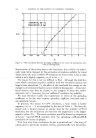
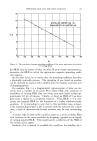
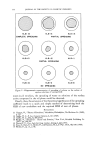
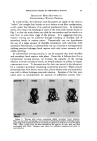
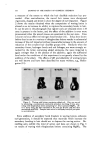
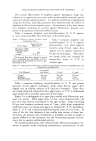
370 JOURNAL OF THE SOCIETY OF COSMETIC CHEMISTS . gland extracts lighten the skin color of frogs. The compound was identL fled by Lerner (8) as N-acetyl-5-methoxytryptamine, and a synthesis was described. The demonstration of melatonin in human peripheral nerves by Lerner (9) and co-workers may be the basis for future work in the field of nerve transmission and pathogenesis of vitiligo. Recently, Lerner (10) summarized the essential experimental findings concerning MSH and melatonin activity: MSH and ACTH (as well as caffeine) cause dispersion •fpigment granules in frog melanocytes (darkening). The action is reversed, i.e., the pigment granules clump together (lightening), by melatonin, hydrocortisone, adrenaline, etc. MSH has no effect on the tyrosine-tyrosinase system in vitro. However, in vivo, or at least in the intact melanocyte, MSH effects increased melanin formation by dispersing tyrosinase. Conversely, melatonin, by aggregating tyrosinase containing particles, reduces synthesis of melanin. Based on this information, Lerner proposed an important novel working hypothesis concerning the initial action of hormones. Some of his com- ments are quoted here: "...I wish to show that the melanin pigment forming cell, the melanocyte, must be intact if hormones are to affect the rate of melanin synthesis. Initially, hormones do not affect the tyrosinase-catalysed conversion of tyrosine to melanin. Instead they produce a change in the location of enzymically active particles which is followed by a change in the rate of enzymic reactions forming melanin .... The activity of the enzyme could well be related to its location within the cell. As suggested earlier, the direct reaction between a hormone and the melanocyte may involve only a relatively specific reaction between hormone, cytoplasmic structural proteins, ions and water to change the colloidal state of parts of the cell. This change in colloidal state eventually would affect the tyrosinase reaction." As in previous years, the Special Award Committee carefully reviewed the contributions of several worthy nominees for the 1959 Award. Dr. Lerner's work in the field of melanin has been most fruitful, and the influence of his scientific contributions will be noted in years to come. The Com- mittee was pleased to select Dr. Lerner as the recipient of the 1959 Special Award. SELECTED BIBLIOGRAPHY REFERENCES (1) Lerner, A. B., and Fitzpatrick, T. B. Physiol. Rev., 30, 91 (1950). (2) Lerner, A. B., et al., Federation Proc., 7, 167 (1948) c.fi 5 t. Biol. Chem., 178, 185 (1949). (3) Lerner, A. B., et al., y. Clin. Endocrinol. and Metabolism, 14, 1463 (1954). (4) Lerner, A. B., and Lee, T. H., •. Alto. Chem. Soc., 77, 1066 (1955). (5) Lee, T. H., and Lerner, A. B., •. Biol. Chem., 221,943 (1956). (6) Harris, J. I., and Lerner, A. B., Nature, 179, 1346 (1957). (7) Lerner, A. B., et al., 7. Alto. Chem. Soc., 80, 2587 (1958). (8) Lerner, A. B., etal.,Ibid., 81, 6084 (1959). (9) Lerner, A. B., et al., Nature, 183, 1821 (1957).
Purchased for the exclusive use of nofirst nolast (unknown)
From: SCC Media Library & Resource Center (library.scconline.org)