ASSOCIATION REACTIONS OF POLYETHYLENE GLYCOLS AND DERIVATIVES BY CHAKLES E. COLWELL, PH.D., and SAMUEL M. LIVENGOOD, PH.D.* Presented •anuary 10, 1962, New York City ETHYLENE OXmE is a reactive chemical which is known to react with a wide variety of chemicals having one trait in common--an active hy- drogen atom. Whether the active hydrogen donor is water, an alcohol, a carboxylic acid, a phenol or an amine, the properties of the end product of the reaction are determined largely by the amount of ethylene oxide which is reacted with the initiating molecule. Once initiated, excess ethylene oxide will continue to react or polymerize with the oxyethylene adduct until the reaction is terminated. Commercial products of nearly endless variety are available as a result of this facile polymerization. Variously known as oxyethylene adducts, polyethylene glycols and poly- ethenoxy derivatives, these compounds all have traits inherited from the polyether moiety. Primarily, this discussion will be concerned with the nature and properties characteristic of the polyether structure and only incidentally with the initiating molecule. Those products to be considered include: (a) the broad class of nonionic surface-active agents which are polyethenoxy derivatives of water insoluble products, such as fatty acids, fatty alcohols, synthetic primary, secondary and tertiary alcohols or thiols (b) the water initiated polyethylene glycol products or Carbowax © polyethylene glycols ranging in molecular weight from 200 to 6000 and (c) the Polyox © resins, which are high molecular weight ethylene oxide polymers ranging in molecular weight from 100,000 to several million. Chemically, the polyethylene glycols and their derivatives are relatively inert. The usual chemical reactions involve only the terminal hydroxyl group or groups, and these reactions are those expected of the simple alcohols. Biologically and physiolog'ically these compounds are also rather inert. Aerobic decomposition by micro Srganisms proceeds at a very low rate for most of these compounds, as indicated by 5-day BOD studies. Also, toxicity by all routes of administration, as a general rule, decreases as the length of the polyoxyethylene chain increases. The very low order * Union Carbide Chemicals Co., Tarrytown, N.Y. 201

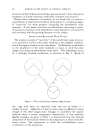
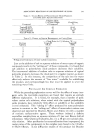
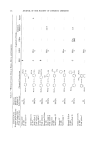
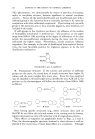
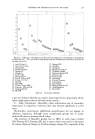
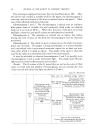
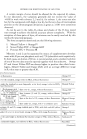
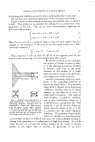
202 JOURNAL OF THE SOCIETY OF COSMETIC CHEMISTS of toxicity of the Carbowax polyethylene glycols has led to their widespread acceptance in diverse ointments, medicated ointments and cosmetics. Despite these indications of inertness, we are faced with an extensive accumulation of experimental evidence which points to a surprising degree of "reactivity" for those products containing the polyethylene oxide structure. In this paper, data from our laboratories concerning a variety of association reactions of the polyethylene oxide derivatives are presented and correlated with the growing literature on this subject. ASSOCIATIONS REACTIONS WITH WATER The simplest example of "reactivity" of the polyethylene oxide structure is its association reaction with water, resulting in the complete solubiliza- tion of the organic material in the water phase. Solubilization is attributed to the attachment of the water molecules to many or all of the ether oxygen sites along the polyethylene oxide chain. This attachment occurs by a hydrogen bonding mechanism, as pictured in Fig. 1. Bonds of / CH2 CH2 / C}l 2 /CH2 / \ Figure 1.--Water solubilization of ethylene oxide polymers. this type with water are relatively weak and may be broken in a number of ways. Application of heat in many cases is sufficient to break enough of the ether oxygen-water linkages to insolubilize the organic molecule above a certain temperature characteristic of that molecule. Specific examples are given in Table 1 to demonstrate how the chemical composition of the molecule influences the temperature at which insolubili- zation occurs. The temperature at which this insolubilization occurs is referred to as the cloud point.
Purchased for the exclusive use of nofirst nolast (unknown)
From: SCC Media Library & Resource Center (library.scconline.org)