METHOD FOR IDENTIFICATION OF AZO DYES 221

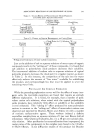
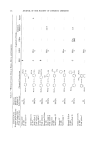
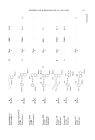
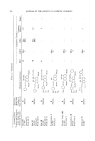
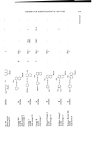
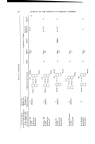
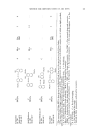
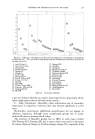
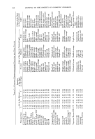
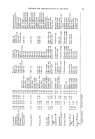
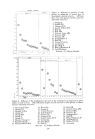
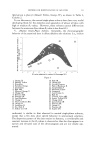
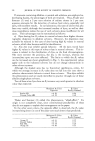
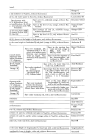
222 JOURNAl, OF THE SOCIETY OF COSMETIC CHEMISTS of solvent. The chromatogram is then allowed to develop until the solvent front has reached a suitable height. If equilibration is required, the paper cylinder is not allowed to touch the solvent until saturation is accomplished. The results reported were obtained at 18 to 25øC. with Whatman No. 1 filter paper. They are, however, applicable, with some variation in Rz values, to Whatman No. 4 and Schleicher & Schuell 2043A filter papers. Study of Solvents- The selection of chromatographic fluids was made after screening work which included many solvent types (Table 2). From these data we have concluded the following: I. Neutral Two-Phase Solvents. The chromatography of the 35 tested dyes in these solvents results in a distribution on the paper according to the degree of sulfonation, as reported by Anderson and Martin (2). Thus, monosulfonated dyes tend to follow the advancing organic solvent, and R• values are generally high. Tri- and tetrasulfonated dyes are selectively retained in the hydrocellulosic phase, and R• values are there- fore low. The positions of disulfonated dyes are intermediate and variable. It was also evident that, for ordinary mixtures, the amount of water present in the solvent is very important. A range of 20 to 35 per cent vfv of the total solvent was found useful. Lower amounts may cause a con- siderable reduction in dispersion of spots on the paper since the R• values are greatly lowered. Furthermore, dyes with different degrees of sul- fonation approach each other too closely if the amount of water exceeds the above cited limits, because the hydrophilic range is completely distorted. Our experimental evidence demonstrates that the introduction of a third miscible component (ethanol, acetone, isopropanol) in the developing sol- vent reduces dispersion considerably. Thus, the polysulfonated dyes appear in a smaller area on the paper than that resulting from use of binary mixtures, which. therefore were of primary interest to us. Organic fluids containing water in the above mentioned amounts were tested, giving in fact, the best results as general solvents for the dyes tested. A typical example is phenol saturated wilh water. In this solvent, the dyes are completely separated according to their hydrophilic nature. (The one exception is the position on Whatman No. 1 filter paper of the monosulfonated compound, Resorcine Yellow, which follows the spot of the disulfonated dye .4nthosine B this does not occur on Schleicher & Schuell and other papers.) If the position of.4nth0sine B (dye of complicated and special structure) is neglected, Rz values vary from 0.81 to 0.56 for mono- sulfonated, from 0.55 to 0.16 for disulfonated, and from 0.11 to 0.03 for trisulfonated compounds, while the only tetrasulfonated dye of the series has an R• value of 0.00.
Purchased for the exclusive use of nofirst nolast (unknown)
From: SCC Media Library & Resource Center (library.scconline.org)