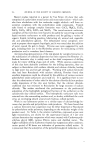
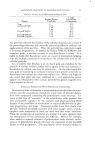
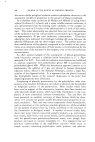
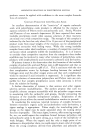
ASSOCIATION REACTIONS OF POLYETHYLENE GLYCOLS 211 COMPLEX FORMATION WITH UREA Complexation of the polyethylene oxide products with urea has been observed and turned to useful purposes in a number of ways. Barker and Ranauto (12) have found the solid adducts resulting from the mixing of urea with a number of different liquid nonionic surface active agents to be an economical and convenient solution to the problem of incorporating liquid nonionics into powdered detergent products. Fluid mixtures of urea and the liquid nonionic surfactant will solidify to a hard cake on standing at room temperature. This cake is easily powdered to provide a water-sol- uble detergent composition. Urea complexes of the polyethylene glycols and of the ethylene oxide based surfactants have been likened to the canal complexes or inclusion complexes which form with hydrocarbons. According to theory, urea molecules form a hexagonal unit cell comprised of 6 molecules of urea arranged in helical form. The occluded hydrocarbon or polyoxyethylene molecule is pictured as fitting into the hollow axis of the spiral formed by the urea molecules. The length of the unit cell is 11.1 A along the helix which corresponds to the length of 3 oxyethylene units arranged in "zig-zag" conformation. An optimum ratio of 2 molecules of urea to 1 oxyethylene unit is predicted by this structure. Our own work has that indicated when 30 parts of liquid or solid poly- ethylene glycols are mixed and melted with 70 parts of urea, hard, solid, products result. Such products made with Carbowax © polyethylene glycols 400, 1000, and 4000 all exhibited melting points at 133øC. Mixed melting points of any combination of these complexed products diverged widely from 133 ø, suggesting that each complex represented a distinctly different specie. Interesting and economically attractive applications of the urea-poly- ethylene glycol complexes involve their pronounced humectant and plasti- cizing properties. Mixtures of animal glue with polyethylene glycols of approximately 200 molecular weight or higher were found to form gummy intractable masses. This incompatibility, probably due to complex formation between the protein and the polyglycol, was overcome by mixing urea with the polyglycol before mixing with the glue. This preferential complexation gave a well-plasticized, flexible glue in which cost savings were realized because of the synergistic plasticizing contribution of the inexpensive urea. Thiourea and other urea derivatives have also been reported to undergo complex formation with the polyethylene oxide derivatives. Higuchi and Each (13) observed the formation of a very strong, water-insoluble complex between phenobarbital and the polyethylene glycols. The stoichiometric ratio of one phenobarbital to two oxyethylene groups was found in this study. Other barbiturates having the same skeletal structure, e.g., barbital and

212 JOURNAL OF THE SOCIETY OF COSMETIC CHEMISTS pentobarbital, but lacking the aromatic substituent did not form complexes. COMPLEX FORMATION WITH HALOGENS The halogen complexes of the polyethylene oxide compounds will be considered as the last but certainly not the least important example of com- plex formation. Probably the best known complexes of this type are the iodophors which result from the admixture of iodine crystals with the polyethylene oxide surfactants. A number of patents have been granted during the last ten years covering the composition and uses of a variety of iodophors (14, 15, 16). While iodine is only sparingly soluble in water, the iodine-nonionic surfactant complexes are extremely soluble and have a powerful germicidal effect even at high dilution. These products have a fortuitous balance of properties which fit them ideally to a number of sanitizing and cleaning operations. The complexes are quite strong, as indicated by a very low vapor pressure of iodine over the complex and by a negative test for iodine with starch. Human subjects who exhibited skin sensitivity and irritation to common iodine preparations were found to be insensitive to the iodine- surfactant complexes. Even though the complexes are very stable, the stability in no way impairs the bactericidal activity of the iodine. SUMMARY The complex interactions of polyethylene glycols and their derivatives with a wide variety of inorganic and organic chemicals were discussed. Subtleties of this association reaction with polyvalent cation salts, phenols, carboxylic acids, urea and the halogens were revealed through experimental observations of changes in solubility, degree of dispersion or flocculation and the potency of preservatives and pharmaceuticals. The broad significance of such interactions was verified by generous literature support in many unrelated areas of technology. Through a better understanding of the equilibria and the competitive reactions involved in complex mixtures containing polyethylene oxide derivatives, the authors are convinced that novel and utilitarian applications will contin.ue to be found for the as- sociation complexes of these polyether derivatives. /lcknow/edgment: The solubility data for the polyvalent ion complexes described in this study were obtained by Miss Gloria Magliane of Juniata College, Huntingdon, Pennsylvania. (Received February 28, 1962) REFERENCES (1) Doscher, T. M., Meyers, G. F., and Atkins, Jr., D.C., y. Colloid Sci., 6, 223 (1951). (2) Van Strien, R. E., U.S. Patent 2,826, 265, March 25, 1958. (3) Doscher, T. M., •7. Phys. & Colloid Chem., 53, 1362 (1949). (4) Heller, W., and Pugh, T. L., •7. Polymer Sci., 47, 203 (1960).
Purchased for the exclusive use of nofirst nolast (unknown)
From: SCC Media Library & Resource Center (library.scconline.org)