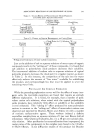
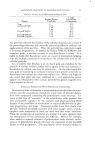
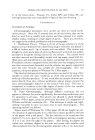
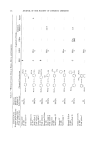
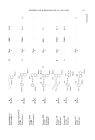
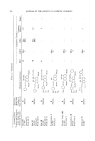
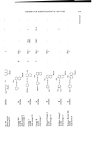
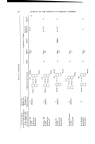
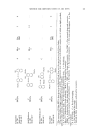
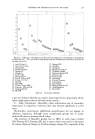
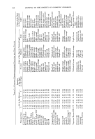
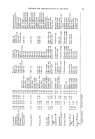
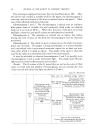
METHOD FOR IDENTIFICATION OF AZO DYES 233 Minimum R•- Value R•- Value Expected Really Obtained Yellow 27175N •0.60 0.49 Resorcine Yellow •0.66 0.56 Acid Yellow G •0.88 0.65 With the exception of Resorcine Yellow, these colors are amino dyes with a free or substituted basic auxochrome on the nucleus to the right of the azo group. In our laboratory we have considered that this configuration may be related to this phenomenon, since these dyes are the only ones tested in which such a group is present. c) A great improvement in definition and contour of spots is observed: The shape is almost round if not completely circular, having no tails or enlargements which may appear in neutral systems. This circumstance, together with the great degree of dispersion, makes these alkaline salt solutions ideal for detecting the presence of subsidiary coloring matters (cf. Table 3, Column 4). VI. •lcid Single-Phase Solvents. The use of dilute solutions of mineral and organic acids, as chromatographic solvents for the tested dyes gave spectra similar to those obtained in neutral solvents. On the other hand, medium to high concentrations of organic acids can produce layering and for practical purposes may be considered two-phase acid solvents. Thus, with dilute organic, dilute inorganic, or concentrated organic acid solvents, no new phenomena can be observed. On the other hand, with concentrated strong mineral acids as chromatographic solvents several new and characteristic phenomena are produced in the case of the tested dyes. These new effects, observed in our laboratory, do not appear to have been reported previously in the literature. Since they are general rather than selective in character, and consequently very important for analytical purposes, we believe that these details must be carefully described. •lcids, nature and concentration: We have used commercially available strong or medium-strong mineral acids (dissociation constants from 10 -3 to 1) which were sufficiently stable and manageable for chromatographic purposes. After screening, 5-24 N hydrochloric, perchloric, hydrobromic, sulfuric and orthophosphoric acids, were selected. Although certain differences, characteristic of the acids, were observed, basically, the same results were obtained in all cases. Results. The chromatographic behavior of the dyes in these solvents can be summarized as follows: 1. The number of sulfonate groups of the dye on chromatographic migration (a very important factor in neutral systems) has almost no in- fluence in the case under discussion. This might be attributed to the high hydrogen ion concentration in the solvent.

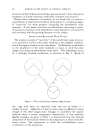
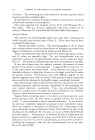
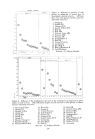
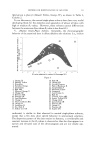
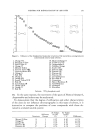
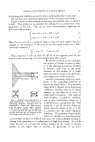
234 JOURNAL OF THE SOCIETY OF COSMETIC CHEMISTS 2. The influence of the position of sulfonate groups (this was considered the most important factor in migration in neutral systems) is clearly reduced, even in the case of dyes which have such groups in the 3-position. 3. The influence of hydrophilic substituents, which is nonexistent in neutral solvents, is still nil however, if such groups are multiple or free (as in t/ictoria t/iolet ¾BS, Neplune Brown RX and Red 10B for example), a slight increase in Rs values can be produced. 4. The influence of lipophilic subslituents appears to be opposite to that in neutral solvents. Thus, lipophile groups, which were considered inert in neutral solvents, appear to be important in lowering the Rs values in acid solvents (multiple methyl groups in Scarlet GN, Ponceau MX and Ponceau 3R). Other lipophilic substituents which lowered the Rs values in neutral solvents seem to be inert here rather than active (methyl groups in Monoso• Orange O, Xylidine Orange and Orange III and phenyl groups in Metanil Yellow and Orange It/). As was mentioned above, four factors were found to affect the migration of the dyes in neutral systems, their interactions producing a chromato- graphic spectrum on the paper 1) number of sulfonate groups, 2) position of such groups, 3) fundamental structure of the dye, and 4) presence of certain lipophilic functions. As can be seen, in acid solvents, three of these factors are eliminated, reversed or greatly inhibited. Therefore, in these acid systems, the role of the Fundamental Structure of the Dye will be clearly observed. This fact is analytically important and is observed experimentally if the acids and their concentrations are properly selected. Under our conditions and for most solvents and dyes studied, only com- pounds of structure .4 tend to migrate rapidly, attaining higher Rs values, while dyes of structure C remain lower on the paper. The compounds of structure B occupy intermediate positions. This effect is shown in Fig. 6, which represents a chromatogram devel- oped with concentrated commercial phosphoric acid which shows a de- crease of Rs values with increasing molecular complexity (the molecular weight, which is not only a function of the fundamental model but also of the nature of all the remaining substituents in the molecule seems un- important). Exceptions to the clear "step-wise" arrangement observed for the three groups of dyes in this particular solvent system are those compounds of structure B, which have multiple lipophilic substituents affecting Rs values Xylidine Orange, Scarlel GN, Ponceau MX and Ponceau 3R. Only the two latter colors can be considered as truly "out-of-step." Similar irregularities are observed in other solvent systems of this type the final results depend in many cases on the acid concentration of the solvent. For example, if the acid concentration is below a certain limit, Orange G may advance rapidly, preceding Melanil Yellow and Orange It / and Ponceau
Purchased for the exclusive use of nofirst nolast (unknown)
From: SCC Media Library & Resource Center (library.scconline.org)