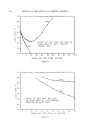
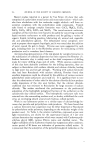
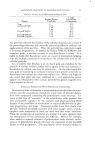
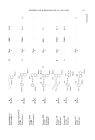
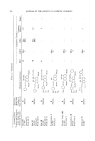
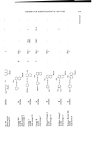
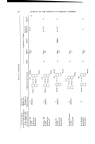
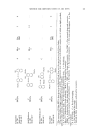
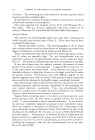
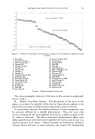
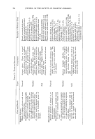
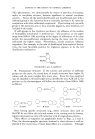
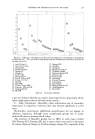
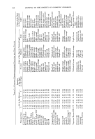
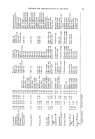
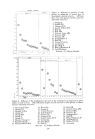
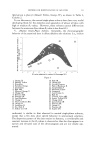
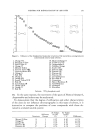
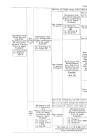
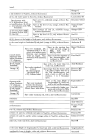
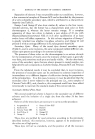
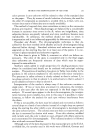
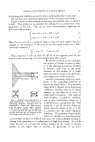
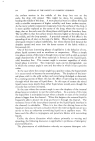
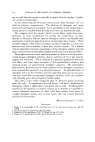
METHOD FOR IDENTIFICATION OF AZO DYES 223 oa o7 o6 os os 0,2 øoo©ooooo© ZONE OF MONOSULFO COLOURS @ ZONE OF TRI AND TETRASULFOCOLOURS Figure 1. Influence of the degree ofsulfonation on migration of tested dyes in diphasic neutral solvents. 1. Roccelline 19. Sunset Yellow FCF 2. Xylidine Orange 20. Carmoisine 3. Monosol Orange O 21. Orange GGN 4. Orange RN 22. Red 6B 5. Metanil Yellow 23. Red 2G 6. Orange II 24. Acid Bordeaux 7. Orange III 25. Benzyl Bordeaux B 8. Orange I 26. Ponceau MX 9. Orange IV 27. Ponceau 3R 10. Neptune Brown RX 28. Azogrenadine S 11. Anthosine B 29. Red 10B 12. Resorcine Yellow 30. Victoria Violet 4BS 13. Lanafuchsin 6B 31. Acid Yellow G 14. Crystal Ponceau 32. Ponceau 4R 15. Orange G 33. Amaranth 16. Scarlet GN 34. Yellow 27.175N 17. Red FB 35. Ponceau 6R 18. Fast Red E Solvent: Phenol saturated with water. The chromatographic behavior of the dyes in this solvent is graphically shown in Fig. 1. II. zl/ka/ine Two-Phase So/vents. The distribution of the dyes on the paper, or, at least, the majority of the dyes in these solvents appears to be governed by the same variables as those operating in neutral solvents. In ammoniacal solvents, the relative positions of some compounds may be seriously affected by a specific phenomenon. Thus, for most dyes tested, including all the beta-naphthol derivatives, a slight increase in the R/ values is observed. The above mentioned displacements affect some alpha-naphthol and other phenol and naphthol derivatives and are due to a marked decrease in R/value. Typical examples are Carmoisine, Orange l, Neplune Brown RX and, in some instances, also Scar/el GN, Lanafuchsin

224 JOURNAL OF THE SOCIETY OF COSMETIC CHEMISTS Z • Z
Purchased for the exclusive use of nofirst nolast (unknown)
From: SCC Media Library & Resource Center (library.scconline.org)