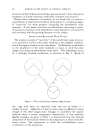
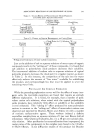
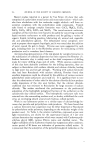
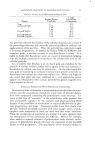
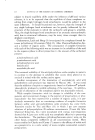
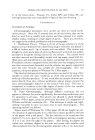
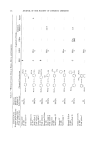
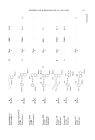
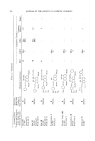
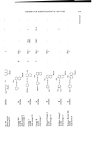
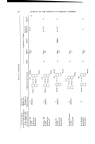
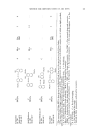
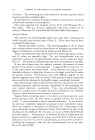
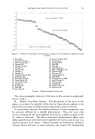
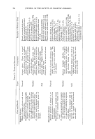
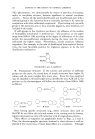
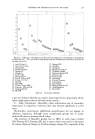
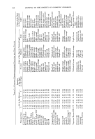
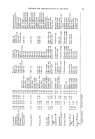
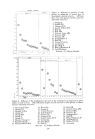
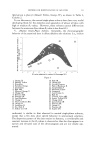
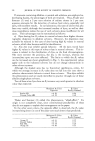
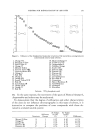
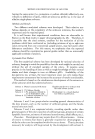
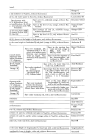
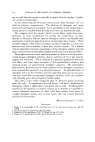
METHOD FOR IDENTIFICATION OF AZO DYES 235 o• o• Figure 6. Influence of the fundamental molecular structure of the tested dyes on migration in concentrated mineral acid solvents. 1. Orange III 18. Monosol Orange O 2. Resorcine Yellow 19. Yellow 27.175N 3. Acid Yellow G 20. Azogrenadine S 4. Orange IV 21. Xylidine Orange 5. Metanil Yellow 22. Scarlet GN 6. Victoria Violet 4BS 23. Ponceau MX 7. Neptune Brown RX 24. Ponceau 3R 8. Orange G 25. Ponceau 4R 9. Red 10B 26. Ponceau 6R 10. Orange I 27. Crystal Ponceau 11. Orange RN 28. Fast Red E 12. Sunset Yellow FCF 29. Carmoisine 13. Red 6B 30. Benzyl Bordeaux B 14. Lanafuchsin 6B 31. Acid Bordeaux 15. Orange GGN 32. Amaranth 16. Orange II 33. Roccelline 17. Red 2G Solvent: 70% phosphoric acid. 6R. In the same manner, the movement of the spots of Monosol Orange O, dzogrenadine and others may be accelerated. To demonstrate that the degree of sulfonation and other characteristics of the dyes do not influence chromatography in this type of solvent, it is instructive to compare the positions of some compounds with those ob- tained in a related neutral system: Roe Values Roe Values Sulfonate in LiC1 in HC1 Structure Groups 1% 7 N Difference Metanil Yellow Orange IV Orange III Ponceau 4R Ponceau 6R A 1 0.07 0.43 +0.36 A 1 0.05 0.49 +0.44 A 1 0.19 0.81 +0.62 C 3 0.50 0.19 --0.31 C 4 0.76 0.18 --0.58

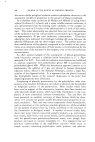
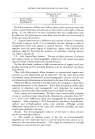
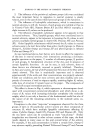
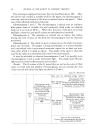
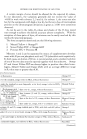
236 JOURNAL OF THE SOCIETY OF COSMETIC CHEMISTS `4dvantages. Concentrated acid solvents have been very useful primary systems in analysis in our laboratory. A single chromatogram of this type holds the key to the fundamental structure of dyes, in the same manner that, e.g., a two-phase neutral solvent may resolve the degree of sulfonation. In fact, these two types of solvents, neutral two-phase and concentrated acid single-phase, are the only general systems capable of demonstrating the special characteristics of the dye molecules. These systems can be used advantageously to obtain complementary data, since the chromatographic spectrum is far different from that ob- tained with any other type of solvent. For some dyes, primarily those of .4 and C structure, these data can be definitive. For these reasons, this solvent was selected as the general system, al- though other systems were employed for specific purposes. Inconveniences. Despite their usefulness in normal practice, concen- trated acid solvents are not without inconveniences. 1. All acid chromatograms require careful neutralization with ammonia vapors in a closed chamber for at least ten minutes after development. Chromatograms can then be preserved for practically indefinite periods of time, and the papers will not become brittle when dry. 2. Some of these solvents, at their most useful concentrations, may af- fect the rigidity of the paper in the chamber, due to chemical attack on cel- lulose. This phenomenon is particularly troublesome with phosphoric and perchloric acids at high concentrations. In such cases, the advance of sol- vent is generally very slow and may take more than twenty-four hours. Nevertheless, neutralized chromatograms can be well preserved in almost all cases. 3. Concentrated solutions of perchloric acid, which are suitable for the separation and identification of many compounds, may cause some de- composition which in turn may distort the position of the affected dyes. On the other hand, chromatograms developed with concentrated perchloric acid must be dried and neutralized with special care and at low temper- ature, since ammonium perchlorate may be explosive. Recommended Solvents. Although highly concentrated phosphoric (about 21-24 N) and perchloric (about 4.5-5.5 N) acids are the chromato- graphic solvents in which the relative position of the dyes is better main- tained, these solvents cannot be recommended, because they were difficult to handle in our laboratory.* Sulfuric acid yields somewhat lower Rf values, and concentrated hydrobromic acid is not very stable, tending to affect many dyes. For practical purposes, sufficiently good results are obtained with 6-7 N hydrochloric acid, although the order of the position of the dyes is not maintained exactly as above. Addition of an alkali salt * Experiments are continuing to determine the utility of these concentrated mineral acids by means of descending chromatographic techniques.
Purchased for the exclusive use of nofirst nolast (unknown)
From: SCC Media Library & Resource Center (library.scconline.org)