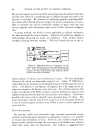
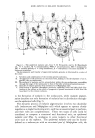
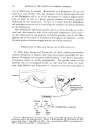
SDME ASPECTS OF MELANIN PIGMENTATION 301 the particle that carries tyrosinase and is the subcellular site of melanin biosynthesis. Histochemical studies of human skin previously carried out at the Mayo Clinic by Fitzpatrick, Becker, Jr., Lerner and Montgomery (6) had shown that tyrosine formed dark brown particles about 0.2-0.5 • in diameter. It is now possible to give a better interpretation (Fig. 2) of the "DOPA" or tyrosinase reaction. 3lelanosorne (7) is the term given to the particle which is the subcellular unit of melanin biosynthesis. This particle is an organelle similar in some ways to a mitochondrion but distinct from a mitochondrion in fine struc- ture, chemical composition and development. The melanosome is not self-duplicating but undergoes a one-way progression: thus, new melano- somes do not arise from other melanosomes. The melanosome arises by a complex series of events, beginning in ribosomes, which are dense RNA- rich particles attached to the endoplasmic reticulum and the site of protein synthesis. TRANSFER OF MELANIN GRANULES FROM MELANOCYTE TO MALPIGHIAN CELL Until recently, it has been generally accepted that, upon leaving the melanocyte, mature melanin granules were (a) liberated into intracellular space and phagocytized as individual particles, or (b) in some way injected into the Malpighian cells. This transfer of particles from one cell to another was termed a "cytocrine" process by Masson (8). Studies with the electron microscope by Bitbeck in London (9) and Drochmans in Belgium (10) have shown that in hair and epidermis segments of dendrites containing melanin granules penetrate into Malpighian cells and are nipped off. It is impossible to say to what extent the penetration of dendrites that leads to this mechanism of transfer can be regarded as a dynamic activity on the part of the melanocyte or as a manifestation of phagocytosis by the Malpighian cell. Possibly the Malpighian cell plays a more active part in the transfer of melanin granules than was thought previously the Malpighian cell would be in a position to control the rate of transfer, stepping it up or slowing it down according to its requirements at a particular time. Such a process would be bound to influence the rate of melanosome synthesis. It seems probable that the rate of melanosome synthesis is geared to the rate of elimination and that the melanocyte as a secretory gland enters a resting stage unless it is called upon to produce melanosomes. For example, retinal pigment cells (in adults) are non- secretory glands and contain fully melanized melanosomes. Thus a sort of biological positive "feed-back" mechanism may exist in which, as the

302 JOURNAL OF THE SOCIETY OF COSMETIC CHEMISTS product (melanosome) is eliminated, a demand for more melanin granules is created. At this time it appears that within a decade or so it might be possible, by the use of chemicals, to increase or decrease at will the amount of pigment present in the skin and possibly also in the hair. The ability to control pigmentation in this way necessarily depends upon sound and exact knowl- edge of the processes involved in pigment formation. At present, there are three known ways in which alterations of skin color can be mediated by chemical means: (a) variations in the availability of pituitary hormones and certain other hormones, such as thyroid and estrogen, whose mech- anisms of action are still unknown (b) topical application of certain substances, such as hydroquinones and (c) oral ingestion of substances, such as psoralens, that can increase the response of the skin to ultraviolet light. Neither the mechanisms involved in these three categories of chemical control nor the stages in the pigmentation process at which the control is exerted by these agents are yet known. (Received November 12, 1963) REFERENCES (1) H. M. Fox and G. Vevers, The Nature o/Animal Co/ours, The Macmillan Co., New York, 1960. (2) J. B. Stanbury, J. B. Wyngaarden, and D. S. Fredrickson, Eds., The Metabolic Basis of Inherited Disease, The Blakiston Div., McGrawIHill Book Co., Inc., New York, 1960. (3) T. B. Fitzpatrick and A.D. Breathnach, Dermatol. IFochschr., 147, 481 (1963). (4) A. B. Lerner and T. B. Fitzpatrick, Physiol. Rev., 30, 91 (1950). (5) M. Seiji, K. Shimao, M. S.C. Birbeck, and T. B. Fitzpatrick, Ann. N.Y. Acad. Sci., 100, Pt. II, 497 (1963). (6) T. B. Fitzpatrick, S. W. Becker, Jr., A. B. Lerner, and H. Montgomery, Science, 112, 223 0950). (7) M. Seiji, T. B. Fitzpatrick, and M. S.C. Birbeck 5 t. Invest. Dermatol., 36, 243 (1961). (8) P. Masson, in M. Gordon, The Biology of Melanomas, Special Publ. N.Y. Acad. Sci., 4, 15 (1948). (9) M. S.C. Birbeck and N. A. Barnicot, in M. Gordon, Pigment Cell Biology, Academic Press, Inc., New York, 1959, pp. 549-561. (10) P. Drochmans, Arch. belg. dermatol., 16, 155 (1960).
Purchased for the exclusive use of nofirst nolast (unknown)
From: SCC Media Library & Resource Center (library.scconline.org)