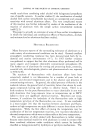
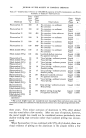
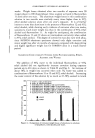
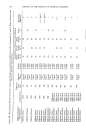
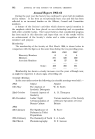
COSMETIC APPLICATIONS OF POLYVINYL ALCOHOL 329 in Table I. This selection provides four different types of material with respect to degree of hydrolysis, as well as two different viscosity ranges for the Type 88 H material. For practical purposes, the degree of hy- drolysis is a measure of the amount of polyvinyl acetate in the sample of polyvinyl alcohol. TABLE I--TYPES oF POLYVINYL ALCOHOL USED IN COSMETICS Commercial Type Range of Designation Designation % Hydrolysis Viscosit? Gelvatol 1-60 Type 100 H 99.0-100 28-32 Medium Elvanol 71-30 99.0-100 28-32 Gelvatol 3-60 Type 98 H 97.9-99.0 23-32 Medium Elvanol 71-24 97.7-98.4 23-32 Gelvatol 20-60 Type 88 H 87.0-89.0 21-25 Medium Elvanol 52-22 87.0-89.0 21-25 Gelvatol 20-30 Type 88 H 87.7-89.0 4-6 Low Elvanol 51-05 88.0-89.0 4-6 Gelvato140-20 Type 75H 72.9 77.0 2-3 Low Viscosity values are in centipoises for 4% aqueous solutions at 20øC. This change in the degree of hydrolysis has a profound effect on suit- ability for use in a particular formulation. On the other hand, changes in viscosity or molecular weight follow a predictable pattern and are of lesser importance. Generally speaking, polyvinyl alcohol can be used to advantage in cosmetic formulations to achieve specific effects: it stabilizes emulsions and suspensions, it fornqs protective and foundation films, it enhances dur- ability and wearing properties, and it resists erosion by perspiration yet facilitates the removal of the cosmetic formulation by washing. Of additional interest is the fact that polyvinyl alcohol functions as a nonionic emulsifying agent having protective colloid effects. In general the par- tially hydrolyzed grades are more effective emulsifying agents than the completely hydrolyzed grades, with the high viscosity types more effective than the low viscosity types (7). PHARMACOLOGICAL BACKGROUND Polyvinyl alcohol has been used for years in both drugs and cosmetics and has an excellent record with respect to safety. It is not a primary irritant, and there is no evidence of its causing sensitization. It can be regarded as innocuous (8). As far back as 1952 it was used in a nasal preparation at a 3.5% level (9), and The Extra Pharmacopoeia refers to the use of PVA in film-forming jellies intended for application to the area surrounding a surgical wound (10). The United States Food and Drug Administration has approved the use of up to 7% PVA in cosmetic pro-

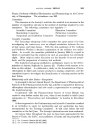
330 JOURNAL OF THE SOCIETY OF COSMETIC CHEMISTS ducts, in addition to approving its use in a variety of packaging applications (7, 11). Perhaps the most recent endorsement of the safety of PVA is to be found in the recent introduction of a new prescription product which contains 1.4ø7o PVA and is intended for routine instillation into the human eye. This certainly is an excellent testimonial to its safety for use. FORMULATION STUDIES Some of the main applications of PVA to cosmetic use can best be il- lustrated by a report of laboratory experiments. In cosmetic creams the most important function of polyvinyl alcohol is to act as a film former. Numerous preliminary trials have shown that the degree of hydrolysis of the alcohol is of prime consideration, since the compatibility of the plastic with the base apparently decreases as the extent of hydrolysis increases. It was found that completely hydrolyzed PVA (Type 100H), when in- corporated into creams, even in low concentrations, produces products which are extremely difficult to process because of their rubbery con- sistency. When cooled to room temperature, emulsified creams set into masses which could not be spread and which closely resembled the "Flub- bet" made popular by Wait Disney. Completely hydrolyzed polyvinyl alcohol is not suitable for use in cosmetic creams and lotions. The partially hydrolyzed alcohol, however, has a wide range of applications. Both Type 88H and 75H impart a noticeable smoothness to creams in addition to the film forming properties mentioned earlier. As might be expected, the nature of the film left on the skin is dependent on both the type and the amount of polyvinyl alcohol included in the formula. At the 1% level, smoothness, adherence to the skin, and general physical stability of a cream or lotion are improved, but little film formation is effected. Experiments have shown that a minimum of 2.5% of the polymer is necessary for definite film forming action. As an example of this use of PVA, studies were made on a barrier or "pro- tective" cream. A series of creams was made based on the following control formula: Barrier Cream Formulation Part .4 Distilled water ................................. approx. 40% Methylparaben .................................... 0.025% Glycerin .......................................... 10% Part B Cetyl alcohol ...................................... 7.5% White petrolatum .................................. 7.5% Polyoxyl-40-stearate ................................ 10.0% Glyceryl monostearate .............................. 5.0% Amerchol L-101 .................................... 5.0% Propylparaben ..................................... 0. 015% Heat to 85øC with mixing Heat to 85øC with mixing. At 85 ø C add B to A with intense Homo-Mixing
Purchased for the exclusive use of nofirst nolast (unknown)
From: SCC Media Library & Resource Center (library.scconline.org)