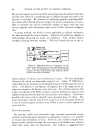
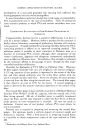
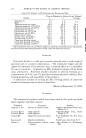
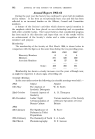
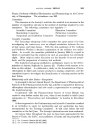
EVALUATION OF ORAL ODOR 291 of the number of dilution vessels needed, and becomes suspect because of the possibility of reaction or decomposition of the odor substance before it is assayed. Applying our knowledge of the sensitivity function and the rate limitations of our detector system, it becomes possible to design an odor monitoring system which can be used for the clinical evaluation of products designed to reduce the sensation of objectionable oral odors. This system has no upper limit since it can be designed to make the second deriv- ative of g become zero. Figure 4 shows the device in its simplest form. In operation, the test subject exhales through his mouth into the stem of the unit while the plunger is pulled back. The trained odor analyzer next places a stop at a o•Odor Collecting ChQmber Plunger •/"*--•SQmpling Cup MovQble Stop•--•- RemovQble Mouthpiece Figure 4.--Incremental odor dilution device for use with the method described in this paper. The movable stop is shown set in the X = 10 position. predetermined point on the plunger and pushes the plunger in at a constant rate (in a more complex embodiment of the device, this pushing at a con- stant rate can be accomplished mechanically), while he makes short shallow inhalations of the gas emitted from the stem into the sampling cup. As soon as the odor is detected, the device is aimed away from the tester until the gas has been expelled, except for that volume which is not released from the test cylinder because of the plunger stop. The tester then puts the device into a clean air environment and pulls out the plunger fully. The procedure is repeated until the odor is just undetectable. By taking the number of times the dilution procedure had to be repeated minus one and entering a table (Table I) under the listing for the particular setting TABLE I--PERcENT OF O•)OR CONTAINING G.•s LEFT AFTER THE nth DILUTION For Stop Settings (X) from 10 units 3 to 90 units 3 in a 100 unit 3 Odor Collecting Chamber and Dilution Cycles (n) from 0 to 5 n = x = 10 20 30 40 50 60 70 80 90 i 100 100 100 100 100 100 100 100 1009081 10 20 30 40 50 60 70 80 1 4 9 16 25 36 49 64 0.1 0.8 2.7 3.2 12.5 21.6 34.3 51.2 72.9 0.01 0.016 0.81 2.56 6.25 12.9 24.0 41.0 65.6 5 0.001 0.003 0.24 1.02 3.13 7.80 16.8 32.8 59.0 For dilution cycles greater than n = 5 the following form is used: (X/100) '• X 100 = per cent of odor containing gas remaining after the nth dilution cycle.

292 JOURNAL OF THE SOCIETY OF COSMETIC CHEMISTS of the plunger stop, the tester can record the ratio of the volume of air to the volume of odor which could just be detected. It is possible by the use of a sequentially-removed series of stops to obtain a linear reduction in the amount of odor containing gas. It is also possible through the use of non- return valves and odor and moisture absorbing cartridges to make an odor measuring device in which the odor containing gas is diluted with auto- matically cleaned and dried air. A gas reservoir may also be used to supply the diluent gas if, for example, an inert gas rather than air is desired. Preliminary tests have shown that the entire dilution series can be made rapidly enough to minimize the possibility of decomposition or inactivation of the odor containing substance. OBJECTIVE METHODS We will now turn to devices utilizing absolute value detectors. Recent advances in physical and physico-chemical techniques for the evaluation of specific gases in gas and vapor mixtures have made possible the design and fabrication of instruments which measure amounts of specific gases, vapors or families of gases and vapors. Two general gas detection methods are being used in the objective evaluation of odor producing compounds. These are gas chromatography and infrared spectroscopy of gases. Some specific gaseous substances such as ammonia and sulfur or halogen-contain- ing compounds can be analyzed by means of chemical techniques, while others, such as hydrogen, oxygen, and carbon monoxide and dioxide, can be evaluated using special electrodes but these are of limited value in the analysis of oral odor. Vapors containing odorous compounds which are the decarboxylation or oxidation products of proteins can be analyzed by spectrophotometric methods. These methods are of general assistance, especially in laboratory studies of odors caused by decomposed protein in saliva. Methods using electrically or chemically charged surfaces aside from those employed in gas chromatography have not been of use in the evaluation of oral odors. Gas Chromatography From related work in this field it has been determined that many of the odor gases from the oral cavity are of low molecular weight. Low molec- ular weight gases to be studied can be frozen using liquid nitrogen or, in special cases, liquid helium. Liquified gases can be heated while hydrogen is slowly flushed over the sample. Each gas will vaporize at its boiling temperature and become mixed in the flowing hydrogen stream. Through a controlled increase in temperature, these gases can be flowed separately into a flame detector for analysis. They can also be sampled by a human
Purchased for the exclusive use of nofirst nolast (unknown)
From: SCC Media Library & Resource Center (library.scconline.org)