EVALUATION OF ORAL ODOR 287 the method of comparison of changes in the amount rather than the quanti- fication of exact amounts, which is the mechanism used by all but a few of our most recently developed instruments. It is this form of combined ratio and rate detection that makes it possible to select small stimulant signals from a background of several stimulants of high intensity striking the organ simultaneously (the signal to noise ratio of less than unity men- tioned above). In the case of oilaction, this is important for the survival of the organism. It is equally essential for a worker to detect the odor of smoke in a laboratory heavily laden with odor of an organic solvent as it is for the deer in a thick pine forest to detect the faint odor of an enemy through the pine scent. This highly developed differential sensing device enables us to sense minute quantities of chemical stimulants. We have no mechanism by which we can shut off the sensation of odors which are not pleasing to us, and this in fact is another protective device of nature to cause us to leave an area of danger. The olfactory system operates on a dif[k:rential system so that, while we are not spared the unpleasantness of detecting an odor which is objectionable to us, we become adapted to it if we must remain in its environment for extended periods. As we shall see, the olfactory system is most sensitive to the first appearance of an odor or to odors presented intermittently for short periods of time. Any odor generator which produces odors in small amounts and in an intermittent manner will be highly efficient from the standpoint of the amount of product (stimulant) used to obtain the greatest response in the olfactory sensors. This fact has its implications, for example, in the economics of perfume sales. If one wishes to disperse the scent of an expensive perfume in a display atomizer, the perfume should be ejected in extremely small amounts with sufficient intervals between the ejections to allow for almost complete theoretical dispersal of the odor throughout the area of sale. The oral cavity is one of the best examples of a highly efficient natural odor generator, one in which amount of stimulant chemical is small with re- spect to the olfactory response. The oral cavity generates odors, some of which we sense as pleasant and others of which we categorize as definitely un- pleasant. It is the efficiency of the oral cavity as an odor generator, to- gether with its frequent proximity to another's olfactory detection apparatus in our present crowded society, which would make each aware of objection- able oral odors unless some form of restraint had been placed upon the generation of odors within the oral cavity. SUBJECTIVE METHODS In order to develop products which reduce the detectability of oral odors, it is necessary to measure them. The human nose is still the most versatile detector available to us in the present state of our odor detecting art. We

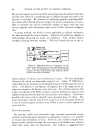
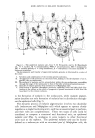
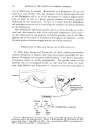
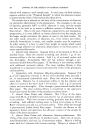
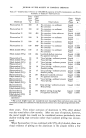
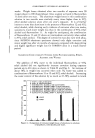
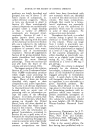
:288 JOURNAL OF THE SOCIETY OF COSMETIC CHEMISTS Figure 1.--A form of the Fair and Wells osmoscope presently in use for the evaluation of odors from the oral cavity. The subject closes his lips over the plastic mouthpiece at the end of the instrument to the left as shown. The evaluator places into his nostrils the nose-pieces seen at the right of the photo. Air exhaled by the subject through the osmo- scope is mixed with room air entering through the side arm in the body of the instrument. must be able to detect not only the odors from many oral cavities but also the comparative intensities. Any method used must be rapid because many of the odor producing agents react with other substances or decom- pose over short periods. One of the most successful tools for determining the intensity of an oral odor has been the Fair and Wells osmoscope (1). This device dilutes an odor from a source with a known amount of air to deliver continuously controlled ratios of odor-bearing gas to admixed air, as shown in Fig. 1. In its present form this instrument can be set in seven different ratios. The sensitivity of the device may be seen in Fig. 2. The equation for the graph shown is in the form: g---x •, [1] where x = the series dilution factor, g = the external signal strength, and n = the value of the osmoscope reading. Usually, holes are bored in the internal tube of the osmoscope so that x has a value of 2. g is given as the reciprocal of the parts per million of stimulant in the total gas emitted from the osmoscope if the amount of the
Purchased for the exclusive use of nofirst nolast (unknown)
From: SCC Media Library & Resource Center (library.scconline.org)