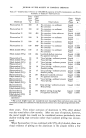
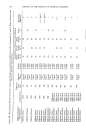
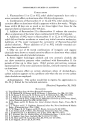
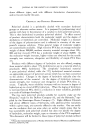
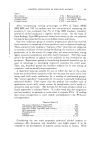
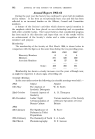
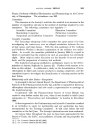
COSMETIC APPLICATIONS OF POLYVINYL ALCOHOL 333 development of a semi-solid greaseless hair dressing with sufficient film forming properties to have a wave setting effect. In most formulations polyvinyl alcohol has a wide range of compatibility. This is particularly true in the case of emulsifiers. Table II summarizes some cosmetic products in which PVA and various emulsifiers were com- bined. LABORATORY EVALUATION OF FILM-FORMING PROPERTIES OF COSMETICS Unquestionably, the best test for a cosmetic's effectiveness is to have it used by a human subject. However, before a product for the consumer is finally chosen, laboratory screening of preliminary formulas will continue to be essential. A simple method for evaluating the films formed by PVA- containing products is offered as an improved screening method. This technique makes it possible to show variations in filtration time as a function of increasing PVA content although other components of the system (surfactants, pigments and oleaginous components) undoubtedly exert an effect on filtration time. Nevertheless, film strength is indicated by the resistance offered to the passage of water through the film under controlled conditions of filtration. Procedure for Evaluation of Pt//1 Effect on Filtration Time: Whatman #1 filter papers (diameter 4.25 cm.) are weighed to the nearest milligram. A 125 mg. quantity of test product is deposited in the center of the filter disc and then spread uniformly over the entire filter surface with the aid of a smooth stainless steel wire. After two minutes, all excess product is removed from the filter using the smooth wire. The treated filter paper is then dried in an oven at 37øC for two hours. A second weighing is made to determine the amount of product deposited on the surface of the filter. The treated filter paper is then carefully mounted in a Millipore Hydrosol Stainless Filter Holder* of 650 ml. capacity, with the treated side of the filter facing upward. 500 ml. of distilled water is carefully introduced above the filter, and the time required to collect the first 50 ml. of tiltrate under gravity at room temperature is recorded. All runs are made in duplicate. Control runs of test product without PVA must always be run as a standard. Extreme care is required in preparing and mounting the treated filter papers. For optimum results a uniform deposit of constant weight and thickness is required. With a little practice in preparing treated filters it is possible to obtain comparative values of the type outlined in Table III. * Produced by the Millipore Filter Corp., Bedford, Mass.

334 JOURNAL OF THE SOCIETY OF COSMETIC CHEMISTS TABLE 1II--ErrECT or PVA CONTENT ON FILTRATION TIME Time in Minutes to Collect 50 mi. Flitrate* Sample a b Average Whatman #1 5.0 5.5 Blank 5.0 4.8 5.1 Theatrical make-up control 28.0 30.0 29.0 Theatrical make-up, 1.25% PVA 134.0 138.0 136.0 Theatrical make-up, 2.5% PVA 281.0 291.0 286 0 Liquid make-up control 21.0 22.0 21.5 Liquid make-up, 2.5% PVA 35.0 37.0 36.0 Liquid make-up, 5% PVA 52.0 50.0 51.0 Sun tan lotion control 73.0 73.0 73.0 Suntan lotion, 2.5% PVA 121.0 123.0 122.0 Suntan lotion, 5% PVA 174.0 178.0 176.0 Cream hair dressing control 24.0 26.0 25.0 Cream hair dressing, 2.5% PVA 38.0 35.0 36.5 Cream hair dressing, 5% PVA 45.0 48.0 46.5 * Determinations were run until 50 ml. had been collected, or until 60 minutes had elapsed. 60 minute values were then projected to obtain values for collection of 50 mi. SUMMARY Polyvinyl alcohol is a safe and versatile material with a wide range of potential uses in cosmetic preparations. The molecular weight and the degree of hydrolysis of the polymer have a marked effect on its suitability for use in cosmetics. In general an 88% hydrolyzed grade will be found most satisfactory. Polyvinyl alcohol included in selected formulas at a concentration of 2.5% and 5% provides increased physical stability, film- forming properties, and wearability of the products. A laboratory method of testing the film forming ability of polyvinyl alcohol-containing cream or lotion is described. (Received September 2.5, 1963) APPENDIX The commercial products which have been used in this work are listed below together with their sources: Trademark Amerchol L-101 Cosmetic Russet Cosmetic Brown Veegum HV Sunscreen #2 Tween 61 Description Supplier Extract of lanolin alcohols American Cholesterol Prod. Corp., Edison, N.J. Oxide pigment Ansbacher-Siegle Corp., Staten Oxide pigment Island, N.Y. Magnesium-aluminum silicate R.T. Vanderbilt Co., New York, N.Y. Menthyl anthranilate Sindar Corp., New York, N.Y. Polyoxyethylene sorbitan mono- Atlas Powder Co., Wilmington, stearate Del.
Purchased for the exclusive use of nofirst nolast (unknown)
From: SCC Media Library & Resource Center (library.scconline.org)