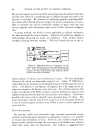
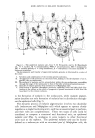
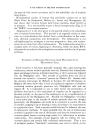
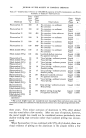
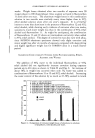
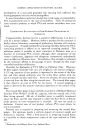
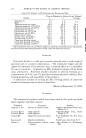
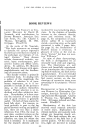
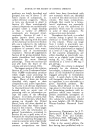
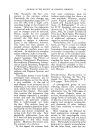
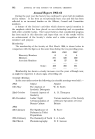
COMPATIBILITY STUDIES OF ALUMINUM 315 A combination of economic considerations and internal pressure require- ments has dictated a wall thickness of 0.008--0.010 in. for aluminum aerosol containers. By contrast, architectural and chemical applications involving aluminum may employ sheet, plate or pipe from 0.020--0.250 in. thick. This means that penetration of the sidewall of an aerosol container can result from pitting corrosion that would be considered insignificant in many other chemical applications. Relatively small corrosion weight losses could also result in a can seam leak or restriction of flow through an atomizing valve. For these reasons, the actual weight losses rather than calculated corrosion rates are employed in this paper. Visual observations as to the type of corrosion could also be important in predicting service life and are, therefore, included. ALUMINUM COMPATIBILITY STUDIES WITH FLUOROCARBONS AND ETHYL ALCOHOL Periods of exposure up to three years are recorded in Table I, and selected values are compared in Fig. 1. In individual solutions of fluorocarbons 11 or 12 or ethyl alcohol (95%), no corrosion was evident in any solutions for periods of approximately two months. After two months exposure, however, slight turbidity began appearing in the fluorocarbon 11 solution, indicating some very minor aluminum corrosion. Even after one year of exposure the actual weight losses were insignificant. No corrosion or turbidity was noticed in fluorocarbon 12 solution exposures, even after 80 A- 100% F-II (414 DAYS) B - 100% F- 12 (1049 DAYS ) • 70 C - 95% ETHYL ALCOHOL (414 DAYS ) D - [50% F-II, 50% (95% ETHYL ALCOHOL)] (67 DAYS ) • E- [50•, F-12, 50•,(95• ETHYL ALCOHOL)I(67 DAYS) o 60 F- [50% F-IZ, 50% (95% ETHYL ALCOHOL)I(387 DAYS) • 6 - [25% F-II,Z5% F-IZ,50•(95D% ETHYL ALCOHOL)] (107 DAYS) so I ß L,OU,D o, 40 [] VA•,O. o • 3o • zo •o •o Figure 1.--Comparison of corrosion weight losses of aluminum in solutions of propellants and ethyl alcohol.

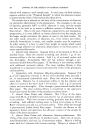
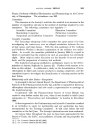
316 JOURNAL OF THE SOCIETY OF COSMETIC CHEMISTS TABLE I--CoMPATIBILITY TESTS OF 1100-H14 ALUMINU• WIT• FI. UOROCARBONS ANt EThYl. ALCOHOL AT AMBIENT TEMPERATURE Corn- Expo- posi- sure Expo- Weight tion, Time, sure Loss, Chemicals % days Observations Phase g. F!uorocarbon 11 Fluorocarbon 11 Fluorocarbon 11 Fluorocarbon 12 Fluorocarbon 12 Fluorocarbon 12 Ethyl alcohol (95%) Ethyl alcohol (95%) Fluorocarbon 11 Ethyl alcohol (95%) Ethyl alcohol (95%) Fluorocarbon 11 Fluorocarbon 12 Ethyl alcohol (95%) Fluorocarbon 12 Ethyl alcohol (95%) Fluorocarbon 12 Ethyl alcohol (95%) Fluorocarbon 11 Fluorocarbon 12 Ethyl alcohol (95%) Fluorocarbon 11 Fluorocarbon 12 Ethyl alcohol (95%) Fluorocarbon 11 Fluorocarbon 12 Ethyl alcohol (95%) (5052-H34 alloy specimens) 100 21 No corrosion--no sediment Liquid ... No corrosion Vapor 100 68 No corrosion--no sediment Liquid ... No corrosion Vapor ... 100 414 No corrosion--faint sediment Liquid 0.00135 No corrosion Vapor 0. 0010 100 21 No corrosion--no sediment Liquid ... No corrosion Vapor ... 100 68 No corrosion--no sediment Liquid ... No corrosion Vapor ... 100 1049 No corrosion--no sediment Liquid 0.0011 No corrosion Vapor 0.0008 100 21 No corrosion--no sediment Liquid ... No corrosion Vapor ... 100 414 Localized shallow corrosion Liquid 0.0041 No apparent corrosion Vapor 0.0001 50 18 Visual pitting--sediment present Liquid ... 50 Visual pitting Vapor ... 50 67 Visual pitting--sediment present Liquid 0.0503 50 Visual pitting Vapor 0.0206 50 18 Visual pitting--sediment present Liquid . .. 50 Possible pitting Vapor ... 50 67 Visual pitting--sediment present Liquid 0.0026 50 Possible pitting Vapor 0.0004 50 387 Moderate localized corrosion Liquid 0.0046 50 No apparent corrosion Vapor 0.0004 25 18 Visual pitting--sediment present Liquid ... 25 Visual pitting Vapor ... 50 25 107 Deep pitting--sediment present Liquid 0.0362 25 Deep pitting ...... 50 25 185 Shallow pitting along edge Liquid 0.0048 25 No apparent corrosion Vapor 0.0001 50 * The actual weight losses are considered more meaningful than corrosion rates since the corrosion is usually not uniform over the aluminum surface nor is it progressing uniformly with time. three years. Very minor corrosion of aluminum in 95% ethyl alcohol was also noted after a few months. After one year of exposure, however, the metal weight loss would not be considered serious particularly since shallow etching type corrosion rather than localized pitting was encoun- tered. When fiuorocarbon 11 was combined with 95% ethyl alcohol, there was visual evidence of pitting on the aluminum in the ampule within a few
Purchased for the exclusive use of nofirst nolast (unknown)
From: SCC Media Library & Resource Center (library.scconline.org)