COMPATIBILITY STUDIES OF ALUMINUM 323

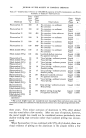
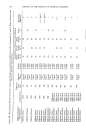
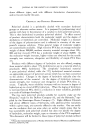
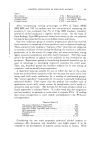
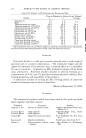
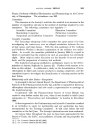
324 JOURNAL OF THE SOCIETY OF COSMETIC CHEMISTS RETARDATION STUDIES WITH VARIOUS ORGANIC CHEMICALS IN MIXTURES OF FLUOROCARBONS, ETHYL ALCOHOL AND WATER Organic additives listed in Table IV seem to be less effective retarders as a group than the inorganic salts of Table Ill. A number of organic halogenated hydrocarbon stabilizers and retarding agents for the reaction between aluminum and carbon tetrachloride were employed without success. Propylene oxide added in 0.2% concentration was the only organic additive which seemed to retard the corrosion process. In most cases the aluminum weight losses were higher with these organic additives than without them. This observation suggests that the addition of small concentrations of organic chemicals in various aerosol formulations should be screened against the possibility of causing higher corrosion rates than those established for the formulation without the additive. STUDIES OF THE EFFECT or THE SUBSTITUTION OF OTHER ALCOHOLS OR ORGANIC SOLVENTS FOR ETHYL ALCOHOLS IN MIXTURES WITH FLUOROCARBONS The rather startling observation is readily made in Table V that many other higher homologue alcohols do not create this same corrosion hazard with aluminum in the presence of fluorocarbons. Isopropyl alcohol with fluorocarbons appeared to be completely innocuous, and confirmation was obtained in two separate tests of 767 and 1022 days, respectively. N-propyl alcohol and n-butyl alcohol were also without significant effects for 767 and 1022 days, respectively. Solutions of the higher alcohols (iso and n-amyl alcohols) with fiuorocarbons were free of any corrosion for periods of almost two years, and in one test with isoamyl no corrosion appeared in almost a three year exposure. In any case, it appears that the use of any of these higher alcohols in place of ethyl alcohol offers freedom from corrosion for periods in excess of the longest projected shelf- life of most aerosol products. It might be admitted that the water content of the various c.p. grade alcohols was different. We do not believe that this explains the difference in behavior of various alcohols because of Giggard's report (14) that no water concentration could be found which significantly reduced the amount of corrosion using ethyl alcohol. Acetone or ethyl acetate were also included in other tests as possible solvents for organic aerosol additives, and they showed no corrosion tendencies in a test period of two years.
Purchased for the exclusive use of nofirst nolast (unknown)
From: SCC Media Library & Resource Center (library.scconline.org)