J. Soc. Cosmetic Chemists 15 411-422 (1964) ¸ 1961Society of Cosn,etic Ch•r,,ists of Gre.•t Britain SYNTHESIS, AND USE IN HAIR PREPARATIONS, OF SOME NEW QUATERNARY DYES DERIVED FROM ANTHRAQUINONE G. KALOPISSIS, Ph.D., A. BUGAUT, M.Sc., and J. BERTRAND* Presented at the Symposium on "Hair", at Brighton, Sussex, on lSth April 1964. The preparation and behaviour of some new quaternary dyes of the anthraquinonoid series are described from the point of view of application to the tinting of hair. This involves compounds deriving schematically from 2-amino-anthraquinone 1-hydroxy,4-amino anthraquinone 1-hydroxy-2,4-diamino anthraquinone by substitution of one hydrogen atom from the amino group by an aniline or alkyl ammonium residue. INTRODUCTION Interest in the use of these colouring agents for hair-tinting lies in the fastness of the resulting shades when exposed to sunlight, in their lack of toxicity, and in their affinity to hair. Use in hair tinting of direct basic colouring agents containing in their molecule one or more tertiary or quaternary groupings has a fairly important place in current processes. The following examples may be quoted (1): 1. Certain basic colouring agents, belonging to the following series: Triphenylmethane, such as methyl violet (crystal violet) Thiazine, such as methylene blue Xanthene, such as rhodamine B. Azine, such as safranine Thiazole, such as thioflavine. 2. Quaternary mono- or disazo dyes, long known by the name of "Janus dyes" (2). * l•esearch Laboratories, L'Oreal, Aulnay-sous-Bois (S. & O.), France. 411

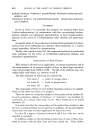
4:12 JOURNAL OF THE SOCIETY OF COSMETIC CHEMISTS 3. Tertiary dyes of the benzene series (3), of the type R• NI-I (CH2)n N NI-I {CH2)n N NO2 R• NH• and NH• NO• 4. Quaternary dyes of the benzene series (4), of the type + NH (CI-I•)n N NO2 a.s.o. NH• As regards tertiary or quaternary dyes, especially of the anthraquinone series, a very large number have already been synthesized during the past fifteen years. Their use has been mainly conceived in terms of the dyeing of synthetic fibres and, less commonly, wool. Though the chemical composi- tion of wool is very close to that of hair, the problems involved in the dyeing of hair are very different from those met with in wool-dyeing. This fact is well known to all cosmetic chemists. It was therefore interesting to attempt to introduce into the field of cosmetic application, dyes of so rich a series as that of anthraquinone, and also to create new ones specially suited to hair. On the first count, the first attempt was made recently (4), and two dyes having the formulation + • NH---CH2--CI-I•--CH•N (CHa)a and q- • l• o NH½ have been proposed.
Purchased for the exclusive use of nofirst nolast (unknown)
From: SCC Media Library & Resource Center (library.scconline.org)