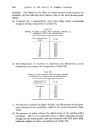
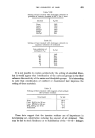
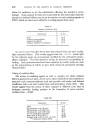
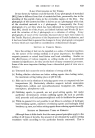
THE CHEMISTRY OF HAIR 433 X-RAY PHOTOGRAPHS OF SET FIBRES It was shown by Astbury et al (5) that the X-ray photograph of stretched (30%) hair is different from that of unstretched hair, presumably due to the uncoiling of the peptide chains in the crystalline regions of the fibre. The photograph of the unstretched fibre is known as an a photograph while that of the stretched material is a /• photograph. Consequently the X-ray photograph of a set fibre which has been deformed by stretching by more than 30% should be of the/• type, and indeed Astbury and Woods (5) have used the retention of the /• photograph as a criterion of setting. X-ray photographs of most of the materials discussed above have been taken in the Textile Physics Laboratory of the Department of Textile Industries, and it has been found that in general the changes in X-ray photograph correspond to those which are expected by consideration of dimensional changes. SETTING IN VARIOUS MEDIA Since the setting of hair can be regarded as a series of chemical reactions (1), the nature of the setting medium is of great importance, for different reagents promote or retard bond fission and bond rebuilding. Studies on the effectiveness of various reagents as setting media are of considerable commercial significance, for they are the basis of many commercial processes. Some of the more important findings from a theoretical point of view are as follows: (a) Untreated hair cannot be set in solutions of strong acids (6). {b) Boiling alkaline solutions are better setting agents than boiling water, the maximum setting taking place at pH 9.2 (6). (c) Hair can be set in solutions of reducing agents even at comparatively low temperatures (6). Particularly effective reagents include ammonium thioglycolate, sodium and monoethanolamine bisulphites (7), THPC, mercaptans, phosphorous acid. {dl Oxidizing agents, in general, are not good setting agents, but under particular circumstances certain oxidizing agents (8) such as periodic acid, peracetic acid and permonosulphuric acid do facilitate the process. {e) While in general it is not possible to set fibres in solutions of hydrogen bond breaking agents, mixtures of reducing agents and hydrogen bond breakers, e.g. urea, are better setting agents than reducing agents alone (9). SETTING OF DIFFERENT TYPES OF KERATIN Although there is little doubt that the same general principles apply to the setting of all types of keratin, the amount of set obtained by a given setting treatment varies according to the particular keratin concerned. This is

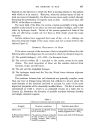
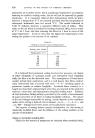
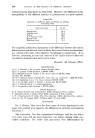
434 JOURNAL OF THE SOCIETY OF COSMETIC CHEMISTS evident from the data shown in Table XIII. Moreover, the differences in the susceptibility of the different keratins to pretreatment are quite marked. Table XIII Response to different types of keratin to setting in boiling water Type of keratin % Set Human hair Lincoln wool Mohair N.Z. Romney wool Merino wool Blackface wool 12-1 14-4 24-6 6'0 21.3 8.1 No completely satisfactory explanation of the differences between the various fibres has been put forward, and it is likely that several factors are important, e.g. cuticle/cortex ratio, fibre diameter, morphological compactness. It is, however, interesting to note that removal of the cuticle does not affect the set which is obtained when hair is set in water. (Received' 5th February 1961.) REFERENCES (1) C. S. Whewell J. Soc. Cosmetic Chemists 12 207 (1961). (2) F. G. Lennox Textile Research J. 25 677 (1955). (3) S. Blackburn and H. Lindley J. Soc. Dyers Colourists 64 305 (1948). (4) Brit. Pat. 872,828. (5) W. T. Astbury and H. J. Woods Phil. Trans. Roy. Soc. London Ser. A 232 333 (1953). (6) J. B. Speakman et al, J. Soc. Dyers Colourists 52 335 (1936). (7) A. N. Davidson and F. O. Howitt J. Textile Inst. 53 62 (1962). (8) C. S. Whewell and R. S. Gandhi unpublished. (9) A. Farnworth Textile Research J. 27 632 (1957). General References E. H. Mercer Keratins and Keratinization (1961) (Pergamon Press, London). P. Alexander and R. F. Hudson Wool (1954) (Chapman & Hall, London). J. W. S. Hearle and R. H. Peters Eds. Fibre Structure (1963) (Butterworths, London). Wool Sci. Rev. 27 (August 1962) 3 (March 1963) 23 (July 1963). DISCUSSION DR. J. BLAKE: How have the three types of cortex mentioned in the paper been studied with regard to the differences in structure and chemical reactivity ? T•E LECTURER: The first experimental technique, and the one which is in some ways still the most important, was simple staining under con- trolled conditions. The ortho- and para-cortex were differentiated by
Purchased for the exclusive use of nofirst nolast (unknown)
From: SCC Media Library & Resource Center (library.scconline.org)