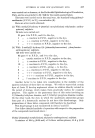
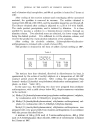
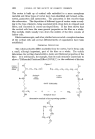
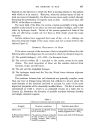
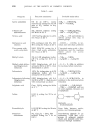
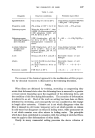
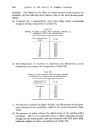
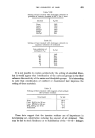
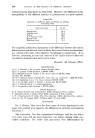
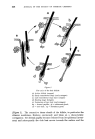
THE CHEMISTRY OF HAIR 425 depends on the direction in which the fibre is moving relative to the surface with which it is in contact. Moreover, when the surface layers of hair or wool are removed chemically, the fibres become more easily wetted, thereby favouring the penetration of reagents such as dyes. At the same time, the D.F.E. of the fibres is reduced. The main bulk of the fibre, the cortex, consists essentially of long coiled peptide chains joined in one plane by salt and sulphur linkages, and in the other by hydrogen bonds. Details of the precise geometrical form of the coils are still being worked out but there is little doubt about the basic structure. Certain authors have suggested that some of the --S--S-- linkings are disposed along the length of the main chains and not as links between the chains (Figure 1). CHEMICAL REACTIVITY OF HAIR If the above concept of the structure of hair is adopted it follows that the following sites and linkages may be concerned in attack by chemical reagents. (1) The peptide linkages (--CO--NH---) in the main chains. (2) The several residues (R--) attached to the carbon atoms in the main chains. The most important of these are the residues derived from tyrosine, serine, and threonine. (3) The salt and the disulphide linkages. (4) The hydrogen bonds and the Van der Waals forces between adjacent peptide chains. The reactions between hair and chemicals are generally complex, more than one type of linkage being affected, but sufficient is known about the main features of the reactions involved to account for some of the more important properties of the chemically modified fibres. The list of reactions summarised in Table I, which is an extended version of a table due to Lennox (2), illustrates the diversity of possible reactions between keratins and simple chemical reagents. Table I Chemical treatments used to modify wool Reagent Reaction conditions Probable main effect Picric acid S-Benzyl thiouronium hydrochloride 1% solution in ethanol acting for 72 hr at 22 ø C 1% aqueous solution acting for 10 min at 25 ø C on wool pre- viously treated with excess NaI-ICO a solution Forms salts with basic groups, mainly arginine and ---NI-t a Forms salts with COOH groups

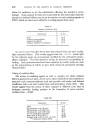
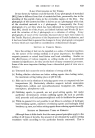
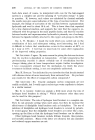
426 JOURNAL OF THE SOCIETY OF COSMETIC CHEMISTS Table I--cont. Reagents Acetic anhydride 1-Fluoro-2,4- dinitrobenzene Nitrous acid Methanol in acid solution Thiocyanate with acetic anhydride Methyl iodide Methyl iodide follow- ing thioglycolate reduction Iodoacetate Iodoacetate following thioglycolate reduction Sulphuric acid Iodine Formaldehyde Potassium dichromate Reaction conditions Probable main effect 0.5 hr at 100 ø C, excess removed by immersion for 10 min in 2% aniline in dry benzene 2% ethanol solution acting for 48hrat21øC 1.0M NaNO s adjusted to pH4 for 3 days at 22 ø C 95% methanol with 5% 10N HC1 acting for 3 days at 22 ø C 2-5M NH4CNS acting for 4 days then acetic arthydride for 7 days at 22 ø C 3% in 0-1M phosphate buffer, pH 7.4, acting for 18 hr at 50 ø C 0.2M thioglycolate, pH 5.4, acting for 24 hr at 22 ø C then methylated as above 1.3% Na iodoacetate in 0.1M phosphate buffer, pH 7.4, acting for 18 hr at 50 ø C 0.2M thioglycolate, pH 5.4, for 24 hr at 22 ø C then treated with iodoacetate as above Cone. H•SO4 acting for 24 hr at 0 ø C 0.1M 12 acting for 72 hr at 23 ø C 0.1M ttCHO acting for 30 min at 60 ø C 3% K•Cr•O? + 2-5% KH tartrate acting for 1 hr at lOO o C --NH• -+ --NHCOCH a --OH -+ --OCOCH a --NI-I• -• ---NHCoHa (NO s) = --OH -+ --OCoH a (NO•)• --NH• -+ --OH and introduces nitroso groups into ring of phenol groups --COOH-• COOMe in ter- minal and side-chain positions C terminal amino acids -• thio- hydantoins and the reactions listed above for acetic anhydride --NH• -• --NHMe --C6H•OH -+ --C6H•OMe --S--S-+ 2--SMe, in addition to reactions before reduction --NH• -+ --NHCH•COONa --C•H•OH -• --C•H•OCH• COONa --S--S-+ 2--SCHaCOONa in addition to the reactions before reduction --CaI-I4OH -• --CaHiOSOaH --NHa •--NHSOaH and loss of sonhe arginine, tyrosine and tryptophane I I imidazole -- -• 2-iodoimidazole Cross links between amide, amino, and tyrosine groups Cross-linking through Cr co- ordinating =NH and =CO groups of adjacent peptide chains and possibly some des- truction through oxidation
Purchased for the exclusive use of nofirst nolast (unknown)
From: SCC Media Library & Resource Center (library.scconline.org)