ALOPECIA IN WOMEN : ITS CLINICAL FORMS AND PROBABLE CAUSES 441 Identity with common baldness (male patterJz alopecia) The nature and etiology of diffuse alopecia are still highly controversial matters. Views as to its nature have been advanced by Sidi and Bourgeois- Spinasse (9), who ascribe it to the indiscriminate use of androgens Juster (3) makes an endocrine imbalance responsible whilst Braun-Falco and Zaun (11) fayour a relationship with alopecia areata, and Binazzi and Wierdis {10) contend that an underlying oestrogenic deficiency is present. Based on observations over several years, we consider all three forms of diffuse alopecia as the expression of common baldness (male pattern alopecia) in the female sex, provided the condition is chronic and not related to transient effluvia or well defined scalp disorders. The identity of common baldness in men and diffuse alopecia in women, a view already advanced by Sabouraud (1), McCarthy (2), and Behrman (4), led us to propose the term androgenetic alopecia for both conditions (14). In the light of present knowledge, common baldness (male pattern alopecia) is the result of androgenic stimulation of the hair follicles of the human vertex with a genetically determined increased responsiveness to androgens (17). The interplay between genetically predisposed hair follicles of the scalp, and normal or increased amounts of androgens initiates that "retrograde metamorphosis" of the hair (18), the result of which is bald- ness (19). Our concept of identity between common baldness and diffuse alopecia in women necessarily focussed our attention on the heredity aspects and on the presence of other signs of androgenic stimulation. HEREDITY We found that the majority of our patients with diffuse alopecia (82 out of 102) were daughters of bald fathers or of mothers with similarly thin hair, or belonged to families in which male pattern baldness is a common trait. Our estimation may be fraught with error as we have seen only a small number of relatives of our patients and have gained the impression that they tend to minimize the extent and occurrence of baldness in their families. It is therefore fortunate that Smith and Wells (20) have recently shown, on the basis of family histories, that of their 56 female patients with "male type alopecia" 54}/0 of the male and 23}/0 of the female first degree relatives past the age of 30 years were similarly affected. The figures for the corres- ponding relatives of patients with alopecia areata were only 20}/0 and 7% respectively. In this connection it is worthwhile to mention the case of a girl, aged 20, with moderately developed diffuse alopecia whose mother and aunt were uni-ovular twins and exhibited severe diffuse alopecia.

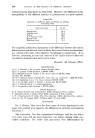
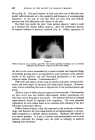
•442 JOURNAL OF THE SOCIETY OF COSMETIC CHEMISTS ANDROGENIC STIMULATION Many of our patients showed symptoms indicative of androgenic stimu- lation. Seventy-two of our patients complained of heavy oiliness of their scalp, moderate hirsutism was present in five, and slight hirsutism in eight patients. Six patients were previously treated for several years with preparations containing testosterone and oestradiol. We started to measure 17-ketosteroid excretion using Zimmermann's method (21) and in 15 patients we obtained a mean value of 6.55 mg/24 hr ,(with a range of 2.42 - 11.85 mg/24 hr). We then started chromatographic fractionation, and utilized the method of Dingemanse (22), modified by Ahrens (23). Four patients with severe diffuse alopecia, of whom three were also moderately hirsute, were shown to have elevated levels of andro- sterone ranging from 4.54 to 7.06 mg/24 hr. While this observation is of interest, we recognize that the most potent androgen which affects follicles of the scalp is testosterone. The production of testosterone could be increased without affecting the urinary excretion of 17-ketosteroids and, on the other hand, androsterone is a metabolite of several steroids and is not necessarily derived from testosterone. It is also pertinent that Hamilton (17) failed to find abnormally high 17-ketosteroid production in men with extensive and precocious baldness. For these reasons we are now performing direct measurements of testosterone excretion in female patients with diffuse alopecia. Determina- tions of oestrogen and gonadotropin levels are being carried out in parallel. SUMMARY Diffuse alopecia in women occurs more frequently than is generally believed. In 102 patients examined within a period of three years the following three types were observed: (1) Diffuse sparseness of the hair involving the whole vertex, (2) orbicular thinning of the hair around the crown, resembling a small scull-cap, and (3) diffuse sparseness of the hair on the vertex, combined with fronto- parietal recessions imitating the pattern of common baldness. Although there is no universal agreement concerning the nature and etiology of these forms of diffuse alopecia in women, they are considered to be the expression of common baldness in the female sex. As common baldness is the result of androgenic stimulation of scalp hair follicles with a genetically determined increased responsiveness to androgens, the heredity aspects and the symptoms of androgenic stimulation were studied. Eighty- two (80%) of the patients had bald, first degree relatives. Seventy-two (70%) complained of oiliness of the scalp indicating androgenic stimulation
Purchased for the exclusive use of nofirst nolast (unknown)
From: SCC Media Library & Resource Center (library.scconline.org)