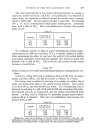
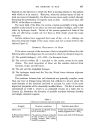
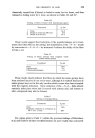
SYNTHESIS OF SOME NEW QUATERNARY DYES 417 The crude hydrochloride of the product which precipitates on cooling, is separated, washed in hexane, and dried. For purification it is dissolved in warm water, the impurities are filtered off and the tertiary base is precipi- tated by 10M NaOH. The precipitated product is separated. We obtained 175 g of 2-(•.N,Ndiethylamino-ethyl)amino-anthraquinone, practically pure, with a yield of 73%. After recrystallization in hexane, the product melts at 123 ø . Table II Calculated as Analysis Cs0 Hs0 N s O s Found C% 74.52 74.50 74.33 H% 6.84 6.61 6-72 N% 8.69 8.68 8.74 To a refluxing solution of 165 g of 2-(•.N,Ndiethylamino-ethyl) amino- anthraquinone in 1600 ml of benzene, 77.5 g of methyl sulphate is added. After maintaining the reflux for one hour, the methyl [2-(• methyl diethyl ammonium) ethylamino anthraquinone] sulphate thus formed is cooled and drained, with a yield of 93%. Left in the air, this product in due course becomes a monohydrate. Series II* Methyl [1-hydroxy 4-(7, methyl piperidinium)propylamino-anthraquinone] sul- phate. A mixture of 36 g (0'15 mol) of quinizarin, 24.2 g (0.165 mol) of 7'amino propyl piperidine (97ø/0), and 225 ml toluene is refluxed for 7 hours. The tertiary base is isolated in the form of an oxalate by adding 24g of oxalic acid dissolved in ether to the cooled reaction mixture. The oxalate is air dried (61 g), and then dissolved in water. The corresponding base is liberated by adjusting to a pH of 8.5 with NaOH, and extracting with ether. The ethereal extracts are evaporated, and the residue recrystallized from hexane. An 82% yield of 1-hydroxy 4-7, piperidine propyl) amino-anthra- quinone (98 g) is obtained. After two recrystallizations from hexane, the product melts at 105 ø. Table III Calculated as Analysis C2 s Hs 40a lg s Found C% 72.53 72.43 72.35 H% 6.59 6.72 6.83 lg% 7.69 7.81 7.75 *While this work was in progress we became aware of Ichikawa's work (9). He synthesized compounds similar to those mentioned here, but not involving heterocyclic substitutions, and studied them in connection with the dyeing of synthetic textiles.

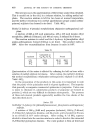
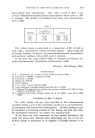
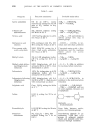
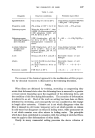
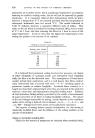
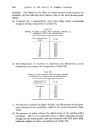
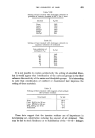
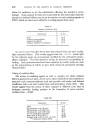
418 JOURNAL OF THE SOCIETY OF COSMETIC CHEMISTS The next process is the quaternization of the tertiary amine thus obtained. This is carried out in the cold, in a toluene solution, by adding methyl sul- phate. The reaction mixture is left for two hours at normal temperature, and the methyl [1-hydroxy 4-(7 methyl piperidinium) propyl amino-anthra- quinone• sulphate thus formed is air dried. Yield: 90%. Methyl [1-hydroxy 4-(timethyl morpholinium) ethylamino-anthraquinone• sul- phate. A mixture of 840 g (3.5 mol) quinizarine, 455 g (3.5 mol) fiamino ethyl morpholine, 2500 ml isobutanol, and 100 ml water, is refluxed for 3 hours. The reaction mixture is cooled and the 1-hydroxy 4-(•morpholine ethyl amino-anthraquinone formed (1024 g) is air dried. This product melts at 160 ø. After two recrystallizations from benzene it melts at 165 ø. Table IV Calculated as Analysis C•o I-I•o N2 O4 Found C% 68.18 68.11 68.11 H % 5'68 5.75 5.64 N% 7'95 7'77 8-00 Quaternization of this amine is effected by refluxing for half an hour with a solution of methyl sulphate in toluene. After cooling, the methyl[1-hydroxy 4(• methyl morpholinium) ethylamino-anthraquinone• sulphate is air dried. Yield: 92%. In the preparation of the products in this series it is important to note that the purity of the quinizarine used is of great significance. The impurity that generally accompanies commercial quinizarine is purpurine. Unless care is taken to eliminate it, substitution products of purpurine are formed in position 2, which are very difficult to eliminate subsequently. The presence of these red-coloured products appreciably modifies the true shades of the dyes described above. Series III hisMethyl [1-hydroxy 2,1-(ptrimethylammonium) phenylamino-anthraquinone] sulphate. A mixture of 264 g (0.83 mol) purpurine (technical), 1018 g (7.48 mol) N,Ndimethyl pphenylene diamine, and 64 g boric acid is heated for 8 hours in an oil-bath at 110 ø under nitrogen. After cooling, 4 l of 30% aqueous alcohol is stirred into the reaction mixture in order to dissolve the unreacted N,Ndimethyl pphenylene diamine. The crude product is then air dried and
Purchased for the exclusive use of nofirst nolast (unknown)
From: SCC Media Library & Resource Center (library.scconline.org)